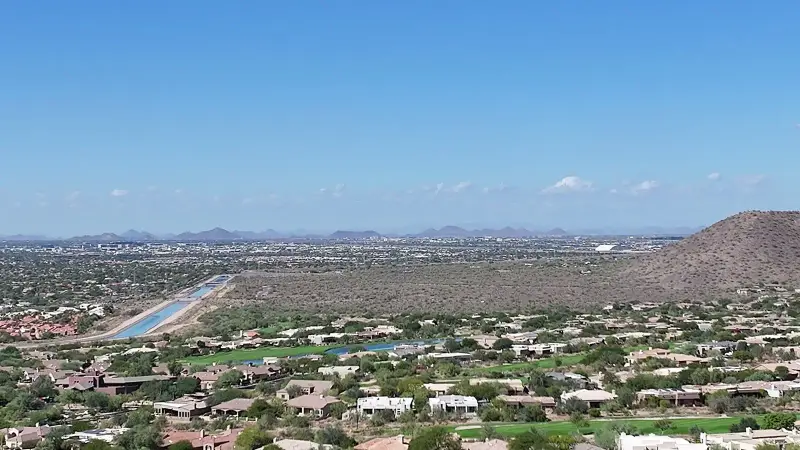
The Scottsdale Ranch Home Intelligence Profile
How Scottsdale Ranch homes are built, cooled, heated, and kept efficient — the complete homeowner's guide to one of Scottsdale's most recognized lakeside master-planned communities.
The Scottsdale Ranch Home Intelligence Profile is Champion Air's community-specific guide to how Scottsdale Ranch homes are built, cooled, heated, and kept efficient — from the community's 1980s-90s construction and original HVAC systems through ductwork, the attic and building envelope, comfort patterns, indoor air quality, modernization planning, and long-term ownership. It's written for Scottsdale Ranch homeowners, buyers, and longtime residents who want to make maintenance, repair, and replacement decisions with the whole home in view.
Scottsdale Ranch blends established luxury living with mature landscaping, lakeside amenities, and a diverse collection of custom and semi-custom homes. Centered around scenic Lake Serena, the community is known for waterfront properties, tree-lined streets, and a convenient location in the heart of Scottsdale.
Developed primarily through the 1980s and 1990s, Scottsdale Ranch offers a mix of patio homes, townhomes, executive residences, and custom waterfront estates. That architectural diversity creates unique opportunities — and challenges — for heating and cooling, and it makes this community an ideal candidate for a comprehensive home performance approach rather than isolated HVAC repairs.
Published July 2026 by the Champion Air team.
Part 1
Community Overview
Unlike many newer developments, Scottsdale Ranch homes have matured alongside the HVAC systems that serve them. Many residences now run second- or third-generation equipment, while portions of the original ductwork, insulation, or building envelope may still remain. Understanding how those components interact is essential for maintaining comfort, controlling utility costs, and protecting long-term home value — and it's the foundation this entire profile is built on.
A mature luxury community
Scottsdale Ranch was designed to offer an upscale residential lifestyle with easy access to everything Scottsdale has to offer. Today the community remains highly desirable because of:
- Waterfront living opportunities surrounding Lake Serena
- Mature shade trees and established landscaping
- A wide variety of architectural styles
- Walking and biking paths
- Proximity to golf, shopping, dining, and healthcare
- Strong long-term property values
- A central Scottsdale location with excellent freeway access
Many homeowners have invested significantly in remodeling and updating their properties while preserving the character that has made Scottsdale Ranch one of the city's most sought-after neighborhoods.
Construction history
Most Scottsdale Ranch homes were built between the mid-1980s and late 1990s, and many have undergone substantial renovations in the decades since. As a result, it's common to find homes that combine updated high-efficiency HVAC equipment, original or partially upgraded duct systems, improved insulation in some areas, original building-envelope components, modern smart thermostats, and mixed generations of HVAC technology — all in the same house.
That combination of old and new is exactly why careful evaluation matters so much here when planning repairs or equipment replacement.
Scottsdale's climate
Like the rest of the Phoenix metropolitan area, Scottsdale Ranch experiences one of the most demanding climates in North America for residential HVAC systems:
- Summer temperatures exceeding 110°F
- Extended cooling seasons lasting much of the year
- Intense solar heat gain
- High attic temperatures
- Dust and airborne particulates
- Seasonal monsoon storms
- Large daily temperature swings
Because cooling systems here operate for thousands of hours each year, proper equipment sizing, airflow, insulation, and preventive maintenance matter significantly more than they do in cooler climates.
Why a community-specific guide matters
No two Scottsdale neighborhoods were built exactly the same. Construction practices, architectural trends, and builder preferences create recurring patterns that influence HVAC performance, airflow characteristics, energy efficiency, indoor comfort, equipment longevity, and common repair trends. Understanding Scottsdale Ranch's specific patterns helps homeowners make better-informed decisions about maintenance, upgrades, and long-term comfort planning.
After decades of serving Scottsdale homeowners, Champion Air has learned that Scottsdale Ranch homes benefit most from a whole-home comfort strategy: the highest-performing homes are those where equipment, ductwork, airflow, insulation, indoor air quality, and homeowner lifestyle are evaluated together. That's the lens every chapter that follows uses.
Part 2
Construction Profile
Scottsdale Ranch was developed primarily between the mid-1980s and late 1990s, during one of Scottsdale's most significant periods of residential growth. The community was planned around a mix of luxury lifestyles, producing production-built neighborhoods, semi-custom homes, custom estates, patio homes, townhomes, and waterfront residences side by side.
That architectural diversity is one of Scottsdale Ranch's defining characteristics — and it means there is no "typical" HVAC system here. Homes vary considerably in floor plan, attic configuration, ceiling height, duct layout, equipment location, and energy performance, which makes construction knowledge essential when evaluating comfort concerns, planning upgrades, or replacing aging equipment.
Typical home characteristics
Most Scottsdale Ranch homes share construction features common to the era:
- Construction dates generally between 1984 and 1999
- Wood-frame construction with stucco exterior finishes
- Concrete tile roofing
- Slab-on-grade foundations
- Single-story and two-story floor plans
- Ceiling heights from 8 feet to over 14 feet in custom homes
- Garages commonly housing water heaters or mechanical equipment
- Attic-mounted HVAC air handlers in many residences
These methods have proven durable, but many homes are now at an age where original building components have been replaced, upgraded, or modified — often more than once.
The building envelope, as originally built
The building envelope is everything separating the conditioned interior from the outdoors: walls, ceilings, insulation, windows, roofing, and doors. Most Scottsdale Ranch homes were built to the energy codes of their time — fiberglass attic insulation, dual-pane or single-pane windows depending on the builder and construction date, moderate air sealing, and standard roof ventilation.
Compared with modern standards, many original homes can benefit from additional attic insulation, air sealing, high-performance replacement windows, improved weatherstripping, and enhanced attic ventilation. Many homeowners have already completed some or all of these upgrades, which is why energy performance varies so widely across the community.
Architectural diversity — and what it means for HVAC
Unlike newer master-planned communities built by one or two companies, Scottsdale Ranch includes numerous builders and architectural styles. HVAC professionals encounter significant variation in duct layouts, equipment locations, return-air design, attic accessibility, mechanical closets, ceiling heights, and open-concept versus compartmentalized floor plans. That diversity is why each home deserves an individual evaluation rather than assumptions based on square footage.
Renovation changes the math
As homes age, many owners have invested in complete kitchen remodels, whole-home renovations, high-performance windows, updated attic insulation, variable-speed HVAC systems, smart communicating thermostats, indoor air quality improvements, whole-home surge protection, and modern lighting and electrical upgrades. These improvements often change the home's heating and cooling requirements.
Room additions, enclosed patios, window replacements, flooring upgrades, improved insulation, and interior remodeling can dramatically affect cooling loads and airflow requirements — so replacing equipment based solely on the size of the existing system may not produce optimal results. A professional Manual J load calculation, combined with airflow and duct evaluations, ensures new equipment is matched to the home as it performs today, not as it was built decades ago.
Part 3
Original HVAC Systems
When Scottsdale Ranch was developed through the 1980s and 1990s, residential HVAC technology looked very different than it does today. Most homes were originally equipped with single-stage split air-conditioning systems paired with gas furnaces or electric air handlers, depending on the builder, home size, and floor plan. These systems delivered reliable comfort for many years, but they lacked the efficiency, comfort, and diagnostic features homeowners now expect.
Although most original systems have since been replaced, understanding how these homes were originally engineered explains many of the comfort, airflow, and efficiency challenges that continue to affect the community.
What was originally installed
Most Scottsdale Ranch homes originally included:
- Single-stage air conditioners
- 8-10 SEER efficiency ratings
- PSC (permanent split capacitor) indoor blower motors
- Sheet metal supply plenums
- Flexible and rigid branch duct systems
- Simple programmable or mechanical thermostats
- One thermostat controlling the entire home
- Minimal zoning capabilities
- Refrigerants standard to the era (primarily R-22)
At the time, this was proven, dependable technology. Compared with today's equipment, it consumed considerably more electricity while providing less precise temperature control. Builders of the era prioritized reliable cooling, straightforward installation, affordable equipment, basic thermostat operation, standard duct layouts, and minimal maintenance — not the ultra-quiet operation, smart home integration, advanced purification, or room-by-room control today's homeowners expect.
Expected equipment life in this climate
Arizona's climate places extraordinary demands on residential HVAC equipment. Unlike regions where air conditioners run a few months a year, systems in Scottsdale Ranch often accumulate thousands of operating hours annually. Under those conditions, original equipment typically provided roughly 12-18 years of service with proper maintenance — shorter when maintenance was neglected — with more electrical component failures during peak summer and gradual efficiency loss with age.
As a result, virtually every Scottsdale Ranch home today is operating on its second or third HVAC system, and some properties have been through multiple equipment upgrades.
How replacement technology has changed
Modern replacement equipment commonly offers variable-capacity compressors, variable-speed indoor blower motors, high SEER2 efficiency ratings, communicating thermostats, smart home connectivity, quieter outdoor operation, improved humidity management during monsoon season, advanced onboard diagnostics, and enhanced refrigerant management. These advancements let systems cool more evenly while using substantially less energy than the equipment originally installed here.
The common replacement pattern — and its blind spot
Over the years, Champion Air has observed a recurring scenario throughout Scottsdale Ranch: modern outdoor condensers paired with older duct systems, updated thermostats connected to aging mechanical infrastructure, replacement equipment installed without duct modifications, original return-air configurations, and existing insulation supporting newer HVAC systems. Those upgrades improve efficiency, but homeowners rarely experience the full benefit of modern equipment unless the surrounding comfort system is evaluated at the same time.
Before selecting replacement equipment, evaluate the Manual J load calculation, airflow performance, static pressure, duct condition, return-air capacity, insulation levels, building envelope performance, indoor air quality goals, and electrical system condition. The greatest improvements rarely come from a larger or more expensive air conditioner alone — they come from a complete comfort solution designed around how the home actually performs.
Go deeper on this site
Part 4
Original Duct Design
HVAC equipment gets the attention, but the duct system is the delivery network that determines how efficiently conditioned air reaches every room. Even the highest-efficiency air conditioner cannot perform as designed if the ductwork is leaking, improperly sized, poorly insulated, or unable to deliver adequate airflow.
In Scottsdale Ranch, many homes still use all or portions of their original duct systems from the 1980s and 1990s. Equipment has frequently been replaced over the years; ductwork often remains untouched. That makes the duct system one of the most important — and most overlooked — factors affecting comfort, efficiency, and equipment longevity in this community.
How the original systems were built
Typical original duct construction here included:
- Sheet metal trunk lines
- Flexible insulated branch ducts
- Fiberglass duct insulation
- Attic-mounted supply distribution
- Central return-air design
- Ceiling-mounted supply registers
- Limited zoning capabilities
- Mechanical balancing performed during original construction
Builders of the era designed for acceptable airflow at reasonable construction cost — efficient installation, standardized layouts, basic distribution, minimal return-air complexity, simple balancing. These systems performed well when new, but decades of attic heat, remodeling, settling, and equipment replacements have changed how they perform today. Modern variable-capacity systems also demand more precise airflow management than the equipment those ducts were designed to serve.
What we find in these attics today
After decades of service, Champion Air commonly observes recurring duct conditions throughout Scottsdale Ranch: leakage at joints and connections, deteriorated insulation around attic ductwork, compressed or kinked flexible ducts, undersized return-air systems, aging support straps allowing ducts to sag, poor airflow to distant bedrooms, uneven temperatures between floors, and elevated static pressure.
These issues develop gradually and often go unnoticed until comfort complaints appear — or until new HVAC equipment exposes them. Poor duct performance reduces cooling capacity, raises utility bills, lengthens run times, wears blower motors prematurely, stresses compressors, adds noise, and leaves rooms uneven. In many cases, homeowners believe the air conditioner is failing when the real problem is air distribution.
The improvement opportunity
Whenever HVAC equipment is replaced, the duct system should be evaluated with it: duct leakage testing, static pressure testing, professional airflow balancing, additional return-air capacity, duct sealing, insulation upgrades, register optimization, return grille improvements, and airflow verification after installation.
Properly designed ductwork lets modern equipment operate more quietly, deliver more even temperatures, manage monsoon-season humidity better, reduce energy consumption, extend equipment life, and improve indoor air quality through better circulation. In our experience, optimizing the duct system produces some of the most noticeable comfort improvements available in Scottsdale Ranch homes.
Go deeper on this site
Part 5
Attic & Building Envelope
The attic and building envelope form the protective barrier between Scottsdale Ranch homes and Arizona's desert climate. The HVAC system creates conditioned air; the attic, insulation, roofing, exterior walls, windows, doors, and air sealing determine how effectively that comfort is maintained.
Most homes here were built in the 1980s and 1990s, when building practices and energy codes were very different from today's standards. The homes were well built — but decades of extreme heat, aging materials, remodeling projects, and evolving efficiency expectations have made the attic and envelope one of the most important areas to evaluate.
Original attic construction
Original attic systems typical of the era include:
- Vented attics
- Fiberglass batt or blown-in insulation
- Concrete tile roofing
- Wood roof truss construction
- Passive roof ventilation
- Ceiling-mounted insulation over living spaces
- Limited air sealing around ceiling penetrations
140°F to 160°F: the attic reality
During summer, Scottsdale attic temperatures commonly reach 140°F to 160°F on typical afternoons — higher during prolonged heat waves — with significant radiant heat coming off the roof decking and concrete tiles. Those extremes affect nearly every HVAC component located in the attic: air handlers, refrigerant lines, supply and return ductwork, electrical wiring, and condensate drain systems. The hotter the attic, the harder the cooling system works to deliver comfortable indoor temperatures.
What we commonly find
Recurring attic and envelope conditions in Scottsdale Ranch homes include settled or compressed insulation, air leakage around recessed lighting and ceiling penetrations, aging attic duct insulation, heat gain through older windows, insulation that is insufficient by today's standards, minor gaps around plumbing and electrical penetrations, and aging weatherstripping on exterior doors. Each seems minor alone; together they substantially impact comfort and energy efficiency.
Upgrade opportunities — and what they actually buy you
Common envelope investments here include additional blown-in attic insulation, air sealing around ceiling penetrations, high-performance replacement windows, improved attic access insulation, radiant barrier improvements where appropriate, enhanced duct insulation, modern weatherstripping, and improved attic ventilation where beneficial.
The benefits go beyond the electric bill: more even room temperatures, fewer hot and cold spots, lower HVAC runtime, quieter operation, reduced equipment strain, longer system life, and better whole-home performance. Because the attic affects every cooling cycle, improvements in this area often produce noticeable comfort gains throughout the home. The HVAC system conditions the air — the envelope decides how long that conditioning lasts.
Go deeper on this site
Part 6
Comfort Characteristics
Comfort is about much more than the number on a thermostat. A truly comfortable home maintains consistent temperatures in every room, delivers balanced airflow, minimizes drafts, controls indoor humidity, operates quietly, and responds efficiently to Arizona's climate.
Scottsdale Ranch homes present a distinctive comfort picture because of their diverse architecture, mature construction, remodeling history, and wide range of HVAC upgrades. No two homes are identical, but years of servicing the community have revealed recurring patterns.
What complete comfort actually requires
Complete home comfort depends on several factors working together:
- Even temperatures throughout the home
- Proper airflow to every room
- Stable humidity during monsoon season
- Quiet HVAC operation
- Consistent air circulation
- Effective indoor air filtration
- Rapid recovery after doors are opened
- Minimal temperature swings
When one or more of these is out of balance, homeowners describe the home as "uncomfortable" even though the thermostat appears to be working correctly.
The patterns we see in Scottsdale Ranch
The comfort concerns we encounter most often here: warm west-facing bedrooms during late afternoon, second-story rooms staying warmer than lower levels, uneven airflow between bedrooms, hot or cold spots in remodeled spaces, rooms farthest from the air handler receiving less airflow, temperature swings caused by oversized equipment, drafts from imbalanced distribution, and long cooling cycles during extreme summer heat.
These problems rarely come from a single component. They typically result from several factors accumulating over years: aging duct systems, settled insulation, window heat gain, air leakage, undersized returns, remodels that altered airflow, equipment replacements done without duct modifications, occupancy changes, and incorrect sizing. Homeowners get used to them without realizing significant improvement is possible.
Airflow: the foundation of comfort
Even the highest-efficiency air conditioner cannot provide optimal comfort if conditioned air isn't delivered evenly. Proper airflow maintains consistent room temperatures, reduces hot and cold spots, improves equipment efficiency, lowers operating costs, cuts system noise, and extends equipment life. Professional airflow testing frequently reveals opportunities that measuring refrigerant pressures or watching the thermostat never would.
Depending on the home, improvements may include professional airflow balancing, static pressure testing, Manual J load calculations, additional return-air capacity, duct sealing, duct insulation improvements, variable-speed HVAC systems, smart thermostat optimization, building envelope improvements, and indoor air quality enhancements. The greatest results typically come from multiple smaller optimizations working together, not one large fix.
Comfort by season
Summer brings solar heat gain, attic stress, and longer cooling cycles. Monsoon season adds humidity that reduces perceived comfort — variable-speed equipment holds more stable indoor conditions, and filtration matters more. Winter's mild morning heating demands still need balanced airflow for even temperatures, and large daily temperature swings challenge thermostat programming. Systems designed to perform across all three seasons produce a more comfortable home year-round.
Go deeper on this site
Part 7
Energy Efficiency Evolution
Scottsdale Ranch was built during a period when Arizona homes were considered energy efficient by the standards of the day. The homes remain exceptionally well built, but dramatic advances in HVAC technology, insulation, building science, windows, and controls have fundamentally changed what's possible.
Here's the pattern worth noticing: many homeowners have invested in kitchen remodels, flooring, roofing, landscaping, and luxury finishes — while the systems responsible for the largest portion of annual energy consumption remain partially original.
What "efficient" meant at construction
Typical construction standards when these homes were built included:
- Single-stage air conditioning systems
- PSC blower motors
- Lower-SEER equipment
- Fiberglass attic insulation meeting minimum code
- Standard dual-pane or single-pane windows depending on year
- Basic programmable or manual thermostats
- Limited emphasis on duct leakage testing
- Minimal whole-home performance evaluation
How far the technology has come
Modern systems commonly feature variable-capacity compressors, variable-speed ECM blower motors, inverter-driven outdoor units, communicating controls, advanced refrigerant management, significantly quieter operation, intelligent diagnostics, and improved humidity management. Rather than running only at full blast, they continuously adjust output — improving both efficiency and comfort.
Cooling efficiency is measured by SEER and the newer SEER2 rating. Compared with the original systems here, modern equipment produces more cooling per unit of electricity, reduces unnecessary cycling, runs longer lower-capacity cycles that improve comfort, and uses controls that optimize performance through the day. Higher efficiency ratings don't automatically guarantee lower bills — but properly designed and installed systems frequently deliver meaningful long-term savings.
Efficiency is a whole-home property
Whole-home efficiency depends on far more than the air conditioner: attic insulation, air sealing, window performance, roof reflectivity, duct leakage, static pressure, return-air design, thermostat programming, and occupant behavior all contribute. Because each component interacts with the others, optimizing several together produces substantially greater results than replacing equipment alone.
Smart controls increasingly tie it together — smart thermostats, remote monitoring, automated scheduling, occupancy-based adjustments, utility demand-response capabilities, maintenance reminders, diagnostics, and energy usage reporting.
Where to look first
When Scottsdale Ranch homeowners want better efficiency, the areas we evaluate most often are high-efficiency variable-speed systems, duct sealing, airflow optimization, Manual J load calculations, additional attic insulation, indoor air quality improvements, smart thermostat upgrades, return-air improvements, and whole-home performance assessments — tailored to the specific home, never applied universally.
The payoff extends beyond monthly savings: greater comfort, reduced equipment wear, quieter operation, better temperature consistency, improved air quality, higher reliability, lower maintenance, and stronger resale appeal. As Arizona's extreme summers grow longer, these investments only become more valuable.
Go deeper on this site
Questions about your Scottsdale Ranch home so far?
Call (480) 748-4000 or schedule a visit — we'll walk the same whole-home checklist this guide does, in your actual house.
Part 8
Indoor Air Quality & the Healthy Home
Indoor air quality has become one of the fastest-growing areas of residential home improvement. Scottsdale Ranch homes were thoughtfully constructed for their time — but most were built long before today's understanding of airborne contaminants, allergens, filtration technology, and whole-home purification.
Modern homeowners spend approximately 90% of their time indoors, making the quality of indoor air as important as temperature and humidity. Today's HVAC systems have evolved into comprehensive indoor environmental systems that filter, clean, circulate, and condition the air throughout the entire home.
What the original systems were designed to do
When these homes were built in the 1980s and early 1990s, indoor air quality meant comfort, not health: basic one-inch disposable filters, limited purification, minimal ventilation strategy, standard return-air filtration, little consideration for airborne pathogens, and humidity control only as a byproduct of air conditioning. Those systems protected the HVAC equipment — they were never designed to actively improve the health of the indoor environment.
What's actually in the air
Every home contains airborne particles continuously circulating through the HVAC system — dust, pollen, pet dander, mold spores, bacteria, viruses, volatile organic compounds (VOCs), cooking particles, smoke residue, outdoor desert dust, fiberglass insulation particles, and household cleaning chemicals. Most are invisible, and all of them affect indoor air quality.
The Sonoran Desert adds its own list: desert dust infiltration, high pollen seasons, monsoon humidity, wind-driven debris, construction dust, wildfire smoke during regional fire seasons, and extremely dry outdoor air much of the year. Because HVAC systems continuously circulate indoor air, filtration and purification carry real weight here.
Modern filtration and purification
Today's filtration options far exceed what was available when Scottsdale Ranch was developed: high-efficiency media filters, MERV-rated systems, electronic air cleaners, whole-home filtration cabinets, multi-stage systems, and HEPA solutions for specialized applications. Properly designed filtration removes significantly more airborne particles while maintaining the airflow the HVAC system needs.
Beyond passive filters, active purification works throughout the home's air circulation process — UV-C germicidal lights, photocatalytic oxidation, active purification devices, whole-home purification integrated into the HVAC system, and surface microbial reduction technologies.
Humidity, and the whole-home strategy
Arizona is dry, but humidity management still matters. During monsoon season indoor humidity rises, and comfort can decline even when temperatures hold steady; properly operating variable-speed systems remove moisture more effectively. Balanced humidity also protects flooring, furnishings, musical instruments, artwork, and other valuable household materials.
Improving indoor air quality is a coordinated effort across filtration, purification, duct cleanliness, airflow balance, ventilation, humidity control, HVAC maintenance, and filter replacement schedules — customized to the home's construction, occupants, lifestyle, and health priorities. The HVAC system is the respiratory system of the home; it deserves to be treated that way.
Go deeper on this site
Part 9
The HVAC Modernization Roadmap
Every Scottsdale Ranch home has its own history — some have received multiple HVAC upgrades, others still run portions of their original infrastructure. There is no single "correct" modernization path. The most effective strategy evaluates the home as a complete comfort system and prioritizes improvements by performance, efficiency, reliability, and your goals.
Approached this way, modernization becomes a long-term investment plan rather than a series of isolated projects. Here is the sequence that consistently works.
Step 1: establish a performance baseline
Start by understanding how the home currently performs: equipment age and condition, airflow testing, static pressure testing, duct inspection, attic insulation evaluation, building envelope assessment, indoor air quality review, thermostat operation, utility usage trends, and occupant comfort concerns. Without a baseline, you can't know which improvements will return the most.
Step 2: address air distribution first
Even the most advanced equipment can't perform through a compromised distribution system. Duct sealing, airflow balancing, additional return-air capacity, duct insulation upgrades, register optimization, and static pressure correction often improve comfort and efficiency before equipment replacement is even on the table.
Step 3: upgrade the equipment
When equipment reaches the end of its service life, replacement is the opportunity to transform whole-home performance: variable-capacity air conditioners, variable-speed heat pumps, high-efficiency furnaces where applicable, communicating systems, smart thermostat integration, and advanced zoning. Selection should always rest on engineering calculations — never on matching the size of the previous unit.
Step 4: improve the envelope
Reducing heat gain lowers the workload on everything else: additional attic insulation, air sealing, window upgrades, improved weatherstripping, attic access insulation, and radiant barrier improvements where appropriate all help hold stable indoor temperatures at lower operating cost.
Steps 5 and 6: air quality, then intelligence
With comfort and efficiency optimized, enhance the indoor environment — high-efficiency filtration, whole-home purification, UV-C technologies, humidity management, ventilation improvements, and routine duct inspections.
Finally, integrate smart controls: smart thermostats, remote monitoring, maintenance reminders, diagnostics, scheduling automation, energy reporting, and utility demand-response participation. These tools help you understand system operation while improving convenience and efficiency.
Why phasing wins
Many Scottsdale Ranch owners stay in their homes for decades, so modernization is an ongoing process, not a one-time project. A phased strategy spreads investment over time, prioritizes the highest-value upgrades first, coordinates improvements with remodeling projects, reduces unexpected failures, improves long-term operating costs, and protects property value. A thoughtful roadmap makes every improvement build on the previous one — no duplication, no missed opportunities.
Go deeper on this site
Part 10
The Future of Home Performance
As Scottsdale Ranch homes continue to age gracefully, a new chapter is emerging — one centered not on simply replacing aging equipment, but on optimizing the entire home as a high-performance living environment.
The future of residential comfort is no longer defined by the size of an air conditioner or the efficiency rating of a furnace. It's driven by the integration of building science, intelligent technology, energy management, indoor environmental quality, and data-driven optimization. Scottsdale Ranch homeowners are unusually well positioned to benefit: these homes have solid construction, generous attic space, quality materials, and significant modernization headroom.
From equipment swaps to whole-home performance
For years, HVAC contractors replaced individual components when they failed. That restored heating or cooling, but ignored the underlying factors driving long-term comfort and efficiency. Today's home performance philosophy views the residence as one interconnected system — HVAC equipment, ductwork, airflow, building envelope, insulation, ventilation, indoor air quality, smart controls, and occupant lifestyle — where each component influences the others.
Intelligent systems and the connected home
HVAC technology grows more sophisticated every year. Systems increasingly incorporate AI-assisted diagnostics, self-monitoring, predictive maintenance alerts, adaptive airflow management, continuous optimization, cloud-connected monitoring, advanced zoning, and real-time energy reporting — catching developing problems before they become costly repairs.
Homeowners also increasingly expect their HVAC system to communicate with the rest of the house: smart thermostats, indoor air quality monitors, whole-home humidification and purification, energy management platforms, solar integration, battery storage coordination, utility demand-response programs, and mobile monitoring.
Sustainability, health, and data
Future home performance means reducing energy consumption while maintaining or improving comfort: higher-efficiency equipment, improved insulation, reduced duct leakage, better airflow management, smarter thermostat programming, renewable energy compatibility, and lower electrical demand during peak utility periods.
Indoor environmental quality will remain one of the fastest-growing priorities as purification, filtration, ventilation, humidity management, air quality monitoring, and allergen management technologies keep improving. And decisions are increasingly data-driven: static pressure measurements, airflow testing, temperature differentials, runtime analysis, utility consumption trends, air quality measurements, and envelope diagnostics replace assumptions with evidence.
Protecting long-term property value
Scottsdale Ranch homes are significant long-term investments. Well-planned modernization preserves property value, improves resale appeal, reduces maintenance costs, increases reliability, builds buyer confidence, enhances efficiency, and creates healthier living environments. As buyers grow more educated about home performance, these improvements only become more valuable at sale time.
Part 11
The Maintenance & Ownership Guide
Owning a Scottsdale Ranch home means protecting one of your largest financial investments through some of the most demanding weather in the United States. Extreme summer heat, intense UV exposure, monsoon humidity, dust storms, and extended cooling seasons stress HVAC systems far more than in most of the country.
Unlike regions where systems run seasonally, air conditioners here may accumulate well over 2,500 to 3,500 operating hours each year. That runtime makes routine maintenance, proactive inspections, and preventive care essential for maximizing equipment life, holding efficiency, and avoiding breakdowns at the peak of summer.
The HVAC lifecycle, honestly
Every system follows a predictable lifecycle. Maintenance can't stop aging, but it significantly slows performance degradation and unnecessary wear:
- Years 0-5: minimal repairs, peak efficiency, warranty coverage — maintenance is primarily preventive
- Years 5-10: wear components age — capacitors, contactors, drain components — and electrical inspections grow more important
- Years 10-15: repair likelihood rises, efficiency slowly declines, refrigerant issues become more common, motors and electrical components need closer monitoring
- Years 15-20+: repair frequency increases, efficiency drops, operating costs climb, compressor-failure risk grows — replacement planning belongs on the table
Actual lifespan varies significantly with installation quality, maintenance history, operating conditions, and system design.
Maintenance by season
Spring: condenser coil cleaning, refrigerant performance verification, electrical inspection, capacitor testing, drain line inspection, filter replacement, thermostat verification, and airflow testing — catching developing issues before extreme heat arrives.
Summer: watch for longer cooling cycles, airflow restrictions, filter cleanliness, drain operation, unusual noises, performance changes, and utility increases; prompt attention prevents larger repairs. Monsoon season: condensate drain inspection, outdoor debris removal, electrical connection inspection, surge protection verification, roof-penetration checks near refrigerant lines, and water intrusion monitoring. Fall and winter: filter replacement, equipment inspections, furnace or heat pump testing, thermostat verification, indoor air quality maintenance, and planning upgrades before summer demand returns.
The homeowner checklist
A simple structure that works:
- Monthly: replace or inspect air filters, check thermostat operation, listen for unusual sounds, monitor the drain line, observe the outdoor equipment
- Every six months: professional inspection, condenser cleaning, electrical testing, refrigerant evaluation, airflow verification
- Annually: complete system tune-up, static pressure testing, duct inspection, indoor air quality evaluation, safety inspection, performance analysis
Warning signs that should never be ignored
Call a qualified professional if you notice uneven temperatures, weak airflow, rising electric bills, frequent cycling, ice formation, water leaks, burning odors, grinding or buzzing sounds, excess humidity, or thermostat inconsistencies. Addressing these early routinely prevents much more expensive repairs.
Maintenance is not simply cleaning equipment — every visit is an opportunity to evaluate the health of the entire comfort system: developing issues, airflow, air quality, duct performance, and equipment health together. That's how homeowners move from reactive repairs to proactive ownership.
Go deeper on this site
Part 12
Champion Air's Home Performance Standards
Modern homeowners expect more than cold air in summer and warm air in winter — they expect consistent comfort, healthy indoor air, quiet operation, energy efficiency, reliability, and long-term value. Meeting those expectations takes more than replacing equipment; it takes a home performance philosophy built on engineering, building science, craftsmanship, and education. These are the standards Champion Air brings to every Scottsdale Ranch home.
Education before recommendations
Every successful project begins with understanding. Homeowners should fully understand how their system operates, why problems occur, the available options, expected benefits, long-term implications, and investment priorities — so decisions rest on knowledge, not pressure.
Engineering before equipment
Replacing equipment without understanding the home produces disappointing results. Our evaluations include Manual load calculations, airflow measurements, static pressure testing, duct evaluations, building envelope observations, and equipment performance analysis — the engineering foundation for successful system design.
And the evaluation covers the whole home: HVAC equipment, duct system, insulation, air leakage, indoor air quality, ventilation, thermostat operation, occupancy patterns, home orientation, and solar exposure. Viewing the home as one integrated system leads to better long-term outcomes.
Quality installation and long-term reliability
Even the best equipment cannot overcome poor installation. Professional installation means manufacturer specifications, proper refrigerant charging, electrical verification, airflow adjustment, static pressure validation, thermostat commissioning, and startup documentation — details that directly determine comfort, efficiency, reliability, and lifespan.
Reliability itself is built through proactive planning: preventive maintenance, routine inspections, component monitoring, early issue identification, performance verification, and proper documentation. Small adjustments made early prevent much larger repairs later.
Indoor environmental quality and continuous improvement
HVAC influences far more than temperature: filtration, purification, ventilation, humidity management, circulation, airflow balance, dust reduction, and allergen control are all part of whole-home comfort.
No home stays static. As homes age, occupants change, technology advances, and priorities evolve — so periodically reevaluate equipment performance, energy efficiency, indoor air quality, comfort, utility costs, planned renovations, and new technology opportunities. We view every service visit as part of a long-term relationship, not a one-time transaction: helping homeowners understand their systems, plan improvements, protect their investment, and maintain healthy indoor environments year after year.
Go deeper on this site
Part 13
The Scottsdale Ranch HVAC Buying Guide
A new HVAC system is one of the largest purchases most homeowners make after the home itself — and unlike most purchases, it affects nearly every aspect of daily living: comfort, energy costs, indoor air quality, humidity, noise, and long-term property value. Most homeowners replace a system only once or twice during ownership, so knowing how to evaluate options matters.
The marketplace is crowded with brands, efficiency ratings, financing options, warranties, and recommendations. The process gets much simpler once you know which factors actually influence long-term performance.
Start with the home, not the equipment
The most common mistake is selecting equipment before understanding how the home performs. Before discussing brands or models, evaluate home size, construction type, insulation levels, window orientation, solar exposure, airflow performance, duct condition, static pressure, indoor air quality, and existing comfort concerns. The goal is to determine what the home actually needs — not to replace the old unit with a similar one.
Sizing matters more than most homeowners realize
Bigger is not better. Each direction of error carries real costs:
- Oversized systems short cycle, remove less humidity, increase wear, reduce comfort, and create uneven temperatures
- Undersized systems run continuously, struggle in extreme heat, increase operating costs, and wear prematurely
Proper sizing should always come from recognized engineering calculations, never rules of thumb.
Efficiency ratings, variable-speed technology, and warranties
Higher efficiency generally reduces energy consumption, but ratings alone don't determine operating costs — installation quality, airflow, duct performance, insulation, thermostat programming, commissioning, and maintenance decide what you actually pay. A well-installed moderate-efficiency system often outperforms a poorly installed premium one.
Variable-speed equipment is one of the most significant advances in residential HVAC: more consistent temperatures, improved humidity control, quieter operation, better airflow, higher efficiency, and longer, gentler operating cycles that match output to the home's changing demands.
On warranties, understand parts coverage, compressor coverage, heat exchanger coverage where applicable, registration deadlines, transferability, labor warranty options, and extended protection plans — before installation, not after.
The contractor matters more than the brand
The quality of the contractor often has a greater impact on system performance than the equipment brand. Evaluate licensing, insurance, experience, the engineering process, installation procedures, quality control, reputation, long-term service capability, and maintenance programs — the whole process, not just the price.
And remember that the lowest purchase price rarely equals the lowest long-term cost. Weigh utility savings, expected lifespan, maintenance costs, repair frequency, warranty protection, comfort, air quality, and resale value.
Questions every homeowner should ask
The answers to these reveal the quality of a contractor's process:
- Was a Manual J load calculation performed?
- Has my ductwork been evaluated?
- Has static pressure been measured?
- How will airflow be verified?
- What indoor air quality options are available?
- What warranties are included?
- What maintenance is recommended?
- How will the installation be commissioned?
Go deeper on this site
Part 14
Your Long-Term Home Performance Plan
This profile was designed as a long-term reference, not a marketing brochure. Whether you've lived in Scottsdale Ranch for thirty years or just bought your first home here, understanding how these homes were originally built — and how modern building science improves them — creates opportunities for greater comfort, efficiency, reliability, and property value.
The records every homeowner should keep
Accurate home records simplify future maintenance, repairs, remodeling, and replacement:
- HVAC installation records, equipment model and serial numbers
- Warranty registrations and maintenance history
- Repair invoices and filter sizes
- Thermostat manuals and utility bills
- Home improvement records, roof replacement dates, insulation upgrades
Well-organized records improve both maintenance planning and future resale value.
A phased performance roadmap
Rather than treating improvements as isolated projects, sequence them. Immediate priorities: maintenance, filter management, minor repairs, drain maintenance, and thermostat optimization. Mid-term improvements: duct sealing, indoor air quality enhancements, smart thermostat upgrades, attic insulation, and air sealing. Long-term investments: HVAC replacement, variable-speed technology, advanced zoning, whole-home performance optimization, and renewable energy compatibility.
A phased approach maximizes return on investment while minimizing unexpected expenses.
Working with trusted professionals
When evaluating contractors, look for appropriate licensing, insurance coverage, engineering-based evaluations, transparent recommendations, quality installation procedures, ongoing maintenance support, strong community reputation, and long-term customer relationships. Professional expertise becomes more valuable as homes age and building technologies grow more sophisticated.
Home performance keeps evolving — equipment efficiency, indoor air quality, energy management, smart integration, diagnostics, comfort control, and sustainability all continue improving. Informed homeowners are consistently better positioned to make confident investment decisions.
Closing thoughts
Every home tells a story. Scottsdale Ranch homes reflect decades of thoughtful planning, quality construction, architectural beauty, and continuous evolution. The greatest opportunities come from viewing each residence as an integrated living system rather than a collection of individual components.
This Home Intelligence Profile represents Champion Air's commitment to education, transparency, engineering excellence, and long-term homeowner success. We hope it serves as a trusted resource for current residents, future homeowners, and anyone seeking a deeper understanding of how Scottsdale Ranch homes can keep delivering exceptional comfort, efficiency, health, and value well into the future.
Part 15
Scottsdale Ranch homeowner questions, answered
Should I repair or replace my HVAC system?
It depends on equipment age, repair frequency, overall condition, energy efficiency, refrigerant type, the repair cost, expected remaining lifespan, and your long-term ownership plans. Rather than relying on system age alone, a comprehensive evaluation of the entire HVAC system provides the most informed recommendation.
Is a higher SEER rating always better?
Not necessarily. Higher-efficiency equipment generally reduces energy consumption, but actual savings depend on proper installation, correct sizing, duct performance, airflow, insulation, thermostat settings, and the home's construction. An improperly installed high-efficiency system can perform worse than a properly installed standard-efficiency one.
How often should air filters be replaced?
Arizona's dusty environment requires more frequent filter checks than most regions — generally every 30-90 days for standard filters, and more often during dust storms, with pets in the home, or during remodeling. Let the manufacturer's guidance and the filter's actual condition set the schedule; dirty filters restrict airflow and stress the equipment.
Why are some rooms hotter than others?
Uneven temperatures usually have several contributing causes: airflow imbalance, duct leakage, poor insulation, window orientation, solar heat gain, return-air limitations, closed interior doors, or improper system sizing. Solving the problem means identifying the root cause — not just lowering the thermostat.
Do I need to replace my ductwork?
Not always. The evaluation should consider duct leakage, insulation condition, airflow performance, static pressure, physical damage, previous modifications, and overall design. Many Scottsdale Ranch homes benefit from targeted duct improvements rather than complete replacement.
Does my thermostat affect energy efficiency?
Yes. Modern smart thermostats improve scheduling, runtime management, occupancy adjustments, humidity control, equipment staging, maintenance reminders, and remote monitoring. But a thermostat upgrade alone cannot compensate for underlying mechanical or airflow problems.
Should I install air purification?
It depends on your priorities. Many Scottsdale Ranch homeowners add purification to address allergens, dust, pet dander, odors, and airborne particles. The right solution varies with the home's occupants, health concerns, and existing HVAC system.
How long should my HVAC system last?
There's no universal lifespan. Installation quality, maintenance history, operating hours, Arizona's climate, equipment design, airflow, refrigerant management, and electrical conditions all influence longevity — and well-maintained systems consistently outperform poorly maintained systems of the same age.
What makes an HVAC installation successful?
Equipment selection is only one part. Long-term performance also depends on manual load calculations, correct sizing, duct evaluation, airflow verification, refrigerant charging, static pressure testing, electrical commissioning, and thermostat configuration. Those details often determine how the system performs for the next 15 to 20 years.
How can I reduce my cooling costs?
Usually through multiple coordinated improvements rather than one upgrade: routine maintenance, proper filter replacement, improved insulation, air sealing, duct improvements, smart thermostat programming, high-efficiency equipment, and whole-home performance evaluation. The biggest savings come from improving the whole home, not a single component.
Put the profile to work in your home
Scottsdale Ranch homes combine mature luxury construction with Arizona's demanding climate. Understanding how HVAC equipment, ductwork, insulation, airflow, indoor air quality, and the building envelope work together turns maintenance, repair, and upgrade decisions from guesswork into strategy — and our Scottsdale headquarters on Via Linda is minutes away.
Keep exploring
The pages Scottsdale Ranch homeowners pair with this profile — neighboring community guides, honest pricing, and deep dives on the upgrades this profile recommends.
- Scottsdale HVAC service hub
- McCormick Ranch community guide
- Gainey Ranch community guide
- McDowell Mountain Ranch community guide
- ChampionCare maintenance plan
- Upfront pricing & cost guides
- Energy efficiency upgrades: the big three
- Indoor air quality services
- Aeroseal duct sealing, explained
- Lennox variable-speed systems