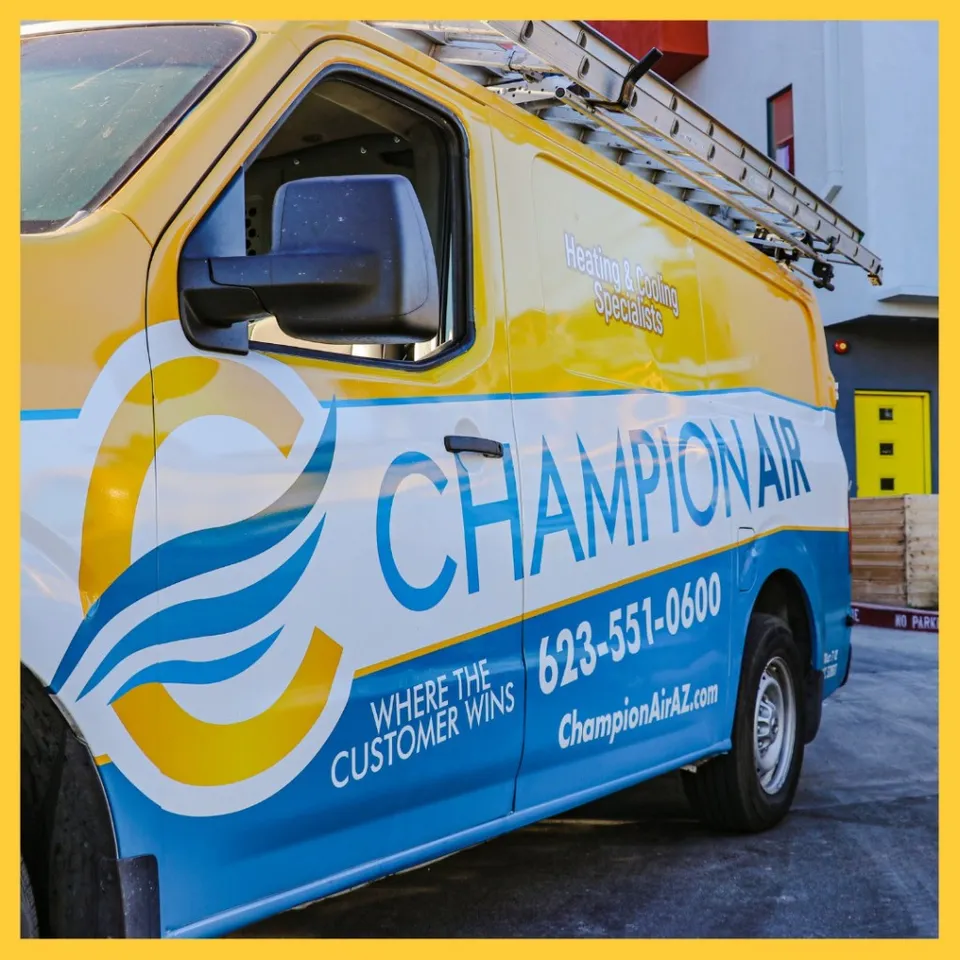
Furnace Repair & Service in Sun City, AZ
Professional HVAC service from Champion Air.
4.9★
Google Rating
1,000+
Reviews
Since 1982
Family owned
Dave Lennox
Award winner
24/7
Emergency service
Get Your AC Fixed Today
Same-day response · Transparent pricing · No pressure
- BBB A+ Rated
- Dave Lennox Award
- Licensed & Insured
- No Overtime Charges
- Pearl Certified
Is Your Sun City Furnace Refusing to Fire on the First Cold Morning?
Did you walk back into your Sun City home, hit the thermostat for the first time since spring, and hear nothing — or maybe a click, a faint whir, and then silence while the house keeps dropping past the setpoint? You do not need to be sold a brand-new system on a furnace that just needs a real diagnosis and a clean repair. The team at Champion Air is ready to figure out exactly what is wrong and get your heat running the way it should.
Common Furnace Repair Issues We See in Sun City Homes
Your Furnace Won't Light at All
The igniter is a small ceramic part that glows hot enough to light the burner every time the furnace calls for heat. After eight or nine months sitting idle in an attic that ran past 140 degrees all summer, that brittle ceramic frequently cracks the moment current flows through it again. Nine times out of ten, when a homeowner tells us the furnace "just clicks but never lights," a failed igniter is the cause. Letting the system keep trying to fire only stresses the gas valve and control board, which is how a quick part swap escalates into something more expensive.
Your Heat Came on Once and Then Quit
Many original Del Webb homes still have furnaces with flame sensors that go decades between cleanings. As the sensor builds a microscopic carbon film, it stops reading the burner flame correctly and the safety system shuts the furnace off after a few seconds — over and over, until you give up and call. A flame-sensor cleaning is a five-minute job for a technician with the right tools. Misdiagnosing this and replacing parts that do not need replacing is how repair calls turn into multiple visits.
The Furnace Is Louder Than It Used to Be
A new rumble, scrape, or persistent squeal coming from the indoor air handler usually means the blower motor is fighting bearing drag or a wheel that has gone out of balance. These furnaces sit untouched for most of the year, and dust drifts down onto blower wheels and motor housings whether the system runs or not. We measure the motor's current draw before assuming a noise is just old equipment. Sometimes a thorough cleaning solves it, and sometimes a worn motor is one short cycle away from seizing.
You Smell Gas or Burned-Dust Odors
A faint metallic or dusty smell on the first cycle of the season is normal. A persistent gas odor, a soot stain near the supply registers, or a smell that lingers room to room is not, and it warrants a real inspection of the heat exchanger and the burner assembly. When we find a cracked heat exchanger on a thirty-year-old furnace, we will tell you straight that repair is not the safe answer. That conversation deserves honesty about replacement cost rather than a patch that only buys a few months.
Your Heat Is Weak Even Though the Furnace Is Running
You hear the furnace fire, the blower kicks on, but the air coming through the registers feels barely warm. Most of the time the cause is upstream — a clogged filter starving the burner of return air, a slipped attic duct dumping heated air into the rafters, or a thermostat that has drifted out of calibration after twenty years on the wall. A quick airflow measurement at the return tells us within five minutes whether the issue is the filter, the ductwork, or the heat exchanger itself.
Why Furnace Systems Break Down in Our Desert Climate
Eight or Nine Months Sitting Idle Every Year
Out here a furnace runs hard maybe sixty days a year and sits quiet the rest of the time. That long stretch of silent attic storage in 130-plus-degree heat is harder on igniters, gas valves, and electronic boards than the actual cycling itself. Most of the failures we see in October are not from a busy heating season — they are from spring, summer, and early fall.
Original Del Webb Equipment That Has Outlived Its Design
The original housing stock was outfitted with builder-grade gas furnaces selected to meet 1960s heating standards on the lowest possible build cost. The components inside that cabinet were never engineered for five decades of attic-baked summers and short, hard winter cycles. Past the twenty-five-year mark, root-cause failures stack up faster than maintenance can catch them.
Desert Dust That Settles Where You Don't See It
Fine West Valley dust drifts onto blower wheels, flame sensors, and burner assemblies whether the system is running or not. A clean burner ignites smoothly and burns efficiently; a dust-coated burner runs cooler, less efficiently, and stresses the heat exchanger over time. The same logic applies to the indoor coil sitting downstream — it slows airflow before anyone notices a comfort problem.
A Single-Thermostat Layout That Cannot Balance the House
Most original Del Webb ranch homes were built with one thermostat and one duct trunk feeding every room. The moment a return is restricted, a duct connection slips, or the gas valve drifts on calibration, you get a back-bedroom cold spot that looks like a needs-more-heat complaint when the real issue is airflow or fuel mixture. Misdiagnosing this leads homeowners to spend money on equipment upgrades that never solve the actual problem.
What to Expect During Your Furnace Repair Visit
When you call Champion Air for furnace service, a NATE-certified technician comes to the door, listens to the symptoms you have noticed, and walks the equipment from gas service to indoor air handler before pulling a single tool. Most furnace repairs in older homes turn out to be a downstream consequence of an upstream airflow, fuel, or electrical issue, so we never assume the obvious part is the failure.
You receive a clear explanation in plain language, the failed part physically shown to you, and an upfront price before any work begins. Fixed-income retirees deserve straight answers, and we never push a replacement when a real repair is on the table.
How We Find What's Actually Wrong With Your Furnace
We measure the gas valve pressure, the inducer motor amp draw, the flame sensor signal, and the temperature rise across the heat exchanger before declaring a diagnosis. Those are the numbers that tell us what is actually happening — guessing based on age or what the unit sounds like is how repair calls come back two weeks later for a different symptom. Our trucks arrive stocked with the parts that fail most often on aging furnaces — igniters, flame sensors, gas valves, blower motor modules, and control boards — so most heating system repairs happen on the first visit.
Protecting Your Sun City Furnace From Future Breakdowns
The single highest-impact change most homeowners can make after a major repair is starting an annual heating-system service schedule. Catching a worn igniter early is a fast fix; finding out about it after the gas valve has already failed is a far bigger bill. Routine maintenance also keeps any active manufacturer warranty intact and gives our team a baseline measurement on your equipment.
What to Do Before You Restart Your Furnace After a Long Off-Season
If your home sat through a long warm season with the furnace untouched, do not just flip the thermostat to heat and hope for the best. We run a fall startup routine that inspects the heat exchanger for cracks, cleans the flame sensor and burner assembly, tests the gas valve, and confirms the safety circuits before signing off.
The Real Cost of Putting Off Furnace Repairs
In our climate, a small heating issue rarely stays small for long. A failing flame sensor that shuts the furnace off mid-cycle forces the gas valve and igniter through hundreds of extra restarts until those parts fail too, turning a five-minute fix into an expensive multi-part replacement. A cracked heat exchanger ignored long enough becomes a safety problem, not just a comfort one.
There is also the slower drain on the gas bill — a furnace running with a dust-coated burner, a drifted gas valve, or a struggling blower easily burns ten to fifteen percent more fuel than a clean unit. That waste is invisible until you compare year-over-year statements.
Schedule Your Sun City Furnace Repair Today
You do not need to wait for the next failure to plan your next move. Whether your furnace is making noise it never used to make, the back bedrooms refuse to keep up with the thermostat, or you just walked back into a home that sat empty all summer, our local technicians bring the diagnostic tools and Del Webb-specific experience to fix the actual problem the first time. Reach out to Champion Air today to schedule your furnace repair visit and let our team get your heat running the way it should.
Ready to book your visit?
Related Services In This Area
View areaAreas We Serve
All Service AreasWhy Choose Us
- Licensed, Bonded & Insured
- Upfront, Honest Pricing
- 100% Satisfaction Guarantee
- Same-Day Service Available
- Certified Lennox Premier Dealer
More Services
Related Services
Need a different service?
Ready to Get Started?
Contact us today for a free estimate on your Furnace Repair & Service in Sun City, AZ needs.