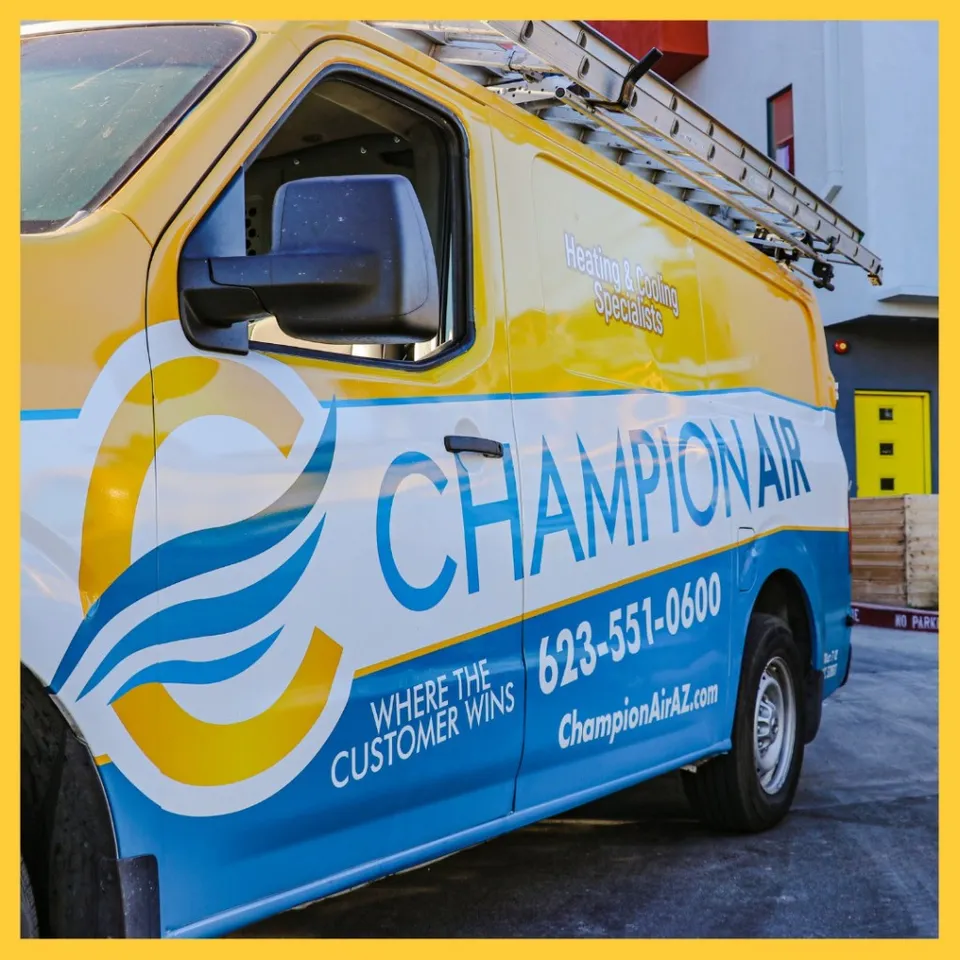
Mini-Split Repair & Service in Fountain Hills, AZ
Professional HVAC service from Champion Air.
4.9★
Google Rating
1,000+
Reviews
Since 1982
Family owned
Dave Lennox
Award winner
24/7
Emergency service
Get Your AC Fixed Today
Same-day response · Transparent pricing · No pressure
- BBB A+ Rated
- Dave Lennox Award
- Licensed & Insured
- No Overtime Charges
- Pearl Certified
Did You Walk Out to the Fountain Hills Casita and Realize Nothing Is Cooling at All?
Did the indoor head over the guest suite freeze solid the moment your in-laws checked in, the pool house mini-split go silent on the hottest week of the year, or the workshop unit start blowing room-temperature air on a Fountain Hills property? Champion Air diagnoses the actual mini-split fault — frozen coil, line-set leak, condensate pump failure, or charge drift on a long line set — and explains it in plain language without pushing a replacement when an honest repair will do. Reach out today to schedule expert mini-split repair with our local team.
Common Mini-Split Repair Issues We See in Fountain Hills Homes
The Indoor Head Has Frozen Solid
A mini-split indoor head encrusted in ice usually means the coil is running cold for too long against insufficient airflow, and the most common root cause is a clogged filter or a fan motor running below spec. The unit looks like it is working — the lights are on, the controller is calling for cooling — but the air leaving the head is actually room-temperature or worse. Letting the freeze-up cycle continue stresses the compressor on the outdoor unit and risks pushing liquid refrigerant back through the line set. We thaw the head completely, then confirm whether the underlying cause is filter, blower, refrigerant charge, or static pressure restriction at the room itself.
The Outdoor Compressor Has Stopped Running
If the indoor head is calling and the outdoor compressor on the casita pad has gone silent, the cause is usually electrical: a swollen capacitor, a pitted contactor, or a board failure on a unit that has been baking on a sun-exposed pad for years. From years of working in Fountain Hills custom homes, we know that mini-split compressors on south-facing pads age noticeably faster than the same units in shaded locations. A capacitor swap on its own is a fast repair. Letting the contactor pit further or the compressor strain against a failing start component is how a fast repair turns into a full unit replacement.
Cooling Has Slowly Gotten Weaker on a Long Line Set
Mini-split installations connecting a detached casita or pool house to an outdoor compressor a hundred or more feet away depend on precise refrigerant charge specification on the original install, and any micro-leak at a flare connection or line-set penetration drifts that charge over time. The first symptom is usually a unit that runs longer for the same comfort, then registers blowing air that is warmer than it used to be. The problem is rarely the head and rarely the compressor — it is almost always the line set. We pressure-test the line, locate the leak, repair the connection, and recharge the system to manufacturer spec against measured line-set length.
Water Is Pooling Below the Indoor Head
If you see water staining on the wall under the indoor head or a damp patch on the floor below it, the condensate path has backed up. The internal condensate pump on a wall-mounted mini-split eventually fails, the gravity drain through the wall penetration can clog with biofilm or dust, and the indoor head's safety float kicks the unit off when the pan fills. We clear the line, replace the pump if needed, and confirm the safety float will actually shut the system down if the path clogs again.
The Casita Hasn't Worked Right Since You Bought the House
Inherited mini-split installations frequently show up with a refrigerant charge that was never properly weighed in, a line set that was kinked at installation, or a wall penetration that was never properly sleeved. We frequently see secondary-structure mini-splits that have been quietly underperforming since the original homeowner accepted the install years before the property changed hands. A diagnostic visit to a poorly performing inherited unit usually finds an installation issue from years ago, not a recent failure.
Why Mini-Splits Fail in Our Desert Climate
Your Outdoor Compressor Sits in Direct Sun All Day
Mini-split outdoor compressors sitting on a south-facing pad face the same accumulated thermal load every other piece of HVAC equipment on the property does. Cabinet temperatures inside those condensers regularly run twenty to thirty degrees above ambient, and the small electrical components inside age much faster than nominal lifespan implies. Capacitors swell, contactors pit, and compressor windings accumulate heat fatigue that no field repair can undo.
Your Line Set Runs Long and Has More Failure Points
A casita line set running a hundred or more feet from the indoor head to the outdoor compressor passes through a wall penetration, a sleeve, or a soffit on its way out. Each of those pass-through points is a future leak location: building movement, sun exposure, and the original install quality determine how long the seal holds. Once a leak opens up, the refrigerant charge drifts and the unit starts running long for the same comfort.
The Casita Doesn't Get the Attention the Main House Does
The biggest functional reason mini-splits fail prematurely on premium properties is exactly the reason they got installed in the first place: the secondary structure is not the main house, and the homeowner spends much less time inside it. Filters go six months past their replacement window, capacitor wear goes unnoticed, and a slow refrigerant leak develops into a full charge drift before anyone notices the unit is no longer keeping up.
Your Casita Got a Builder-Grade Unit That Was Undersized
Some original casita installs went in with builder-grade mini-splits sized to a square-foot rule rather than the cubic-foot reality of a vaulted-ceiling pool house or a high-ceiling garage conversion. Those units run continuously through summer, age fast, and often need full replacement after seven or eight years instead of the twelve-to-fifteen-year run a properly sized inverter unit delivers.
What to Expect During Your Mini-Split Repair Visit
When we arrive, a NATE-certified Champion Air technician walks through every secondary structure on the property where a mini-split is in service, listens to the symptoms you have actually noticed, and inspects the indoor head, the line set, and the outdoor compressor before pulling a single tool. Most mini-split issues turn out to be the downstream consequence of an upstream airflow, refrigerant, or electrical fault, so we never assume the obvious symptom is the failure.
You receive a clear explanation in plain language, the failed component physically shown to you when accessible, and an upfront price before any work begins. We never push replacement when a real repair is on the table.
How We Find What's Actually Wrong
We measure airflow at the indoor head, refrigerant pressure at the outdoor compressor, capacitor microfarad, and current draw on the compressor and indoor blower before declaring a diagnosis. Those are the numbers that tell us what is actually happening — guessing based on age or how loud the unit sounds is how mini-split repair calls come back two weeks later for a different symptom. Our trucks arrive stocked with the parts that fail most often on these systems — capacitors, contactors, condensate pumps, indoor head fan motors, and line-set repair components — so most repairs happen on the first visit.
Protecting Every Secondary Structure on Your Property
The single highest-impact change most homeowners can make after a mini-split repair is starting an annual maintenance and tune-up schedule on every mini-split on the property. Routine filter cleaning, line-set inspection, capacitor testing, and condensate pump checks catch small failures before they cascade into the breakdowns that strand a casita or a pool house at the worst possible moment.
When the Casita Repair Reveals a Bigger Problem
Sometimes a mini-split repair visit uncovers a unit that has been out of spec since the day it was installed — wrong size, undercharged from day one, or routed through a line-set path that was always going to fail. We will tell you straight when an inherited install is past saving, walk you through your replacement options without pressure, and make sure the next install actually performs the way the manufacturer rated it.
The Real Cost of Putting Off Mini-Split Repairs
In our climate, a small mini-split issue rarely stays small for long. Running a unit with a swollen capacitor forces the compressor to strain itself every start cycle until it burns out for good, turning a fast electrical fix into the most expensive component replacement on the unit. A clogged condensate path that nobody clears eventually overflows the indoor head and stains the wall finish below it.
There is also the slower drain on the comfort side. A mini-split running with a slow refrigerant leak underperforms continuously, so the casita never quite reaches setpoint and the household quietly stops using the space. By the time the failure is obvious, the room has been off the usable list for months.
Schedule Your Fountain Hills Mini-Split Repair Today
You do not need to wait for the next failure to plan your next move. Whether the indoor head has frozen solid, the outdoor compressor has gone silent, or the casita has slowly gotten warmer over the last six months, our local technicians bring the diagnostic tools and secondary-structure experience to fix the actual problem the first time. Reach out to Champion Air today to schedule your mini-split repair visit and let our team get every secondary structure on your property cooling the way it should.
Ready to book your visit?
Related Services In This Area
View areaAreas We Serve
All Service AreasWhy Choose Us
- Licensed, Bonded & Insured
- Upfront, Honest Pricing
- 100% Satisfaction Guarantee
- Same-Day Service Available
- Certified Lennox Premier Dealer
More Services
Related Services
Need a different service?
Ready to Get Started?
Contact us today for a free estimate on your Mini-Split Repair & Service in Fountain Hills, AZ needs.