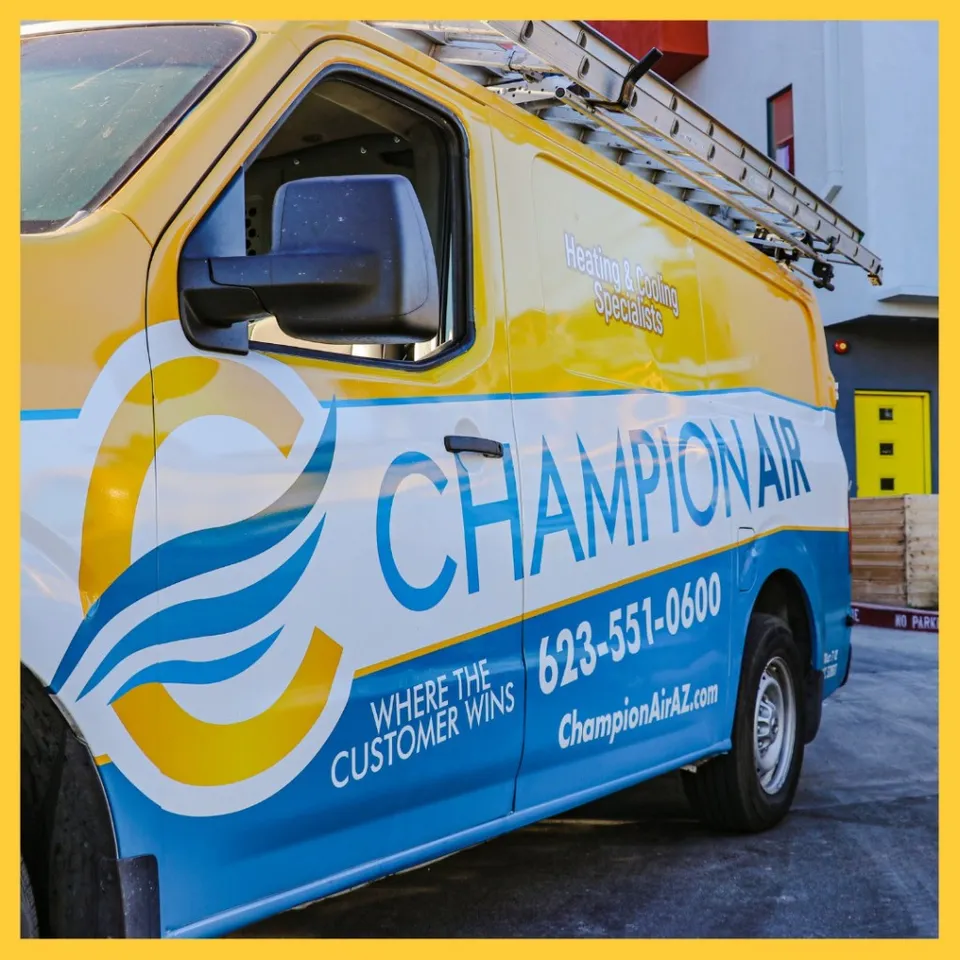
Furnace Repair & Service in Fountain Hills, AZ
Professional HVAC service from Champion Air.
4.9★
Google Rating
1,000+
Reviews
Since 1982
Family owned
Dave Lennox
Award winner
24/7
Emergency service
Get Your AC Fixed Today
Same-day response · Transparent pricing · No pressure
- BBB A+ Rated
- Dave Lennox Award
- Licensed & Insured
- No Overtime Charges
- Pearl Certified
Did Your Fountain Hills Furnace Refuse to Fire on the First Cold Snap of the Year?
Did you flip the thermostat to heat for the first time in months and hear nothing kick on, watch the great-room loft hold thirty degrees colder than the ground floor on a 38-degree morning, or get woken up by the system cycling every five minutes without ever holding setpoint? You don't need a sales pitch about replacing the whole system — you need a technician who will actually find the failure and fix it the first time. The team at Champion Air is ready to diagnose the root cause and get your Fountain Hills heat back on track.
Common Furnace Repair Issues We See in Fountain Hills Homes
Your Furnace Won't Fire When You Hit the Thermostat
Custom homes here often go six or eight months without calling on the furnace, and that long idle stretch is when small problems quietly stack up. Igniters develop fine cracks, electronic ignition boards lose stored settings, and dust accumulates on flame sensors until the system simply refuses to light when you finally need it. We test the igniter, the flame sensor, the gas valve, and the ignition board in sequence — that's how we find the actual failure point instead of swapping parts at random and hoping one of them works.
Your Furnace Cycles On and Off Every Few Minutes
If the furnace fires, runs for two or three minutes, then shuts down before warming the house — and repeats that loop all night — the underlying cause is usually a short-cycling fault rooted in a dirty flame sensor, a heat exchanger temperature limit being reached, or restricted return air starving the burner. On custom multi-zone systems, a stuck damper that closes too much of the trunk creates the same problem. Diagnosing this means a manometer on the trunk, a temperature read at the supply plenum, and a careful inspection of the flame sensor before any parts get replaced.
Your Vaulted Great Room Just Won't Warm Up
When the great-room loft holds eight or ten degrees colder than the floor on cold mornings, or one wing of the house never reaches setpoint while another runs warm, the issue is rarely the furnace alone. Custom return-air paths frequently weren't perfectly sized at install, and a stuck damper actuator buried in a chase wall can pull whole-house static pressure out of balance until heat distribution falls apart. We map every zone, watch damper position under live calls, and check supply temperatures room by room before declaring the furnace is the actual fault.
Strange Noises Are Coming From the Air Handler
A noticeable rumble, a faint grinding, or a high-pitched squeal from the indoor air handler usually means the blower motor or its bearings are working harder than they should. On variable-speed blower motors common in custom-home installations, control board faults can also produce odd cycling sounds that mimic mechanical failure. We measure blower amperage against nameplate, listen for the specific signature of bearing drag versus dirty wheel imbalance, and pull control board fault codes — that's how a noise complaint becomes a real diagnosis instead of a guess.
The Air From Your Vents Smells Wrong
A dusty smell on first start is normal after a long idle stretch, but a persistent burning, metallic, or chemical odor as the system runs warrants real attention. Cracked heat exchangers, scorched control board components, and accumulated debris on the burner assembly all produce distinct smells a trained technician can identify. If the inspection shows a heat exchanger has begun to fail, we explain the safety implications in plain language and walk you through replacement options without high-pressure tactics.
Why Furnaces Develop Problems in Custom Hillside Homes
Long Idle Stretches Hide Slow Failures
A furnace that sits unused from April through October has plenty of time to accumulate dust on the flame sensor, settle moisture in the burner compartment, and let small electronic faults go unnoticed. By the time the first cold morning calls on the system, those issues compound into a no-start condition that surprises homeowners. This is why annual pre-cold-snap maintenance catches the small failures before they become a no-heat call on the wrong morning.
Foothill Elevation Affects Combustion Performance
Hillside lots in Fountain Hills sit at noticeably higher elevations than the central Phoenix valley, and that elevation does affect combustion air requirements on gas furnaces. Furnaces installed without the manufacturer's altitude derate adjustment run lean, which produces incomplete combustion patterns, scorched components, and shortened heat exchanger life. Confirming the gas pressure, combustion analysis, and altitude adjustment is part of any honest diagnostic on equipment in this area.
Custom Multi-Zone Systems Have More Failure Points
Three- to five-zone heating systems live or die on damper actuators and zone control boards, and any one of those small parts failing throws the rest of the system out of balance. A stuck damper does not just affect its own zone — it loads up the rest of the system with extra static pressure until the blower struggles, the heat exchanger high-limits, and the furnace short-cycles. Reading the existing zoning logic and confirming damper position under live calls is the difference between fixing the symptom and fixing the cause.
Variable-Speed Blower Boards Drift on Premium Equipment
Variable-speed blower motors common in premium custom-home furnaces rely on electronic control boards that send precise PWM signals to the motor. Over time those boards develop drift, capacitor failures, and signal issues that present as oddly-timed cycling, blower speed mismatches, or intermittent no-start conditions. Diagnosing a control board issue means reading the actual signal output, not just swapping parts and hoping the new one resolves the symptom.
What to Expect During Your Furnace Repair Visit
When we arrive, a NATE-certified Champion Air technician comes to the door, listens to the symptoms you have noticed, and walks the equipment from gas meter through the air handler before pulling a single tool. Most furnace problems in custom homes turn out to be a downstream consequence of an upstream airflow, ignition, or zoning issue, so we never assume the obvious symptom is the actual failure.
You receive a clear explanation in plain language, the failed part physically shown to you, and an upfront price before any work begins. Custom Fountain Hills homes deserve the same straight answers as anyone else paying for HVAC service, and we never push replacement when a real repair is on the table.
How We Find What's Actually Wrong With Your Furnace
We measure gas pressure at the manifold, blower amperage versus nameplate, supply and return static pressure at the air handler, and combustion analysis at the flue before declaring a diagnosis. On multi-zone systems we also confirm damper position under live calls and read the zone control board for fault history. Our trucks arrive stocked with the parts that fail most often on premium custom equipment — igniters, flame sensors, gas valves, induced-draft motor assemblies, ignition control boards, and common blower motor modules — so most furnace repairs happen on the first visit.
Protecting Your Heating System From Future Breakdowns
The single highest-impact change most homeowners can make after a major repair is starting an annual maintenance schedule that catches the small failures before they cascade into the breakdowns that strand you on a cold morning.
Pair Heating Service With Cooling Service Annually
Custom multi-zone systems share a blower, an air handler, and most of their ductwork between heating and cooling modes, which means a thoughtful service plan covers both sides of the equipment. Many homeowners pair an autumn furnace tune-up with a spring AC tune-up so every component on every zone gets documented and tested at least once a year.
The Real Cost of Putting Off Furnace Repairs
Running a furnace with a marginal igniter, a degraded flame sensor, or a slightly cracked heat exchanger forces every other component to work harder until something else fails — turning a small electrical fix into a major component replacement. There is also the slower drag on your APS or SRP utility bill, where a unit cycling poorly because of a control board drift can quietly burn through fifteen or twenty percent more energy than a healthy system.
The bigger concern is safety. A cracked heat exchanger introduces combustion byproducts into supply air, and the longer that condition exists the more risk it carries for the people in the home.
Schedule Your Fountain Hills Furnace Repair Today
Whether your system refuses to fire on the first cold morning, the great-room loft never quite warms up, or one zone runs cold while another bakes, our local technicians bring the diagnostic tools and custom-home experience to fix the actual problem the first time. Reach out to Champion Air today to schedule your furnace repair visit, and let our team get every cabinet and zone on your property heating the way it should.
Ready to book your visit?
Related Services In This Area
View areaAreas We Serve
All Service AreasWhy Choose Us
- Licensed, Bonded & Insured
- Upfront, Honest Pricing
- 100% Satisfaction Guarantee
- Same-Day Service Available
- Certified Lennox Premier Dealer
More Services
Related Services
Need a different service?
Ready to Get Started?
Contact us today for a free estimate on your Furnace Repair & Service in Fountain Hills, AZ needs.