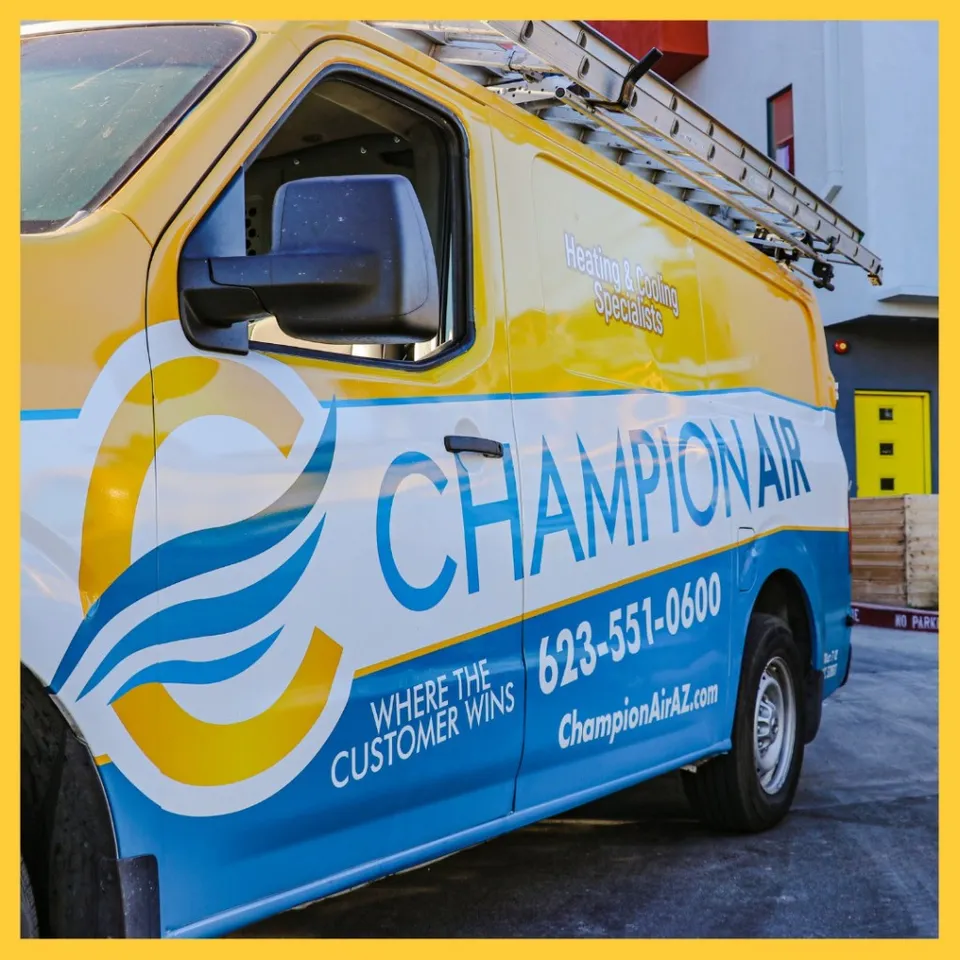
Heat Pump Repair & Service in Fountain Hills, AZ
Professional HVAC service from Champion Air.
4.9★
Google Rating
1,000+
Reviews
Since 1982
Family owned
Dave Lennox
Award winner
24/7
Emergency service
Get Your AC Fixed Today
Same-day response · Transparent pricing · No pressure
- BBB A+ Rated
- Dave Lennox Award
- Licensed & Insured
- No Overtime Charges
- Pearl Certified
Is Your Fountain Hills Heat Pump Cooling Fine but Refusing to Heat When You Need It?
Did you flip the thermostat to heat on the first cold morning and find the system blowing cool air no matter how long it ran, hear an unfamiliar clunk from the outdoor cabinet just as the unit tried to switch modes, or watch one zone of your custom home stay stuck below setpoint while the others adjust normally? You don't need a sales pitch about replacing the whole system — you need a technician who will actually find the failure and fix it the first time. The team at Champion Air is ready to diagnose the root cause and get your Fountain Hills heat pump back on track.
Common Heat Pump Repair Issues We See in Fountain Hills Homes
Your Heat Pump Won't Switch From Cooling to Heating
The reversing valve inside the outdoor cabinet is the part that flips refrigerant flow direction between cooling and heating modes, and after years of sitting in cooling-only mode it can hesitate, stall, or fail to fully reposition when the seasons turn. Homeowners hear this as a clunk followed by air that never quite gets warm. We test the solenoid coil, measure the pressure differential across the valve under load, and confirm whether the mechanical valve body itself is stuck — that's how we tell a valve issue apart from a refrigerant charge problem that mimics it.
Your System Is Stuck in Defrost or Won't Defrost at All
On cold-snap mornings here, the outdoor coil ices over while the heat pump pulls heat out of cold air, and the system is supposed to cycle into a brief defrost mode to clear that ice. When the defrost cycle stalls — running too long, never engaging, or kicking back into cooling instead of heating — the entire heating output collapses. Diagnosing this means watching the defrost board signals under live conditions, confirming sensor readings, and checking whether the auxiliary heat strips are actually staging in to cover the defrost interval the way they should.
One Zone Just Stopped Producing Heat
Custom multi-zone heat pump systems share one outdoor unit and one indoor air handler across three to five dampered zones, and a single failing actuator or zone control board can leave one wing of the house cold while the rest holds setpoint. Homeowners often blame the thermostat first when the actual fault is a fifteen-dollar motor on a damper buried in a chase wall. We map every zone, watch damper position under live calls, and check supply temperatures room by room before declaring any individual component is the actual fault.
The Outdoor Unit Is Making Noise It Never Used To
A new clunk, grind, or persistent buzz from the outdoor cabinet usually traces to a worn capacitor, a contactor with pitted points, a fan motor with bearing drag, or a compressor showing early signs of mechanical fatigue. On premium custom equipment, those failure patterns each have a distinct signature. We measure capacitor microfarad rating, contactor condition, fan motor amperage, and compressor amp draw against nameplate — that's how a noise complaint becomes a real diagnosis instead of a parts-cannon repair.
Your Heating Output Has Slowly Gotten Weaker
When the same thermostat setting is producing slightly less warm air this winter than last, the most common cause is a slow refrigerant leak, an auxiliary heat strip that has failed silently, or a degraded outdoor cabinet that no longer extracts as much heat from cold air. Custom homes here often have long line sets running through chase walls, which adds more potential leak points than a typical tract layout. Catching the drift during a service visit means a small repair instead of waiting for the full breakdown that follows.
Why Heat Pumps Develop Problems in Custom Hillside Homes
Sun-Baked Equipment Pads Cook Components Faster Here
South- and west-facing equipment pads on hillside lots take six to nine hours of direct sun a day, year after year, and the cabinet temperatures inside heat pump condensers regularly run twenty to thirty degrees above ambient. Reversing valves, capacitors, contactors, and compressor windings all wear faster under that sustained thermal load. This is a steady mechanical wear pattern, not a calendar event, and it shows up faster on hillside lots than it does in shaded inland neighborhoods.
Multi-Zone Heat Pumps Use Parts That Aren't Interchangeable
A common frustration with custom multi-zone heat pump repairs is that parts substitutions are not interchangeable with standard residential AC equipment. Zone control boards, damper actuators, communicating thermostats, and inverter-driven outdoor boards are matched components, and a generic substitute often produces fault codes the system cannot recover from. Reading the existing wiring schematic and sourcing the manufacturer-specified component is the difference between a real repair and a callback two weeks later.
Defrost Logic Stresses Equipment Differently Than Cooling Alone
Heat pumps pull duty cycles in both directions year-round, and the defrost cycle in heating mode introduces its own thermal and pressure stresses. Reversing valves see more state changes, the compressor pumps in both directions, and the outdoor coil cycles through ice formation and melt repeatedly through cold-snap mornings. Documenting refrigerant pressure on both lines, superheat and subcooling under load, and reversing valve operation is the only way to confirm a heat pump is healthy in both modes, not just one.
Long Line Sets Develop Slow Leaks Over Time
Custom-built homes routinely run refrigerant line sets across vaulted soffits, through chase walls, and along the exterior of two-story facades to reach equipment pads on the opposite side of the property. Every joint and bend is a potential micro-leak point, and pinpointing the actual leak rather than recharging blindly is the only way to stop the cycle of disappearing refrigerant.
What to Expect During Your Heat Pump Repair Visit
When we arrive, a NATE-certified Champion Air technician comes to the door, listens to the symptoms you have noticed, and walks every outdoor cabinet on the property before pulling a single tool. Most heat pump problems in custom homes turn out to be a downstream consequence of an upstream airflow, refrigerant, zoning, or defrost-logic issue, so we never assume the obvious symptom is the actual failure.
You receive a clear explanation in plain language, the failed part physically shown to you, and an upfront price before any work begins. Custom Fountain Hills properties deserve the same straight answers as anyone else paying for HVAC service, and we never push replacement when a real repair is on the table.
How We Find What's Actually Wrong With Your Heat Pump
We measure airflow at the registers, refrigerant pressure on both suction and liquid lines, the electrical health of every capacitor, and the current draw on every compressor and blower before declaring a diagnosis. We confirm reversing valve operation by manually triggering a mode change, watch the defrost board signals under live conditions, and read the zone control board for fault history. Our trucks arrive stocked with the parts that fail most often on premium heat pump equipment — capacitors, contactors, reversing valve solenoid coils, defrost boards, fan motors, damper actuators, and common control modules — so most heat pump repairs happen on the first visit.
Protecting Your Heat Pump From Future Breakdowns
The single highest-impact change most homeowners can make after a major heat pump repair is starting a twice-yearly maintenance schedule that covers both cooling and heating performance. A heat pump runs duty cycles in both directions, so a single annual visit only catches half the operating reality.
Don't Forget the Casita and the Pool House
Detached casitas, guest houses, and pool houses on these properties almost always run on independent mini-split heat pumps that get neglected because they aren't the main house. A property walkthrough catches indoor head freeze-ups, line set leaks, and reversing valve issues on those secondary systems while they are still small.
The Real Cost of Putting Off Heat Pump Repairs
Running a heat pump with a marginal reversing valve, a stalling defrost cycle, or a slow refrigerant leak forces every other component to work harder until something else fails — turning a fast electrical fix into the most expensive component replacement possible. There is also the slower drag on your APS or SRP utility bill, where a heat pump leaning on auxiliary heat strips because the outdoor unit has lost capacity can easily burn fifty percent more electricity than a healthy system.
A compressor that fails silently in summer leaves you without cooling on a 110-degree afternoon, and the same component failing in winter leaves you running on resistance heat strips alone — which is the most expensive way a heat pump can produce warm air.
Schedule Your Fountain Hills Heat Pump Repair Today
Whether your system refuses to switch into heating mode, the defrost cycle keeps stalling, or one zone of your custom home has stopped responding to the thermostat, our local technicians bring the multi-zone diagnostic experience to fix the actual problem the first time. Reach out to Champion Air today to schedule your heat pump repair visit, and let our team get every cabinet and zone on your property running the way it should in both modes.
Ready to book your visit?
Related Services In This Area
View areaAreas We Serve
All Service AreasWhy Choose Us
- Licensed, Bonded & Insured
- Upfront, Honest Pricing
- 100% Satisfaction Guarantee
- Same-Day Service Available
- Certified Lennox Premier Dealer
More Services
Related Services
Need a different service?
Ready to Get Started?
Contact us today for a free estimate on your Heat Pump Repair & Service in Fountain Hills, AZ needs.