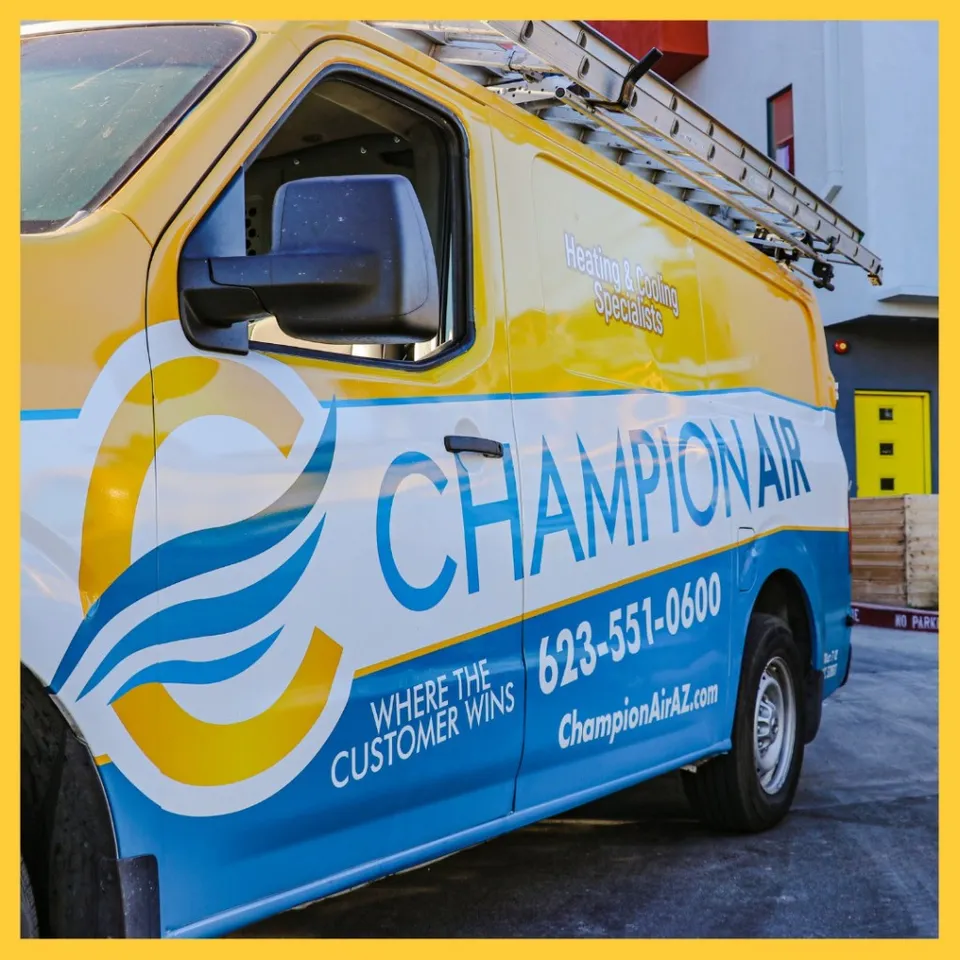
AC Repair & Service in Fountain Hills, AZ
Professional HVAC service from Champion Air.
4.9★
Google Rating
1,000+
Reviews
Since 1982
Family owned
Dave Lennox
Award winner
24/7
Emergency service
Get Your AC Fixed Today
Same-day response · Transparent pricing · No pressure
- BBB A+ Rated
- Dave Lennox Award
- Licensed & Insured
- No Overtime Charges
- Pearl Certified
Is One Zone of Your Fountain Hills Home Suddenly Refusing to Cool?
Did you walk into your great room and find one zone holding fine while the back wing climbs past 80, hear a deep buzz from one of the south-facing condensers that wasn't there a week ago, or watch the loft of your vaulted ceiling drift ten degrees above the floor on a 108-degree afternoon? You don't need a sales pitch about replacing the whole system — you need a technician who will actually find the failure on the right cabinet and fix it the first time. The team at Champion Air is ready to diagnose the root cause and get your Fountain Hills cooling back on track.
Common AC Repair Issues We See in Fountain Hills Homes
One Zone Stopped Cooling While the Rest Runs Fine
Custom multi-zone properties here typically run two, three, or even four condensers feeding different wings, and a single failing cabinet will leave one zone of the house warm while every other room reads normal. Homeowners often blame the thermostat first, but nine times out of ten the actual fault is one tired condenser, one dragging blower motor, or one stuck damper deeper in a chase wall. We map every cabinet on the property before declaring a diagnosis, because chasing the loudest unit when the failure is on the quiet one is how repair calls come back two weeks later for a different symptom.
Your AC Won't Start When You Hit the Thermostat
The capacitor inside the outdoor cabinet gives the fan motor and compressor the jolt they need to start, and on south- or west-facing equipment pads here it bakes inside metal at twenty to thirty degrees above ambient for hours every day. Once it loses microfarad rating, the motors hum but never spin up — that classic "buzz but no kick" homeowners describe when they call us out. Letting it limp along forces the compressor to strain itself every start cycle, which is how a fast electrical fix turns into a far more expensive compressor replacement on premium equipment.
Your Cooling Has Slowly Gotten Weaker
When the same thermostat setting is keeping your house just a little warmer this summer than last, the most common cause is a slow refrigerant leak at one of the brazed coil joints or a long line set running through a hot attic. Custom multi-zone systems with line sets crossing vaulted soffits and chase walls have more potential leak points than a single-condenser tract home. We use electronic detection equipment to pinpoint the source, then walk you through the honest comparison between a coil-level repair, a line-set repair, or a recharge with the appropriate refrigerant for the equipment.
One Room Is Sweltering While Others Are Comfortable
If a vaulted-ceiling great room runs sixty at the floor and ninety at the loft, or if a clerestory-fed room stays warm no matter what the thermostat says, the issue is rarely the equipment alone. Custom return-air paths frequently weren't sized perfectly at install, and a stuck damper in a multi-zone system can pull whole-house static pressure out of balance until one room loses airflow entirely. Diagnosing this means a manometer on the trunk, a damper-position check at the actuator, and supply-temperature reads at every register — not a refrigerant top-off and a guess.
Water Is Pooling Where It Shouldn't
When monsoon humidity spikes, your indoor coil produces gallons of water per day, and fine attic dust drifting through the air handler clogs drain lines that have worked fine for ten years. The pan overflows, the safety float kicks the system off, and you find out about the problem when one zone suddenly stops cooling and a stain appears on the ceiling. If the same line has clogged twice on the same air handler, we recommend a relocated trap or a secondary safety pan to keep your custom interior dry the next time.
Why AC Systems Break Down in Our Desert Climate
Sun-Baked Equipment Pads Cook Components Faster Here
South- and west-facing equipment pads on hillside lots take six to nine hours of direct sun a day, year after year, and the cabinet temperatures inside those condensers regularly run twenty to thirty degrees above ambient. Capacitors swell and lose microfarad rating long before their nominal life, and contactor points pit and arc under sustained high-current loads. This is a steady mechanical wear pattern, not a calendar event, and it shows up faster on hillside lots than it does in shaded inland neighborhoods of Maricopa County.
Custom Multi-Zone Systems Have More Moving Parts
Three- to five-zone systems live or die on damper actuators, zone control boards, and balanced return-air paths, and any one of those small parts failing throws the rest of the system out of equilibrium. Static pressure climbs, the blower motor overworks, the supply trunk whistles, and one room runs warm while another runs cold — all from a fifteen-dollar actuator buried in a chase wall. Reading the existing zoning logic, mapping which zones call together, and watching damper position under live load is the difference between a real diagnosis and a parts-cannon repair that doesn't hold.
Tile Roof and Heavy Stucco Hold Heat Past Sundown
Hillside lots radiate stored heat well past sundown, and a system already wrestling with a worn capacitor or a low refrigerant charge has to keep running into the night just to catch up. The tile-roof and stucco-wall thermal mass that gives these homes their architectural character forces equipment to operate at full load far longer than tract layouts ever require, and that extended duty cycle is how small mechanical issues escalate fast.
Long Line Sets and Custom Refrigerant Routing
Custom-built homes routinely run refrigerant line sets across vaulted soffits, through chase walls, and along the exterior of two-story facades to reach equipment pads on the opposite side of the property. Every joint and bend over those distances is a potential micro-leak point, and pinpointing the actual leak rather than recharging blindly is the only way to stop the cycle of disappearing refrigerant.
What to Expect During Your AC Repair Visit
When we arrive, a NATE-certified Champion Air technician comes to the door, listens to the symptoms you have noticed, and walks every outdoor cabinet on the property before pulling a single tool. Most repairs in custom multi-zone homes turn out to be a downstream consequence of an upstream airflow, refrigerant, or zoning issue, so we never assume the loudest cabinet is the failing one.
You receive a clear explanation in plain language, the failed part physically shown to you, and an upfront price before any work begins. Custom Fountain Hills properties deserve the same straight answers as anyone else paying for HVAC service, and we never push replacement when a real repair is on the table.
How We Find What's Actually Wrong With Your AC
We measure airflow at the registers, refrigerant pressure at every outdoor unit, the electrical health of every capacitor, and the current draw on every compressor and blower before declaring a diagnosis. On multi-zone systems we also confirm damper position under live calls and read the zone control board for fault history. Our trucks arrive stocked with the parts that fail most often on custom premium equipment — capacitors, contactors, fan motors, damper actuators, condensate pumps, and common blower motor modules — so most cooling system repairs happen on the first visit.
Protecting Your AC System From Future Breakdowns
The single highest-impact change most homeowners can make after a major repair is starting an annual maintenance and tune-up schedule that tracks every condenser on the property, not just the loudest one. Catching a weak capacitor or a contactor with pitted points early is a quick repair; finding out about it after the compressor has already burned out is a multi-thousand-dollar component replacement.
Don't Forget the Casita and the Pool House
Detached casitas, guest houses, and pool houses on these properties almost always run on independent mini-split systems that get neglected because they aren't the main house. A property walkthrough catches indoor head freeze-ups and line set leaks while they are still small, before a refrigerant leak runs the line set dry and the indoor unit ices over completely.
The Real Cost of Putting Off AC Repairs
In our climate, a small AC issue rarely stays small for long. Running a system with a swollen capacitor forces the compressor to strain itself every start cycle until it burns out for good, turning a fast electrical fix into the most expensive component replacement possible. A clogged drain line that keeps dripping into an overflow pan eventually warps drywall, stains custom ceilings, and rots baseboards in ways no insurance claim covers cleanly.
There is also the slower drain on your APS or SRP utility bill — a multi-zone system limping along with a low refrigerant charge, dirty coils, or a struggling blower can easily burn 25 to 30 percent more electricity than a healthy system, and that waste compounds across two or three condensers on the same property.
Schedule Your Fountain Hills AC Repair Today
Whether one zone has stopped cooling while the others run fine, an outdoor cabinet is making noise it never used to make, or you walked back into a custom home and the great room just won't hold setpoint, our local technicians bring the multi-zone diagnostic experience to fix the actual problem the first time. Reach out to Champion Air today to schedule your AC repair visit, and let our team get every cabinet and zone on your property back in balance.
Ready to book your visit?
Related Services In This Area
View areaAreas We Serve
All Service AreasWhy Choose Us
- Licensed, Bonded & Insured
- Upfront, Honest Pricing
- 100% Satisfaction Guarantee
- Same-Day Service Available
- Certified Lennox Premier Dealer
More Services
Related Services
Need a different service?
Ready to Get Started?
Contact us today for a free estimate on your AC Repair & Service in Fountain Hills, AZ needs.