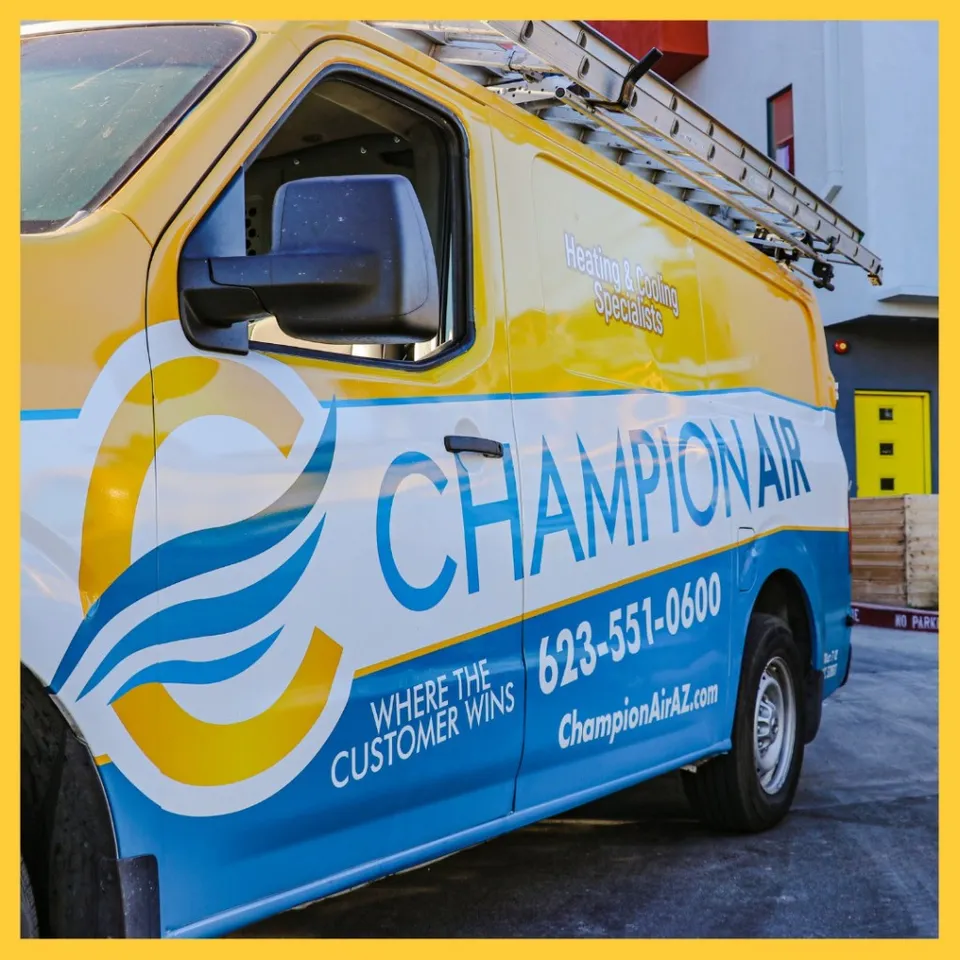
AC Installation & Replacement in Fountain Hills, AZ
Professional HVAC service from Champion Air.
4.9★
Google Rating
1,000+
Reviews
Since 1982
Family owned
Dave Lennox
Award winner
24/7
Emergency service
Get Your AC Fixed Today
Same-day response · Transparent pricing · No pressure
- BBB A+ Rated
- Dave Lennox Award
- Licensed & Insured
- No Overtime Charges
- Pearl Certified
Is Your Custom Fountain Hills AC Finally Past the Point of One More Repair?
Are two of your three outdoor condensers showing their age all at once, is the great-room loft running ten degrees hotter than the floor no matter where you set the thermostat, or do your APS bills climb every summer while one zone never reaches setpoint? When repair after repair stops making sense on a custom multi-zone system, a properly designed full replacement is the cleaner path forward — and it deserves an honest assessment instead of a hard sell. The team at Champion Air is ready to walk you through your replacement options for your Fountain Hills home.
Key Signs Your Air Conditioning System Is Ready for Replacement
One or More of Your Condensers Has Crossed Twelve Years
Custom hillside homes here often run two, three, or four outdoor condensers, and any one of them aging out leaves a full zone of the house without cooling on a 110-degree afternoon. Sun-exposure on south- and west-facing equipment pads runs cabinet temperatures twenty to thirty degrees above ambient, which is why outdoor units in Fountain Hills regularly fail closer to ten or twelve years than the fifteen-year national norm. When two of three condensers on a property are already past that line, replacing them in one coordinated project is almost always cheaper and simpler than chasing one breakdown at a time across two or three more summers.
Your Multi-Zone System Cannot Hold an Even Temperature Anymore
If one zone runs ice cold while another bakes, a damper actuator hums but never repositions, or your zone control board has started throwing fault codes you have learned to ignore, the whole zoning logic of the house has drifted from the original design. Patching one stuck damper or one tired zone control on a fifteen-year-old custom layout rarely pulls the rest of it back into balance. A clean replacement is the moment those mismatches finally get corrected — equipment matched to the actual cubic footage of vaulted rooms, dampers and zone logic verified against the way you actually use the house, and capacity sized for hillside thermal load.
Your Existing Equipment Was Installed Before 2010
Air conditioning equipment installed before 2010 almost universally uses R-22 refrigerant, which was federally phased out and is no longer manufactured. As original line sets and indoor coils develop micro-leaks under sustained desert heat, the cost of recharging from reclaimed supply has climbed dramatically. Once a pre-2010 multi-zone system needs more than a top-off, the math tips quickly toward a coordinated R-410A replacement — particularly when the same property runs multiple cabinets on the same legacy refrigerant.
Your Vaulted Great Room Stratifies Worse Every Summer
Vaulted ceilings, clerestory windows, and great-room layouts produce severe temperature stratification, and the gap between floor-level comfort and loft-level heat widens noticeably as a system loses capacity. When the upstairs landing was four degrees warmer five years ago and now runs ten or twelve, the underlying equipment is no longer keeping up with the volume the home requires. A replacement properly sized to actual cubic footage — not floor area — restores the static pressure and supply temperature the original installer should have specified.
A Returning-Resident Surprise You Cannot Afford to Repeat
Some owners here travel for stretches each year, and we see the predictable consequences walk through our schedule every fall. A small refrigerant leak or weakening compressor on premium custom equipment can cost ten thousand dollars more in collateral damage than the same fault on a tract-home unit. When one returning surprise has already cost you a compressor or a stained ceiling, planning the next replacement on your own timeline is dramatically cheaper than reacting to the next failure mid-summer.
Why Custom AC Systems Wear Out Faster in Our Desert Climate
Sun-Baked Equipment Pads Cook Components Years Early
South- and west-facing equipment pads on hillside lots take six to nine hours of direct sun a day, year after year. Capacitors swell and lose microfarad rating long before their nominal life, contactor points pit under sustained high-current loads, and compressor windings accumulate heat fatigue no factory replacement can undo. Properly engineered cabinet shading, oversized component specs on replacement parts, and refrigerant pressure baselines documented at install all extend the next system's life on the same equipment pad.
Tile Roof and Heavy Stucco Hold Heat Long After Sundown
Hillside lots radiate stored heat well past sundown, and an undersized cooling system has to keep running into the night just to catch up. The tile-roof and stucco-wall thermal mass that gives these homes their architectural character also forces equipment to operate at full load far longer than a typical Maricopa County tract layout. Selecting a properly sized replacement starts with a Manual J load calculation that accounts for actual envelope, vaulted volume, and orientation — not a square-footage guess.
Custom Return-Air Paths That Were Never Quite Right
We frequently see one-off custom builds where the original return-air path was sized for a slightly smaller system, the second-floor returns were never balanced against the first, or a remodel collapsed a return chase that the AHU still depends on. The result is chronic static-pressure imbalance that wears the blower motor and starves zones at the long end of the trunk. A coordinated air conditioning replacement is the natural moment to correct return sizing, reseat collars in the attic, and verify static pressure across every zone before the new equipment goes live.
Your Professional Air Conditioning Installation Process
When you call Champion Air for an air conditioning replacement, the conversation starts with a precise Manual J load calculation against your actual cubic footage, vaulted volume, glazing, and orientation — not a rule-of-thumb BTU number. Oversizing a custom multi-zone system produces short-cycling, humidity problems, and shortened compressor life, while undersizing leaves entire wings of the house behind on the hottest afternoons.
From there, we walk you through real equipment options with no high-pressure sales push. We explain SEER2 efficiency tiers, single-stage versus two-stage versus variable-speed compressors, and which configurations qualify for APS or SRP rebate programs, so the payback math is clear before you commit.
Coordinated Multi-System Installation and Testing
Our NATE-certified installers handle the clean removal of your old condensers and air handlers, including any abandoned hardware on flat roofs or hillside equipment pads. We make new electrical, refrigerant line, and condensate connections to current Maricopa County code, pull the appropriate permits, and adhere strictly to manufacturer specifications so the new equipment performs as designed. The job is not finished until each new system has been tested end to end — refrigerant charge measured against spec, airflow verified at every register across every zone, supply and return static pressure documented, and the new thermostats walked through with you room by room.
Protecting Your Investment Across Every System on the Property
Even the best new equipment underperforms when paired with custom ductwork that has split mastic in the attic or stuck dampers buried in a chase wall. We walk through the condition of your existing duct system before installation day and recommend the right combination of sealing, partial replacement, or full duct replacement based on what static-pressure testing actually shows, so the new condensers deliver every BTU they are rated for.
Permits, Architectural Review, and Hillside Equipment Delivery
A coordinated replacement requires a mechanical permit and a final inspection, and we handle that paperwork as part of the install. Many Fountain Hills neighborhoods also enforce architectural review around equipment screening, color-matched cabinets, or rooftop visibility, and we review those guidelines before specifying equipment so the install clears review without delays. Steep driveways, narrow custom equipment closets, and flat-roof access points all factor into how we stage delivery and crane placement on install day. Planning that logistics carefully is what keeps a multi-cabinet replacement on schedule and your property undamaged.
The Long-Term Cost of Stretching a Worn-Out System
Every additional summer you stretch a multi-zone system past its useful life carries real costs well before the final breakdown. The monthly bill drag from a tired compressor and an out-of-balance zoning system runs hundreds of dollars across a cooling season, and a single R-22 leak repair on pre-2010 equipment can quickly exceed any reasonable preservation argument.
For travelers and seasonal residents the stakes run deeper. A compressor that fails silently in July leaves you returning to a system that has run dry, an air handler closet with water staining, and a forced full replacement at the worst possible moment.
Schedule Your Fountain Hills AC Installation Today
Whether you are coordinating two or three end-of-life condensers on a sun-baked equipment pad, replacing a custom multi-zone system that no longer balances the great room and the loft, or planning a clean break from pre-2010 R-22 equipment, the right replacement installed correctly the first time is the only way to break the cycle. Reach out to Champion Air today to schedule your replacement consultation, and let our local technicians design a system that fits your Fountain Hills home, your utility-rebate window, and every cabinet on the property.
Ready to book your visit?
Related Services In This Area
View areaAreas We Serve
All Service AreasWhy Choose Us
- Licensed, Bonded & Insured
- Upfront, Honest Pricing
- 100% Satisfaction Guarantee
- Same-Day Service Available
- Certified Lennox Premier Dealer
Still browsing? Book when you're ready.
Common Questions
Frequently Asked Questions
Get answers to the most common questions about this service.
More Services
Related Services
Need a different service?
Ready to Get Started?
Contact us today for a free estimate on your AC Installation & Replacement in Fountain Hills, AZ needs.