Why Desert Homeowners are Trading Their Old ACs for Heat Pumps
Champion Air
Discover heat pump benefits for desert climate homeowners: beat 115°F Phoenix heat, slash energy bills, boost air quality. Upgrade now!
Why Heat Pump Benefits for Desert Climate Homeowners Are Changing the HVAC Game in Arizona
Heat pump benefits for desert climate homeowners are significant — and if you're in Phoenix, Scottsdale, or Mesa, here's what you need to know right now:
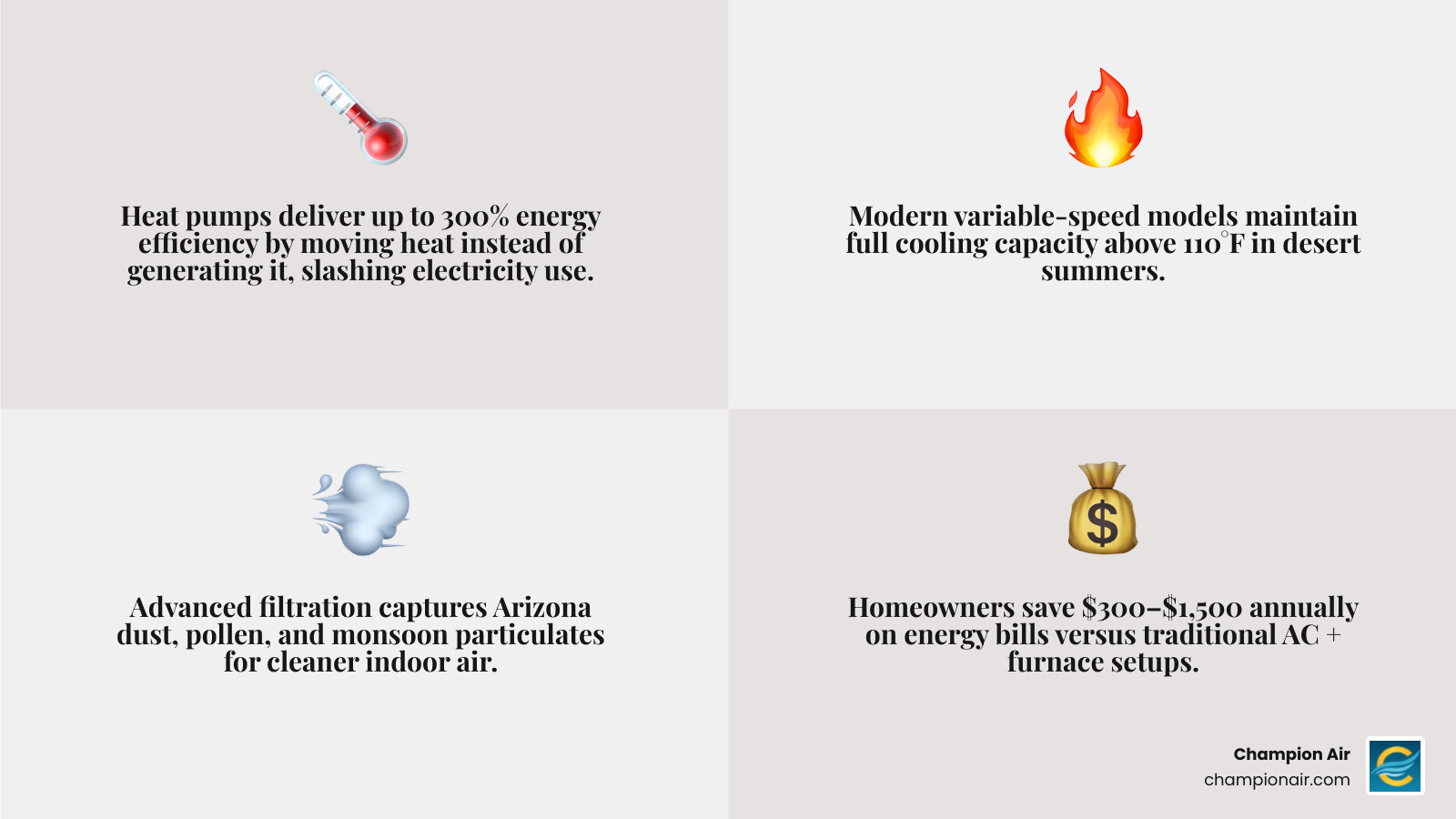
- Year-round comfort from one system — cools in summer, heats on mild winter nights, no separate furnace needed
- Up to 300% energy efficiency — heat pumps move heat rather than generate it, using far less electricity than traditional systems
- Handles triple-digit heat — modern variable-speed models maintain full capacity well above 110°F
- Lower energy bills — homeowners can save $300 to $1,500 annually compared to older AC and furnace setups
- Better air quality — advanced filtration helps manage Arizona's dust, pollen, and monsoon-season particulates
- Strong federal incentives — ENERGY STAR-certified heat pumps qualify for up to $2,000 in federal tax credits
- One investment, two jobs done — replaces both your AC and your heating system in a single, efficient unit
Arizona summers are no joke. Phoenix sees over 110 days of 100°F-plus temperatures every year, and most homeowners have spent decades running aging AC units that were never designed to handle that kind of punishment — let alone provide efficient winter heating when temperatures dip on cool desert nights. The result? Sky-high electricity bills, inconsistent comfort, and HVAC systems pushed well beyond their limits.
Heat pumps are changing that equation. Unlike a traditional air conditioner that only removes heat from your home, a heat pump moves heat in both directions — out in summer, in during winter — using the same refrigerant-based system. That bi-directional design makes it dramatically more efficient than running a separate AC and furnace, and modern inverter-driven models are now built specifically to thrive in the extreme conditions that define life in the Sonoran Desert.
This guide walks Arizona homeowners through everything you need to know: how heat pumps perform in extreme desert heat, what makes them ideal for mild winters, how they handle dust and dry air, and what incentives are available to make the switch more affordable in 2026.
I'm Barry Farah, and as the leader of Arizona's largest Lennox family-owned residential replacement HVAC company, I've spent years helping homeowners across the state understand the real-world heat pump benefits for desert climate homeowners — from energy savings to long-term comfort. Let's break it all down so you can make a confident, informed decision for your home.
Maximizing Heat Pump Benefits for Desert Climate Homeowners in Extreme Heat
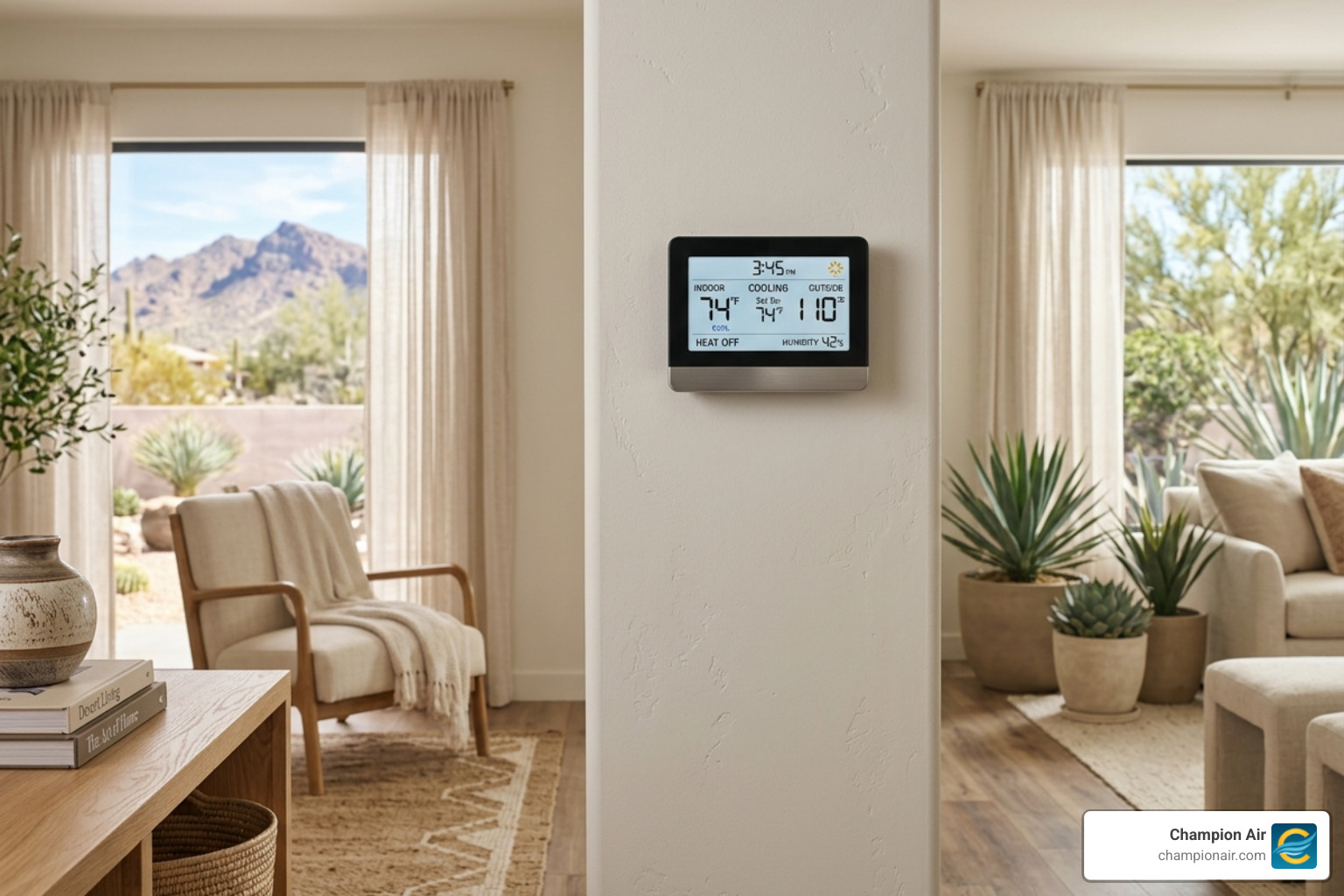
When the mercury hits 110°F in the Valley, your HVAC system isn't just a luxury; it's a lifeline. A common misconception we hear from homeowners in places like Peoria and Surprise is that heat pumps can’t keep up with triple-digit temperatures. While that might have been true for older technology, the 2026 landscape is entirely different.
Modern heat pumps utilize variable-speed compressors and advanced inverter technology. Unlike traditional single-stage AC units that are either "all on" or "all off," variable-speed systems act like a dimmer switch. They adjust their output in tiny increments to match the exact cooling load of your home. This prevents the constant "on-off" cycling—known as thermal cycling—that wears out components and causes energy spikes.
The core of heat pump benefits for desert climate homeowners lies in the physics of heat transfer. Instead of "creating" cold air (which is impossible), these systems extract heat from your indoor air and pump it outside. In extreme heat, premium models like those found in our Lennox SL25KCV Guide are designed to maintain full cooling capacity even when the outdoor air is scorching.
Efficiency Comparison: Single-Stage AC vs. Variable-Speed Heat Pump
| Feature | Standard Single-Stage AC | Variable-Speed Heat Pump |
|---|---|---|
| Operational Mode | On/Off Only | Modulating (Variable) |
| Energy Efficiency | Lower (SEER2 13-15) | High (SEER2 20+) |
| Temperature Stability | Fluctuates 3-5 degrees | Maintains within 0.5 degrees |
| Humidity Control | Basic | Superior (Longer run cycles) |
| Annual Savings | Baseline | $300 - $1,500 |
"How do these systems handle the 110-degree Phoenix summers?"
Many homeowners worry that a heat pump will "lose its breath" when Phoenix hits its peak summer heat. However, high-efficiency units are now built with extreme heat ratings, often tested to perform reliably at 120°F or higher.
Systems detailed in our Lennox EL21KLV Guide use enhanced refrigerant flow and larger heat exchanger coils to dump heat more effectively, even when the outside air is already hot. This is a major factor when Choosing Air Conditioners vs Heat Pumps; while a standard AC might struggle and run 24/7 to keep up, a variable-speed heat pump modulates its compressor to provide steady, relentless cooling without the massive energy draw.
"I'm looking to upgrade my home's heating. Who in Phoenix specializes in energy-efficient systems?"
As we move into April 2026, the demand for energy-efficient heating in the Phoenix metro area has never been higher. While we don't deal with sub-zero blizzards, our desert nights can get surprisingly chilly. This is where the "pump" in heat pump really shines.
Traditional gas furnaces are roughly 80% to 98% efficient, meaning some energy is always lost through the flue. Electric resistance heaters are 100% efficient. However, because heat pumps move existing heat rather than burning fuel to create it, they can achieve 300% to 400% efficiency. This is measured by the Coefficient of Performance (COP). A COP of 3.0 means for every 1 unit of electricity used, you get 3 units of heat.
We often tell our neighbors in Glendale and Tempe that Heat Pumps Perfect for Arizona because our winters are "mild." The system simply operates in a reverse cycle. A reversing valve switches the flow of refrigerant, allowing the outdoor unit to absorb residual warmth from the winter air (yes, even 40°F air has heat in it!) and move it inside. You can learn more about this magic in our guide on How Does Lennox Heat Pump Work.
Unlocking Heat Pump Benefits for Desert Climate Homeowners During Cool Nights
One of the most underrated heat pump benefits for desert climate homeowners is how they handle the dramatic temperature swings between a sunny 75°F afternoon and a 40°F midnight.
Because they are variable-speed, they don't blast you with hot air and then shut off. They provide a gentle, consistent flow of warmth. For those in colder pockets of the Valley like Cave Creek or Queen Creek, we sometimes discuss Lennox vs Trane Heat Pumps to find the best fit for specific home sizes. Additionally, because there is no combustion involved, these systems are much quieter. If you've ever wondered Are Heat Pumps Quieter Than Air Conditioners, the answer is a resounding yes—especially since they don't have the loud "kick" of a furnace igniting or a single-stage compressor slamming on.
"Concerned about the air quality in my house. Can anyone recommend advanced air purification services in Mesa?"
Living in the desert means dealing with more than just heat; we deal with dust, sand, and the "Valley Fever" spores that can travel during monsoon season. When we perform a Heat Pump Repair or installation in Mesa or Gilbert, we see how the environment impacts equipment.
Desert conditions are harsh. High UV levels can make plastic components brittle, and fine dust can clog sensitive coils. That’s why we recommend systems with high cabinet durability and UV-resistant finishes. Our Lennox EL19KPV Heat Pump Guide highlights units built with powder-coated steel and protected coils to withstand the relentless Arizona sun and wind.
Essential Heat Pump Benefits for Desert Climate Homeowners Regarding Air Quality
Beyond protecting the machine, a heat pump system is a central hub for your home's health. Because variable-speed heat pumps run for longer, lower-speed cycles, they circulate air through your filters more consistently than a standard AC. This means more opportunities for your filtration system to catch dust and allergens.
- Humidity Control: While the desert is dry, our monsoon seasons bring humidity spikes. Heat pumps are excellent at dehumidifying because their longer run times allow the coils to pull more moisture from the air.
- Integrated Solutions: We can pair Lennox Heat Pumps with whole-home humidifiers to add moisture back during the bone-dry months, preventing dry skin and respiratory irritation.
- Longevity: You might wonder, How Long Do Heat Pumps Last? In our climate, with proper maintenance to clear away dust and grit, you can expect 10 to 15 years of reliable service.
Frequently Asked Questions about Desert HVAC Upgrades
Can a heat pump really keep up when it’s over 115°F in Scottsdale?
Yes. Modern, high-efficiency heat pumps are designed for extreme climates. By using inverter-driven compressors, they can adjust their cooling capacity to handle 115°F+ days without failing. The key is professional sizing—an undersized unit will struggle, but a properly sized system will keep you perfectly cool.
What are the federal tax credits for installing a heat pump in 2026?
Under current federal guidelines in April 2026, homeowners can qualify for a tax credit of up to $2,000 for installing an ENERGY STAR-certified heat pump. This is significantly higher than the $600 credit typically offered for traditional central AC or furnaces, making the switch to a heat pump much more financially attractive.
How often do I need to change filters during Arizona dust storm season?
During the peak of dust storm (haboob) season or heavy summer usage, we recommend checking your filters every 30 days. In a dusty environment like Buckeye or Apache Junction, filters can clog quickly, which restricts airflow and forces your heat pump to work harder, reducing its efficiency and lifespan.
Conclusion
The shift toward heat pumps in the Phoenix metro area isn't just a trend; it's a smart response to our unique environment. Between the massive energy savings—sometimes cutting heating costs by 30% to 50%—and the reduction in carbon emissions, it’s a win for both your wallet and the Valley.
Heat pump benefits for desert climate homeowners include:
- Financial Value: Lower monthly utility bills and high-value tax credits.
- Reliability: Systems built to handle 110°F+ summers and 40°F nights.
- Simplicity: One system to maintain instead of two.
- Health: Constant air filtration and better humidity management.
At Champion Air, we specialize in the professional sizing and Heat Pump Installation required to make these systems thrive in Arizona. Whether you are in Scottsdale, Mesa, or anywhere in the North and West Valley, our team is ready to help you trade in that old, struggling AC for a system built for the future.
Ready to experience the difference a modern heat pump can make? Give us a call at Champion Air today, and let's get your home ready for every Arizona season.
Talk to a Champion
Have an HVAC question — or a quote you're not sure about?
Our free second opinion reviews any competitor quote line by line, and our team answers Valley HVAC questions every day. No pressure, no obligation — that's the Champion Air promise.
Talk to a Champion
Free Second Opinion
Already have a quote? We review it line by line, free. If it's fair, we'll tell you to take it.
About the Author
Champion Air
More Articles
View All PostsKeep Reading
Related Articles


Ready to Get Started?
Whether you need a repair, maintenance, or a new installation, our expert team is here to help.