Warmth Guaranteed: Choosing Top-Rated Furnace Repair in Phoenix, AZ
Champion Air
Why a Reliable Furnace Matters in Phoenix's Desert Climate
Furnace repair best in phoenix, az is essential when desert temperatures drop unexpectedly during winter nights. Phoenix homeowners often underestimate their heating needs until a cold front arrives and their furnace fails to keep up. With average nighttime lows around 35°F, a broken furnace isn't just uncomfortable—it's a safety concern that can lead to frozen pipes and health risks.
Here's what to look for in top-rated Phoenix furnace repair:
- Licensed and insured technicians with NATE certification
- 24/7 emergency availability for unexpected breakdowns
- Comprehensive diagnostics to identify root causes, not just symptoms
- Transparent pricing with no hidden fees
- Proven track record with verified customer reviews
- Full-service offerings including repair, maintenance, and replacement
- Local expertise understanding Phoenix's unique climate challenges
If you need expert guidance on maintaining your heating system year-round, explore our comprehensive heating services. When urgent repairs can't wait, our team is ready to help—schedule your furnace repair today.
Phoenix winters may be mild compared to other states, but they're chilly enough to make a functioning furnace essential. The combination of dusty conditions, temperature swings, and aging systems means local furnaces face unique challenges. Ignoring warning signs like strange noises, weak airflow, or inconsistent heating can turn a simple repair into a costly replacement.
As Barry Farah, I've spent years helping Arizona families maintain comfortable, healthy homes through expert HVAC solutions, including reliable furnace repair best in phoenix, az services. My team and I understand the unique demands of desert heating systems and the importance of getting repairs done right the first time.
Is Your Furnace Failing? Key Warning Signs to Watch For
Even in Phoenix, where scorching summers dominate the conversation, a properly functioning furnace is vital for those unexpectedly chilly winter nights. Knowing the signs that your furnace needs attention can save you from a complete breakdown and ensure your home stays cozy and safe. Timely furnace repair is significant to keep a home warm and safe, and neglecting furnace issues can lead to costly repairs or premature replacement.
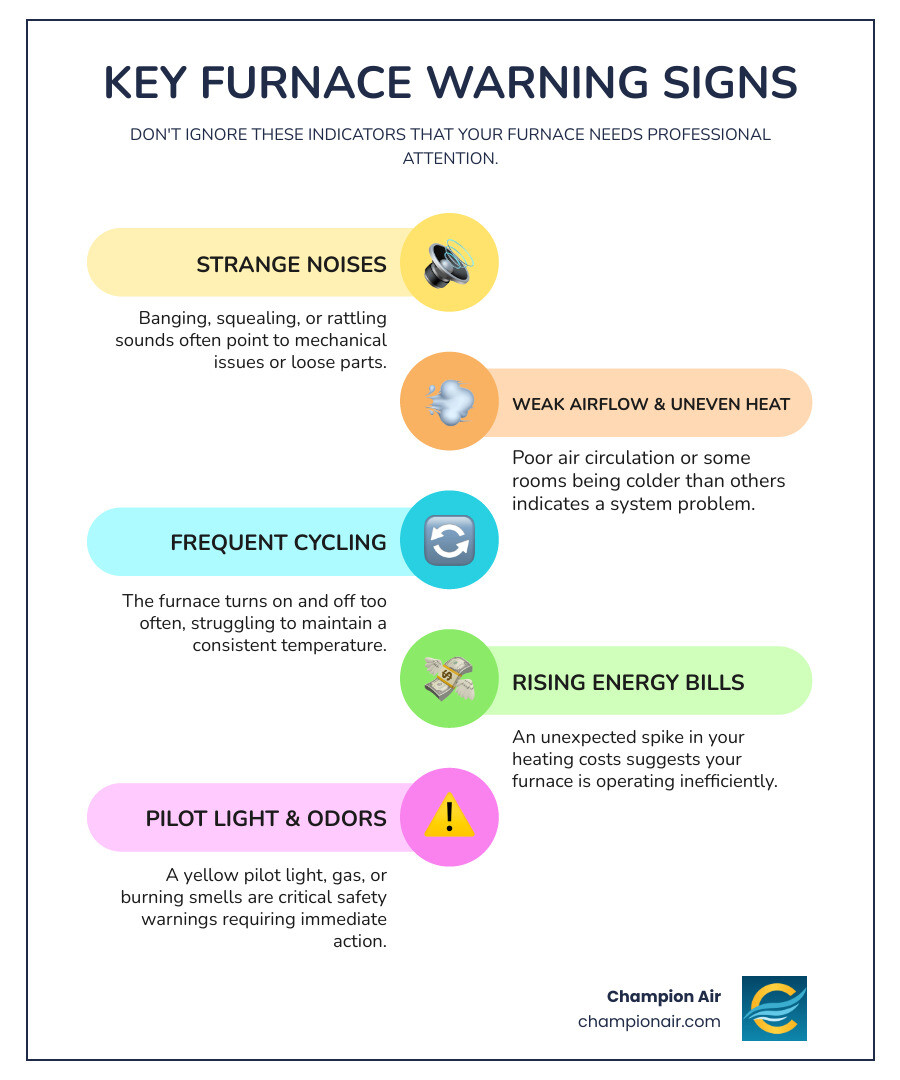
One of the most common indicators of a furnace problem is inconsistent heating or uneven temperatures throughout your home. You might notice some rooms are toasty while others remain cold, or perhaps your furnace cycles on and off frequently without ever quite reaching the desired temperature. This could be due to issues ranging from a faulty thermostat to ductwork problems. Another red flag is weak airflow from your vents, indicating a blockage or a problem with the blower motor. If your furnace is short cycling – turning on and off too frequently – it's often a sign of an underlying issue that needs professional diagnosis. Finally, a noticeable increase in energy bills without a change in usage is a strong signal that your furnace is working harder than it should, indicating inefficiency or a developing problem.
For more information on keeping your home warm and efficient, check out our heating services.
Common Signs You Need Furnace Repair Best in Phoenix, AZ
Beyond the general performance issues, your furnace might be trying to tell you something with distinct symptoms. One of the clearest indicators is unusual noises. While furnaces aren't entirely silent, they typically operate with a consistent hum. If you start hearing squealing sounds, it could point to a loose or worn fan belt. Banging noises might signal loose or broken parts, while rattling parts could indicate a component has come loose. Any noise that is out of the ordinary warrants investigation.
Thermostat issues are another frequent culprit. If your thermostat isn't accurately reading the temperature, or if you're constantly adjusting it to get comfortable, there might be a problem with the thermostat itself or its communication with the furnace. Difficulty starting your furnace, or if it struggles to ignite, also indicates a need for professional attention. If you're experiencing thermostat problems, our guide on Why Thermostat Not Working can offer initial insights.
Critical Safety Alerts: When to Call for Emergency Help
Some furnace issues go beyond mere inconvenience and pose serious safety risks. It's crucial to recognize these critical signs and act immediately.
Strange odors are a major warning. A faint burning dust smell when you first turn on your furnace is often normal, as dust accumulated over the summer burns off. However, a persistent or strong burning smell, especially like plastic or electrical wiring, is cause for alarm. Most dangerously, if you detect a gas smell, evacuate your home immediately and contact emergency services and your utility company. Natural gas leaks are extremely hazardous.
Another critical sign is a yellow pilot light or a flickering flame instead of a steady, bright blue one. A yellow or flickering flame can indicate incomplete combustion, which can lead to the production of carbon monoxide. Carbon monoxide is an odorless, colorless gas that can be deadly. Symptoms of carbon monoxide poisoning include headaches, dizziness, nausea, and disorientation. If you suspect a carbon monoxide leak, or if your furnace's pilot light isn't blue, turn off your furnace, open windows, and seek professional help right away. Furnaces can pose risks such as carbon monoxide leaks and electrical fires if not properly maintained.
When these critical safety alerts arise, don't delay. We offer emergency services to address these urgent situations promptly and safely.
Before You Call: Simple DIY Furnace Troubleshooting
Before reaching out for professional help, there are a few simple troubleshooting steps you can take. These steps often resolve minor issues and can help you avoid a service call, or at least provide valuable information to our technicians.
First, check your thermostat settings. Ensure it's set to "heat" and that the temperature is above the current room temperature. Sometimes, a simple setting adjustment is all that's needed. Next, head to your electrical panel and inspect the circuit breaker dedicated to your furnace. If it's tripped, simply reset it. A tripped breaker can be a one-time event, but if it trips repeatedly, it indicates a more serious electrical issue.
Another common culprit for furnace problems is a dirty air filter. A clogged filter restricts airflow, making your furnace work harder and less efficiently. We recommend you change the air filter regularly, typically every 1-3 months, especially during peak usage seasons or if you have pets. This simple act can significantly improve your system's performance and air quality. For more on this, read Why Changing Air Filters Is So Important. Finally, ensure all vents are open and unobstructed by furniture or drapes. Blocked vents can disrupt airflow and lead to uneven heating.
For a more comprehensive guide on basic troubleshooting, check out How to Troubleshoot Your HVAC System for Optimal Performance. If these DIY steps don't resolve the issue, it's time to call in the experts.
The Importance of Professional Maintenance and Tune-Ups
While Phoenix winters might be shorter, they are certainly not nonexistent. The unique climate, with its dust and sudden temperature drops, makes regular furnace maintenance even more crucial. Professional maintenance is not just about fixing problems; it's about prevention and optimization.
Regular furnace maintenance contributes significantly to your system's longevity. Furnaces generally last around 12 to 17 years, but consistent tune-ups can help them reach the higher end of that range, delaying costly replacements. It also leads to improved energy efficiency. Many homeowners in Phoenix see a significant drop in energy bills—often 20% or more—after making targeted improvements and ensuring their systems run optimally. This is because a well-maintained furnace doesn't have to work as hard to heat your home.
Moreover, professional maintenance improves safety. Technicians can identify and address potential hazards like carbon monoxide leaks or electrical issues before they become dangerous. This proactive approach leads to fewer breakdowns, saving you from uncomfortable and inconvenient emergency repairs during the coldest nights. The constant presence of Phoenix dust can severely impact furnace filters and internal components, making regular cleaning and inspection a necessity.
Investing in a Seasonal HVAC Tune-Up is a smart decision for any Phoenix homeowner.
What's Included in a Furnace Tune-Up?
A comprehensive furnace tune-up is a detailed process designed to inspect, clean, and optimize your heating system. When our technicians perform a tune-up, they carefully go through a checklist to ensure every component is functioning correctly and safely.
Typically, a furnace tune-up includes:
- Component inspection: A thorough visual inspection of all major furnace components, including the heat exchanger, burner assembly, and ignition system.
- Cleaning burners: Cleaning the burners to ensure efficient fuel combustion and even heat distribution.
- Checking electrical connections: Inspecting and tightening all electrical connections to prevent shorts and ensure safe operation.
- Testing safety controls: Verifying that all safety controls, such as the limit switch and flame sensor, are working correctly to prevent overheating and other hazards.
- Lubricating moving parts: Applying lubrication to moving parts like the blower motor bearings to reduce friction and wear.
- Verifying airflow: Checking and adjusting airflow to ensure proper heat distribution throughout your home.
- Filter replacement: Replacing or cleaning the air filter.
- Safety checks: Testing carbon monoxide levels and checking for any gas leaks.
This detailed process ensures your furnace is ready to handle Phoenix's winter demands, providing reliable and efficient heat. Learn more about our maintenance offerings on our Maintenance page.
Finding the Furnace Repair Best in Phoenix, AZ: What to Look For
When your furnace needs professional attention, choosing the right company for furnace repair best in phoenix, az is paramount. You want a team you can trust to get the job done right, efficiently, and safely. Here's what to look for:
First and foremost, ensure the company is licensed and insured. This protects you from liability and guarantees that the technicians meet industry standards. Look for companies whose technicians are NATE-certified. NATE (North American Technician Excellence) certification signifies that technicians have passed rigorous exams demonstrating their knowledge and skills in HVAC.
24/7 emergency availability is a non-negotiable for furnace repair in Phoenix. Breakdowns don't adhere to business hours, and you need a team that can respond promptly, even on weekends or holidays, especially when temperatures drop unexpectedly. Positive customer reviews are also a strong indicator of a company's reliability and service quality. Look for consistent feedback praising professionalism, timeliness, and effective solutions.
Finally, choose a company that offers comprehensive services, covering everything from repairs and maintenance to new installations. This ensures they can handle any issue that arises and provide consistent service throughout your furnace's lifespan. Our Awards and Certifications page showcases our commitment to excellence.
Repair vs. Replacement: Making the Right Call for Your Phoenix Home
One of the toughest decisions homeowners face is whether to repair a failing furnace or invest in a new one. This choice often boils down to a few key factors: the furnace age, the frequency of repairs, and the system's overall efficiency.
Most furnaces have a lifespan of around 12 to 17 years, though some sources suggest 15-20 years. If your furnace is nearing or past this age range, and particularly if it's over 15 years old, replacement often becomes the more economical and practical choice. An older unit might be constantly breaking down, leading to repeated service calls. If the cost of repairing your furnace is more than 50% of the price of a new furnace, or if it's no longer heating your home effectively or efficiently, it might be time for a replacement. Conversely, if your furnace is relatively young (less than 15 years old) and the repair cost is significantly less than a new unit, a repair is often the best solution.
Consider the system's efficiency. Older furnaces are far less energy-efficient than modern units. Even if an old furnace is technically repairable, its continued operation could mean higher energy bills and a larger carbon footprint. Sometimes, investing in a new, high-efficiency furnace pays for itself over time through energy savings.
For more guidance on this decision, consult our article on Indicators It Is Time to Replace HVAC System. If replacement is the right path, we offer expert Furnace Installation services.
Deciding Between Repair and Replacement: What's Best in Phoenix, AZ?
When making the repair vs. replacement decision, it's also helpful to understand the different furnace types commonly found in Phoenix homes and how they might influence your choice. The most prevalent types are gas furnaces and electric furnaces, though heat pumps are also a popular choice in our climate.
Gas furnaces are known for their powerful heating capabilities and are often very efficient. They use natural gas as an energy source. Electric furnaces are reliable and require no gas lines, making installation simpler in some cases. However, electricity can be more expensive than natural gas for heating in some areas.
Heat pumps are particularly well-suited for the Phoenix climate. They offer both heating and cooling capabilities in one unit, transferring heat rather than generating it. This makes them highly energy-efficient, especially in milder climates where extreme heating is not constantly required. In Arizona, heat pumps are a fantastic option for year-round comfort. Our article Heat Pumps Perfect for Arizona digs deeper into their benefits.
The best decision involves evaluating long-term comfort and cost-effectiveness. A new, more efficient system will not only provide better heating but also potentially lower your utility bills and offer greater peace of mind.
Frequently Asked Questions about Furnace Repair in Phoenix
We understand you might have questions when facing furnace issues. Here are some of the most common inquiries we receive from Phoenix homeowners:
How often should I have my furnace serviced?
We recommend annual maintenance for your furnace. Ideally, this should be done in the fall, before the cold season truly begins. A pre-season check-up ensures your system is ready for the demands of winter, operating at peak performance and maintaining optimal system health. Regular servicing helps catch potential issues early, prevents unexpected breakdowns, and extends the lifespan of your unit.
What are the most common furnace problems in Phoenix?
In Phoenix, some of the most frequent furnace problems we encounter include:
- Restricted airflow: Often caused by dirty air filters or blocked vents, leading to reduced heating efficiency and strain on the system.
- Overheated heat exchanger: This can result from restricted airflow, causing the furnace to cycle off prematurely as a safety measure.
- Ignition problems: Issues with the pilot light or electronic igniter preventing the furnace from starting or staying lit.
- Thermostat malfunctions: Inaccurate temperature readings or communication issues between the thermostat and the furnace, leading to inconsistent heating.
What's the difference between a furnace and a heat pump?
The primary difference lies in their heating methods and capabilities. A furnace generates heat through combustion (gas furnace) or electric coils (electric furnace) and then distributes that warm air throughout your home. Its sole purpose is heating.
A heat pump, on the other hand, doesn't generate heat directly. Instead, it transfers heat. In heating mode, it extracts heat from the outside air (even cold air contains some heat) and moves it indoors. During warmer months, it reverses the process, extracting heat from inside your home and releasing it outdoors, effectively providing cooling capability. Given Arizona's climate, a heat pump's dual functionality makes it a very suitable and efficient choice for year-round comfort. For a detailed comparison, see Choosing Air Conditioners vs. Heat Pumps.
Stay Warm and Safe with a Trusted Phoenix HVAC Partner
We've covered the essential aspects of furnace repair best in phoenix, az, from recognizing warning signs to understanding the value of maintenance and making informed decisions about repair versus replacement. Phoenix winters, though often mild, demand a reliable heating system to ensure your family's comfort and safety.
Choosing a qualified, experienced professional is crucial for any furnace service. Our team is dedicated to providing award-winning service, combining local expertise with a commitment to your home's comfort. For reliable and prompt service, trust our team of experts to keep your home comfortable. Schedule an Appointment for your furnace needs today.
AC & Heating Repair
Sound like your system? Get it diagnosed for $89 — waived with an approved repair.
A Champion Air technician pinpoints the actual fault and quotes the fix as a flat price before touching anything. Emergency calls run 24/7 with no overtime charges, across the Phoenix Valley.
AC & Heating Repair
$89 Diagnostic
Waived with an approved repair. Flat quote before any work begins — 24/7, no overtime charges.
About the Author
Champion Air
More Articles
View All PostsKeep Reading
Related Articles


Ready to Get Started?
Whether you need a repair, maintenance, or a new installation, our expert team is here to help.