Summer Energy Saving Tips for Phoenix Area Homeowners
Champion Air
Discover summer energy saving tips for Phoenix area homeowners: smart thermostats, HVAC tune-ups, sealing, shading & more to slash bills!
Why Summer Energy Bills Hit Phoenix Homeowners So Hard
If you're looking for summer energy saving tips for Phoenix area homeowners, here's a quick overview of the most effective strategies:
- Set your thermostat to 78°F when home and 85°F when away
- Replace air filters every 30-60 days — desert dust clogs filters faster than almost anywhere else in the country
- Seal your ductwork — the typical home loses 20-30% of cooled air through leaks
- Install solar screens or window treatments on south and west-facing windows to cut cooling costs by up to 25%
- Use ceiling fans counterclockwise to create a wind-chill effect and raise your thermostat 4°F without losing comfort
- Run heat-producing appliances at night — dishwashers, dryers, and ovens add heat during peak afternoon hours
- Schedule a professional AC tune-up before peak summer heat arrives in May or June
- Consider a smart thermostat — annual savings of 10-23% on cooling costs are well-documented
- Upgrade to a variable-speed pool pump if you have a pool — savings of around 70% on pool-related energy are possible
- Look into utility rebates from SRP and APS for qualifying efficiency upgrades
Phoenix summers are in a category of their own. When temperatures routinely climb past 110°F for weeks at a time, your air conditioner isn't running occasionally — it's running almost constantly. That relentless demand shows up fast on your electric bill. The average Phoenix household can see a July electric bill of around $220, and for larger or older homes, that number can push well past $350. Air conditioning alone can account for 50% or more of your total summer electricity use, and for some homes it climbs as high as 60-70% of the entire bill.
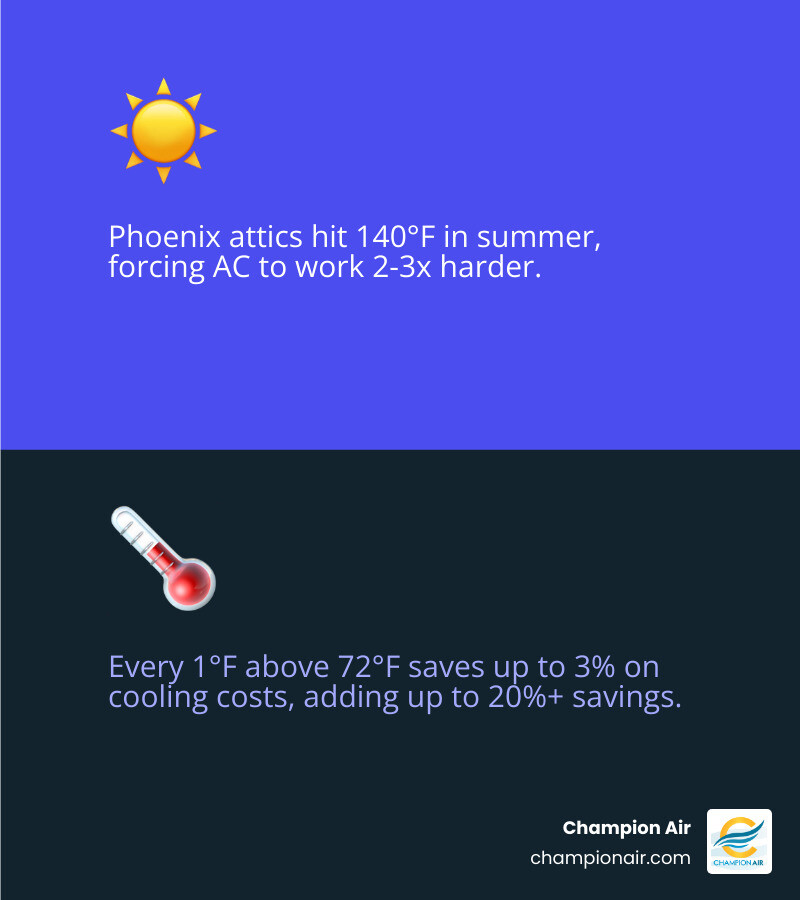
What makes Phoenix especially challenging isn't just the heat — it's the combination of intense solar exposure (up to 14 hours of direct sunlight per day in summer), attic temperatures that can exceed 140°F, and a dusty desert environment that quietly works against your HVAC system every single day. Bills that were manageable in April can double or even triple by July, which catches both new residents and longtime locals off guard.
The good news is that a significant portion of those costs are controllable. Small behavioral changes, targeted home improvements, and regular HVAC maintenance can add up to meaningful savings — without sacrificing comfort during the hottest months of the year.
I'm Barry Farah, and as the leader of one of Arizona's largest Lennox family-owned residential HVAC replacement companies, I've spent years helping Phoenix area homeowners put summer energy saving tips for Phoenix area homeowners into real practice — not just theory. In the sections ahead, I'll walk you through the strategies that actually move the needle on your energy bill.
Optimizing Your HVAC for Summer Energy Saving Tips for Phoenix Area Homeowners
In May 2026, as we face another record-breaking Arizona summer, your HVAC system is the frontline defense for your home. However, many homeowners inadvertently force their systems to work harder than necessary. Optimizing your system starts with the most basic control: the thermostat.
The U.S. Department of Energy recommends setting your thermostat to 78°F when you are at home. While this might sound high to some, every degree you set your thermostat above 72°F can save you up to 3% on your cooling expenses. If you can push it even higher, for every degree above 80°F, you can save approximately 2% to 3% more. When you leave the house, we recommend an "away mode" of 85°F. This prevents the house from becoming a heat soak, which would require the AC to run for hours on end just to recover when you return.
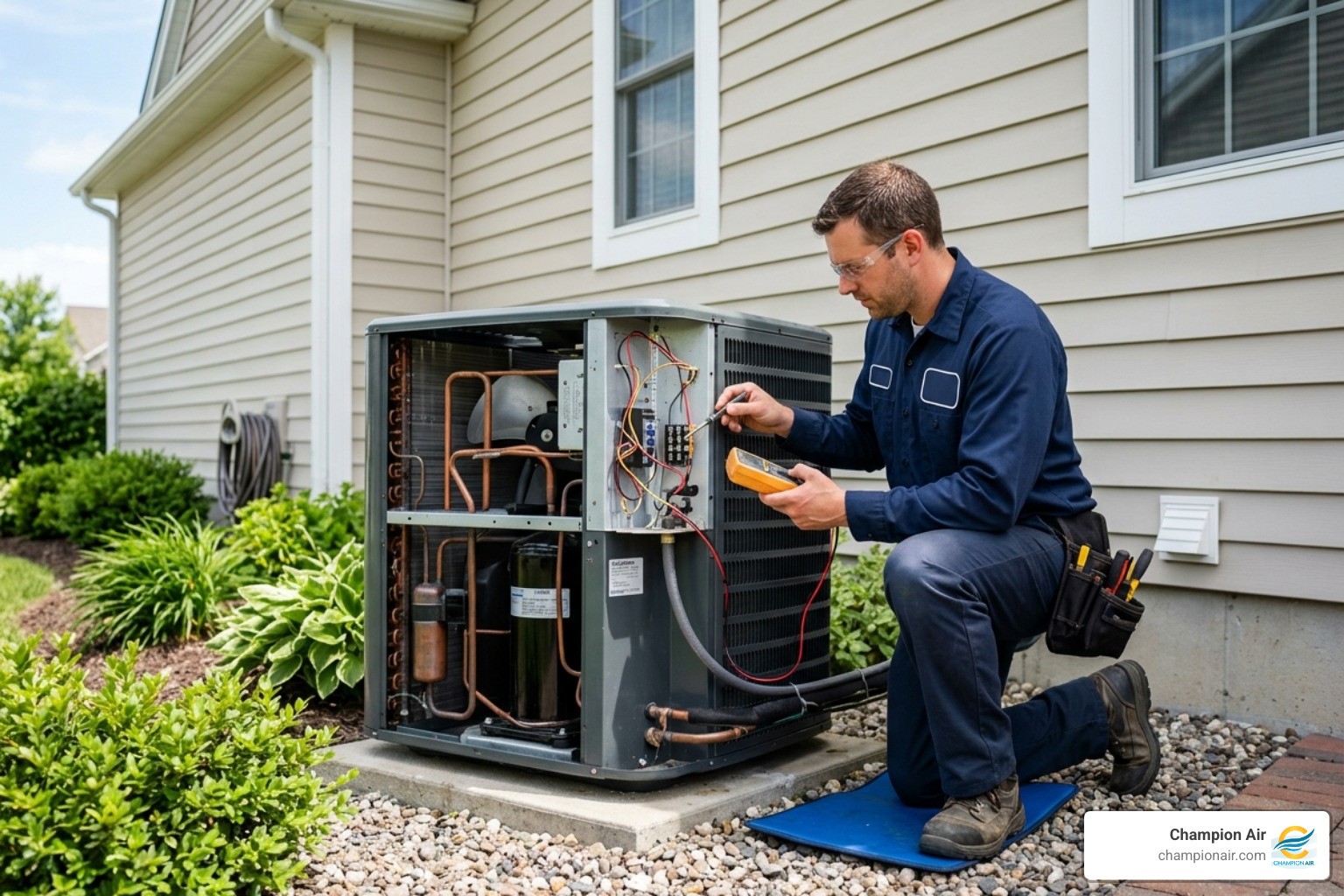
Properly Prepping Your HVAC System for Summer is essential for efficiency. A neglected system can lose 5% to 15% of its efficiency every year. This is why a professional AC Maintenance & Tune-Up in Phoenix is so critical. During a tune-up, we check refrigerant levels and clean the coils. If your coils are dirty, they can't release heat effectively, forcing the compressor to run longer. If you’ve ever wondered, "How Long Should My AC Run in Arizona?", the answer depends on the outdoor temperature, but a well-maintained system will cycle more efficiently than one struggling with dirty components.
Smart Thermostat Strategies for Summer Energy Saving Tips for Phoenix Area Homeowners
If you are still using a manual thermostat, you are likely leaving money on the table. There are many Why You Need Smart Thermostats in Arizona reasons, but the primary one is automation. Smart thermostats can reduce cooling and heating costs by 10% to 23% annually by learning your habits and adjusting temperatures automatically.
Key features to look for include:
- Occupancy Sensors: These detect when a room is empty and adjust the temperature accordingly, so you aren't cooling a guest room to the same level as your master bedroom.
- Geofencing: This technology uses your phone’s location to know when you are heading home, allowing the system to start cooling just in time for your arrival.
- Time-of-Use (TOU) Optimization: In Phoenix, utilities like SRP and APS often have peak hours where electricity is more expensive. A smart thermostat can "pre-cool" your home during off-peak hours and scale back usage when rates are highest.
Understanding All You Need to Know About Programmable Thermostat Savings can help you maximize these high-tech tools to keep your bills manageable.
Essential Maintenance and Air Filter Cycles
One of the most overlooked summer energy saving tips for Phoenix area homeowners is the humble air filter. In our dusty desert climate, a standard filter doesn't last as long as it might in the Midwest. We recommend checking your filters every 30 days during the peak of summer and replacing them at least every 60 days.
Proper filter maintenance alone can reduce your system's energy use by 5% to 15%. When a filter is clogged, the blower motor has to work much harder to pull air through, which increases your bill and shortens the lifespan of the motor. For the best balance of air quality and system health, we suggest using MERV 8-11 rated filters. Avoid the ultra-high MERV filters unless your system is specifically designed for them, as they can actually restrict airflow too much.
Don't forget the outdoor unit! Wind-blown dust and monsoon debris can clog the condenser coils. A quick, gentle rinse with a garden hose (with the power off) can help keep those coils clear. For a deeper dive into keeping your system at peak performance, check out our HVAC Efficiency Guide and remember the many Reasons to Schedule a Spring AC Tune-Up before the triple digits arrive.
Sealing the Home Envelope and Ductwork
You can have the most efficient AC unit in the world, but if your home is "leaky," you're essentially paying to cool the neighborhood. The "home envelope" refers to the outer shell of your house—the walls, roof, windows, and doors. In Phoenix, where attics can reach a staggering 150°F, insulation is your primary barrier. We recommend an insulation value of R-38 to R-60 for Phoenix attics.
Air leaks are another major culprit. You can identify these by looking for "dirty" spots on your carpet or ceiling, which often indicate where air is being pulled through joints. Using foam gaskets behind electrical outlet faceplates on exterior walls and applying weatherstripping to doors can save a homeowner about 15% on cooling costs.
Perhaps the biggest source of waste is the duct system. The typical house loses 20% to 30% of its conditioned air through leaks, holes, and poor connections in the ducts. When your ducts run through a 140-degree attic, those leaks are incredibly costly.
| Feature | DIY Air Sealing | Professional Duct Sealing |
|---|---|---|
| Focus | Windows, doors, outlets | Internal ductwork connections |
| Tools | Caulk, weatherstripping | Mastic, Aeroseal technology |
| Potential Savings | 5-10% on bills | 20-30% on cooling loss |
| Complexity | Low (Weekend project) | High (Requires specialized gear) |
We specialize in Aeroseal Technology for Energy Savings, which seals duct leaks from the inside out, ensuring that the air you pay to cool actually reaches your living spaces.
High-Efficiency Upgrades and SEER2 Standards
If your AC unit is more than 10-12 years old, it might be time to consider an upgrade. Modern high-efficiency HVAC upgrades can reduce energy consumption by 20% to 40%. When shopping for a new system, you'll encounter SEER2 (Seasonal Energy Efficiency Ratio) ratings. You can learn Everything to Know About SEER Ratings to help you choose, but generally, the higher the number, the more efficient the unit.
In the Phoenix area, the EER2 (Energy Efficiency Ratio) is also vital because it measures how a unit performs at a specific, high temperature (usually 95°F), which is much more representative of our daily reality.
Other technologies to consider include:
- Variable-Speed Compressors: Unlike standard units that are either "on" or "off," these adjust their speed to match the cooling demand exactly, saving massive amounts of energy.
- Heat Pumps: These are incredibly efficient in our climate, often achieving over 300% efficiency by moving heat rather than creating it.
- Zoned Systems: These allow you to cool only the parts of the house you are using.
Seeing How New HVAC Systems Save You Money is often the tipping point for homeowners facing expensive repairs on an old, inefficient unit. Plus, federal tax credits like the 25C Energy Efficient Home Improvement Credit can help offset the investment.
Passive Cooling: Shading, Windows, and Landscaping
One of the most effective summer energy saving tips for Phoenix area homeowners happens outside the house. Passive cooling involves stopping the heat before it ever enters your home. Phoenix homes receive up to 14 hours of direct sunlight in the summer, and the majority of that heat gain comes through windows.
Shading windows with protective solar screens can cut cooling costs by up to 25%. These screens block the sun's rays before they hit the glass, preventing the "greenhouse effect" inside your rooms. If you are replacing windows, look for multi-pane glass with Low-E (low-emissivity) coatings, which can reduce heat transfer by up to 70%.
Landscaping also plays a massive role. Strategic shading from trees can make the surrounding microclimate up to 9 degrees cooler. In the Valley, focusing your shading efforts on the south and west-facing sides of your home is the priority, as these areas receive the most punishing afternoon sun.
Exterior Solutions and Summer Energy Saving Tips for Phoenix Area Homeowners
Beyond trees, there are several structural ways to shade your home:
- Awnings and Pergolas: These provide excellent shade for patios and windows, especially on the west side of the house.
- Reflective Roof Coatings: Traditional dark shingles can reach 150°F. Reflective materials can reduce roof surface temperatures by 50-60 degrees.
- Desert Willow Planting: This native tree provides great shade in the summer but drops its leaves in the winter, allowing the sun to help warm your home when it's actually chilly.
- Window Films: A more affordable alternative to window replacement, these films reflect solar heat while still allowing natural light into the home.
- Motorized Exterior Shades: These can be programmed to lower during the hottest parts of the day and retract when the sun goes down.
Lifestyle Habits and Pool Efficiency
Sometimes, the best summer energy saving tips for Phoenix area homeowners are the simplest ones. Your daily habits can significantly impact your monthly bill. For example, "energy vampires"—devices that draw power even when turned off—can cost you $100 to $200 per year. Using smart power strips can automatically cut power to these devices.
Other high-impact habits include:
- Appliance Timing: Run your dishwasher, dryer, and oven in the early morning or late evening. These appliances generate a lot of heat, forcing your AC to work harder to compensate.
- Outdoor Grilling: Instead of heating up the kitchen with the oven, take the cooking outside.
- LED Lighting: Switch to LED bulbs. They use 75% less energy than incandescents and, more importantly for us, they emit almost no heat.
- Laundry Scheduling: Wash clothes in cold water to save on water heating costs and dry them during off-peak hours.
For homeowners with pools, the pool pump is often the second-largest electricity user in the house. Upgrading to a variable-speed pool pump can save around 70% a year on pool-related energy costs. Additionally, using a pool cover can reduce water evaporation by 40% to 50%, which also helps maintain the water's chemical balance and temperature.
Frequently Asked Questions about Phoenix Energy Savings
What is the ideal thermostat setting for a Phoenix summer?
The Department of Energy recommends 78°F when you are home. If you use a ceiling fan, you can usually raise that to 82°F and feel just as comfortable due to the wind-chill effect. When you are away for more than a few hours, set it to 85°F.
How often should I replace my air filters in the desert?
During the peak of summer (June through September), we recommend replacing 1-inch filters every 30 days. If you have pets or live near a construction site or unpaved road, you may need to check them even more frequently. During the "shoulder" seasons, every 60 days is usually sufficient.
Are there rebates available for energy-efficient upgrades?
Yes! Both SRP and APS offer various rebates for smart thermostats, duct sealing, and high-efficiency AC units. Additionally, federal tax credits are currently available for many energy-efficient home improvements. We always recommend checking the current utility websites or asking us during a service call for the latest available incentives.
Conclusion
Lowering your energy bills in the Valley of the Sun doesn't have to be a mystery. By combining professional maintenance, smart technology, and simple lifestyle adjustments, you can stay cool without the financial "sticker shock" every July. Whether it's scheduling a routine tune-up or investing in advanced duct sealing, every step you take helps protect both your comfort and your wallet.
At Champion Air, our licensed technicians are experts in the unique challenges of the Arizona climate. We serve Scottsdale, Phoenix, Mesa, and the surrounding areas with award-winning service and 24/7 emergency support. Contact us today to learn more about how we can help make your home safer and more energy-efficient.
Talk to a Champion
Have an HVAC question — or a quote you're not sure about?
Our free second opinion reviews any competitor quote line by line, and our team answers Valley HVAC questions every day. No pressure, no obligation — that's the Champion Air promise.
Talk to a Champion
Free Second Opinion
Already have a quote? We review it line by line, free. If it's fair, we'll tell you to take it.
About the Author
Champion Air
More Articles
View All PostsKeep Reading
Related Articles


Ready to Get Started?
Whether you need a repair, maintenance, or a new installation, our expert team is here to help.