How to Troubleshoot Why AC Is Running But Not Cooling in Arizona
Champion Air
Troubleshoot why is my ac running but not cooling in Arizona with these expert tips for Phoenix heat.
How to Troubleshoot Why AC Is Running But Not Cooling in Arizona
When Your AC Is Running But Not Cooling in Arizona: Quick Answers First
If you're wondering why is my AC running but not cooling in Arizona, here are the most common causes:
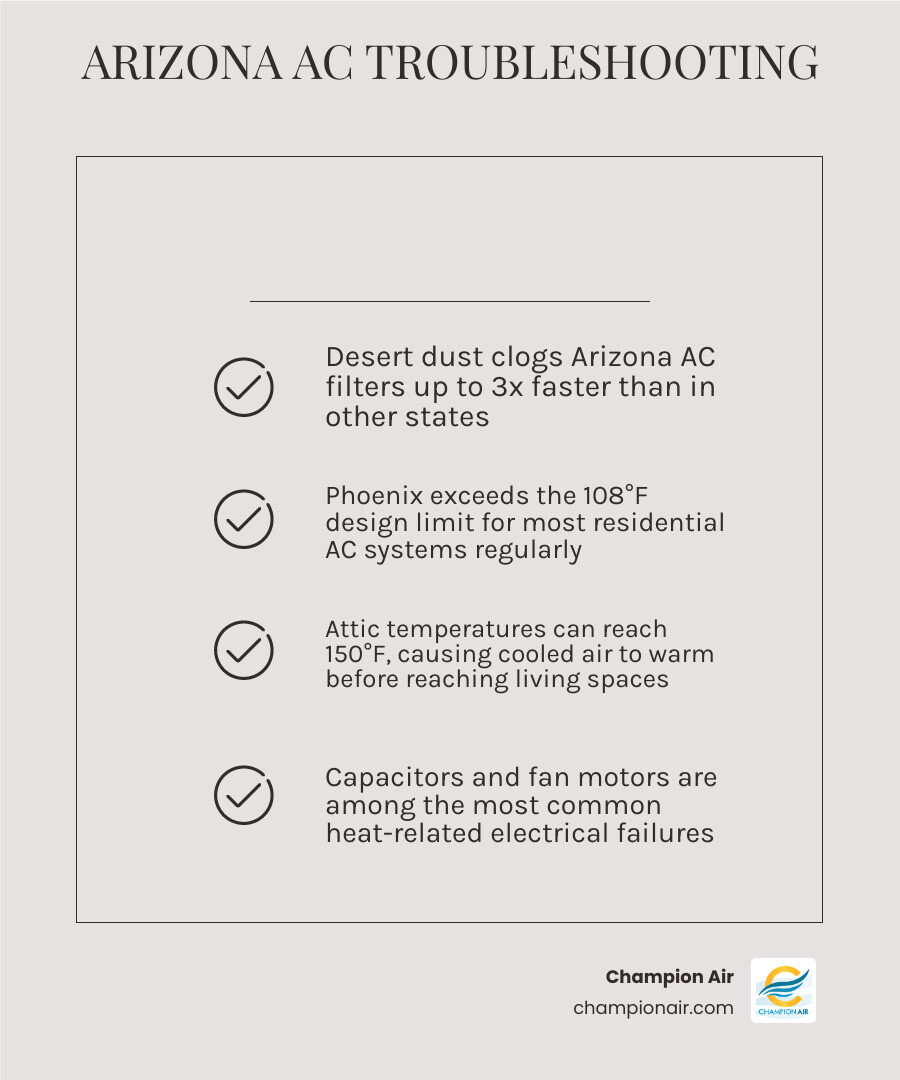
- Dirty or clogged air filter — desert dust clogs filters up to 3x faster than in other states
- Refrigerant leak — thermal expansion from extreme heat stresses refrigerant lines
- Frozen evaporator coil — caused by restricted airflow or low refrigerant
- Failed capacitor — one of the most common electrical failures in Arizona heat
- Dirty outdoor condenser coil — blocked heat transfer from dust and debris
- Thermostat set to wrong mode — fan set to "On" instead of "Auto," or incorrect temperature setting
- Ductwork leaks — cooled air escaping into 150°F attics before reaching living spaces
- System overwhelmed by extreme heat — AC units are designed for a maximum outdoor temperature, and Phoenix regularly exceeds it
It's the middle of July in Phoenix. You walk inside, hear your AC humming away, but the house feels like an oven. The system is clearly running — but nothing is getting cooler. In Arizona, this is one of the most common and urgent HVAC problems homeowners face. With Phoenix averaging over 107 days per year above 100°F, your AC system is under a level of stress that most equipment simply wasn't built to handle indefinitely. The causes range from something as simple as a clogged air filter to something as serious as a refrigerant leak or a failing electrical component — and in Arizona's heat, what starts as a minor issue can become a safety concern fast.
I'm Barry Farah, and through leading one of Arizona's largest Lennox residential HVAC companies, I've seen every reason why an AC is running but not cooling in Arizona — from dust-choked filters after a haboob to capacitors cooked by triple-digit summers. In the sections ahead, I'll walk you through exactly how to diagnose and address the problem, step by step.
Learn more about why is my ac running but not cooling in arizona:
- ac running but house still warm troubleshooting
- why is my ac running but not cooling
Why Is My AC Running But Not Cooling in Arizona?
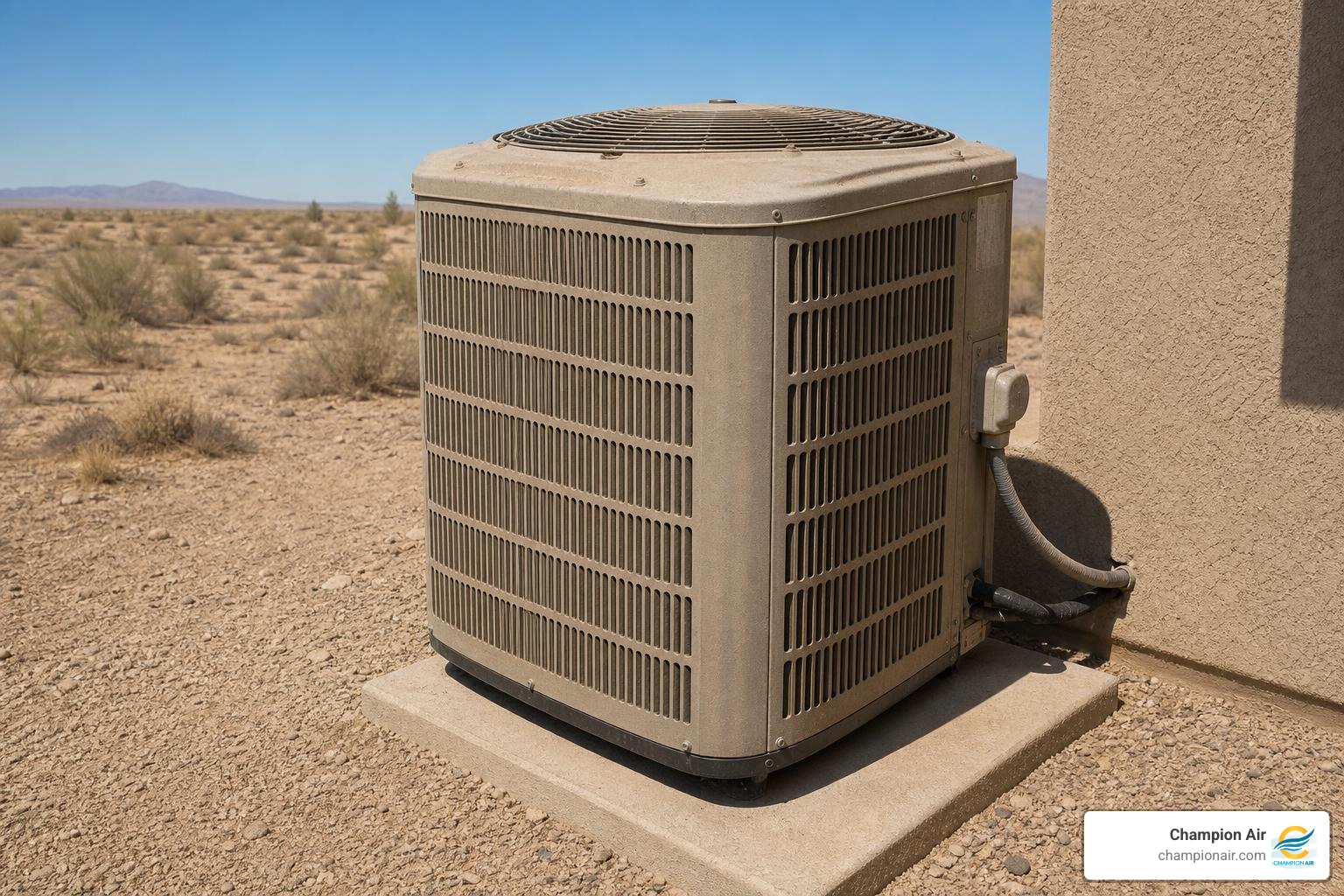
When your air conditioner runs continuously but fails to lower the indoor temperature, it means the mechanical or electrical parts of your system are moving, but the heat-removal cycle has broken down.
In Arizona's harsh desert environment, our cooling systems face conditions that are vastly different from the rest of the country. Extreme summer temperatures routinely exceeding 110°F mean your outdoor condenser unit can experience surface temperatures over 120°F in direct sunlight. This relentless heat causes metal components to expand and contract dramatically, accelerating wear and tear on copper lines, electrical connections, and fan motors.
Additionally, Arizona’s infamous haboobs and persistent desert dust coat vital outdoor components in a layer of grime, insulating the coils and preventing the system from releasing heat. When your system cannot dump heat outside, it continues to run indoors without actually cooling your home. To keep your unit running efficiently during these brutal periods, check out our guide on How To Help Your AC During A Phoenix Area Heat Wave.
Airflow Restrictions and Clogged Filters in Phoenix
The leading cause of cooling issues in cities like Mesa, Chandler, and Gilbert is restricted airflow. While standard HVAC guidelines suggest changing your air filter every 90 days, Arizona's desert climate renders that advice obsolete.
Desert dust, windblown sand, and construction particulates clog filters up to three times faster in Phoenix than the national average. When an air filter is caked in dust, the indoor blower fan has to work twice as hard to draw air through it. This suffocates the system, dramatically reducing the volume of cool air entering your home.
To prevent your system from running constantly without cooling, learn more about How Often Should You Change Your AC Filter In Arizona.
Refrigerant Leaks and Frozen Evaporator Coils
Another frequent culprit behind an AC that runs but doesn't cool is a frozen evaporator coil. Many homeowners find it hard to believe that an air conditioner can freeze when it is 115°F outside, but it is a incredibly common issue.
When airflow is restricted due to a dirty filter, or if your system has low refrigerant, the temperature of the indoor evaporator coil drops below freezing. Moisture in the air collects on the coil and quickly turns to ice, creating a literal wall of ice that blocks all cooling.
Refrigerant leaks account for roughly 20% to 30% of summer service calls in Arizona. Because refrigerant operates in a closed loop, it does not get "used up." If it is low, you have a leak.
Keep an eye out for the Signs Your Air Conditioner Is Low In Freon, and listen closely to your indoor or outdoor unit — if you hear a strange sound, read about Why AC Making Hissing Noise.
Equipment Failure vs. Environmental Limits in the Desert
Sometimes, your AC isn't actually broken; it is simply fighting against the laws of thermodynamics. It is crucial to understand the difference between a mechanical failure and a system that has reached its physical cooling limits.
| Symptom | Mechanical Failure | Extreme Environmental Heat Load |
|---|---|---|
| Air Temperature from Vents | Warm or lukewarm air | Cool air (but weak airflow or unable to lower thermostat) |
| Outdoor Unit Status | Blower runs, but compressor is silent or making clicking sounds | Outdoor fan and compressor run normally |
| Ice Formation | Ice visible on copper lines or indoor coil | No ice present on lines |
| System Behavior | Trips breakers or shuts down unexpectedly | Runs continuously during peak hours (2 PM - 7 PM) |
In the HVAC industry, systems are sized based on local "design temperatures." In the Phoenix metropolitan area, the design temperature is typically 108°F. This means your AC is engineered to maintain a comfortable indoor temperature of 75°F when it is 108°F outside.
When Arizona summer peaks hit 115°F to 119°F, the outdoor temperature exceeds the system's design limits. During these extreme afternoon spikes, your AC may run continuously just to keep the indoor temperature at 78°F or 80°F. This is normal behavior, not a malfunction.
To understand how long your system should be running during these intense heat waves, refer to our article on How Long Should My AC Run In Arizona.
Thermostat Settings and Fan Modes in Extreme Heat
Your thermostat settings play a major role in how your system handles extreme heat. One of the most common mistakes homeowners make is setting the thermostat fan mode to "On" instead of "Auto."
When the fan is set to "On," the indoor blower runs continuously, even when the cooling cycle is off. This blows uncooled, humid air back into your living spaces and can make it feel like your AC is blowing warm air. Keeping the fan on "Auto" ensures the blower only runs when the system is actively cooling.
Additionally, raising your thermostat setting slightly during peak heat hours (such as setting it to 78°F instead of 72°F) reduces system strain and prevents the compressor from overheating. For more detailed settings advice, read our AC Running But House Still Warm Troubleshooting guide.
Electrical Component Failures Caused by Arizona Heat Waves
The intense, prolonged heat of an Arizona summer is brutal on electrical components. The single most common electrical failure we see in cities like Scottsdale, Tempe, and Glendale is a failed run capacitor.
The capacitor acts like a temporary battery, providing the electrical jolt needed to start and run the compressor and outdoor fan motor. In hot desert climates, capacitors often fail within 4 to 7 years due to heat exposure, compared to 10 to 15 years in milder climates.
If the capacitor fails, the outdoor fan or compressor will not run, leaving your indoor blower to circulate warm room-temperature air. This electrical strain can also cause your system to draw too much power. If your system shuts down completely, check out Why AC Keeps Tripping Breaker.
Home Efficiency Factors: Ductwork and Insulation
Sometimes, the air conditioner itself is operating perfectly, but your home’s envelope is failing to keep the cool air in and the desert heat out. In Arizona, attic temperatures can easily soar to a staggering 150°F during July and August.
If your home has leaky, damaged, or unsealed ductwork running through the attic, you could be losing 20% to 30% of your system's cooling capacity before the air ever reaches your registers. This means you are paying to cool your attic while your living room remains uncomfortably warm.
Poor attic insulation also contributes to massive heat gain, allowing heat from the roof to radiate directly down through your ceilings. When this happens, your AC has to run constantly just to keep up with the heat entering the home.
To understand how these non-equipment issues impact your comfort, read our detailed guide on Why Is AC Not Cooling.
Homeowner DIY Troubleshooting vs. Professional HVAC Repair
Before you call for professional service, there are several safe, simple steps you can take to troubleshoot your system.
- Check the Thermostat: Ensure it is set to "Cool" and the temperature setting is at least 3 to 5 degrees below the current room temperature. Replace the thermostat batteries if the display is fading.
- Inspect the Air Filter: Pull the filter out and hold it up to a light source. If light cannot pass through it, replace it immediately.
- Clear the Outdoor Unit: Ensure there are at least two feet of clear space around your outdoor condenser unit. Remove dead weeds, leaves, or debris that might be blocking airflow.
- Check the Circuit Breakers: Look at your main electrical panel to see if the AC breaker has tripped. Reset it once. If it trips again immediately, do not attempt to reset it a second time — call a professional.
If you complete these steps and your system is still blowing warm air, or if you notice ice forming on the copper lines, it is time to turn off the system at the thermostat to prevent compressor damage and call in the experts.
For a complete breakdown of what you can fix yourself and what requires professional tools, read our Complete Homeowners Guide AC Troubleshooting Repair. If you need immediate assistance in the Phoenix area, schedule a visit via our AC Repair Service Phoenix AZ page.
Frequently Asked Questions About Arizona AC Performance
Why is my AC running but not cooling in Arizona during peak afternoon hours?
During the hottest part of the day (typically between 2 PM and 7 PM), outdoor temperatures often exceed the 108°F design limit of standard residential AC systems. When the temperature gap between the hot outdoor air and your desired indoor temperature is greater than 35 degrees, heat transfer becomes much less efficient. Your system is likely working perfectly but is simply running continuously to combat the extreme heat radiating through your walls, windows, and roof.
What should I do immediately when my AC is running but not cooling in Arizona?
First, turn the system off at the thermostat. If the system is running without cooling due to a frozen coil or a low refrigerant charge, keeping it running can cause permanent damage to your compressor (the most expensive component in your system). Once the system is off, check your air filter and look at the copper lines connected to your outdoor unit for any signs of ice. If ice is present, keep the system off and switch the fan mode to "On" to help thaw the coil before a technician arrives.
How often should I clean my outdoor condenser unit in Phoenix?
We recommend gently hosing down your outdoor condenser coils at least twice a year — once in the spring before the summer heat hits, and once in the late summer after the monsoon season. Monsoon dust storms (haboobs) coat the outdoor coils in fine clay dust, which acts like an insulating blanket and blocks heat transfer. Always turn off the electrical disconnect switch next to the outdoor unit before gently rinsing the coils with a garden hose (do not use a pressure washer, as it will bend the delicate aluminum fins). For a thorough, professional deep-cleaning, schedule a seasonal visit through our AC Maintenance Tune Up Phoenix AZ service.
Conclusion
An air conditioner that runs without cooling is more than just an inconvenience in Arizona — during our triple-digit summers, it is a matter of home safety. Whether your system is struggling with a simple airflow restriction, a failed electrical capacitor, or is simply overwhelmed by the extreme desert heat, addressing the problem early can prevent minor issues from turning into major mechanical failures.
At Champion Air, we have spent years helping homeowners across Scottsdale, Phoenix, Mesa, and surrounding communities keep their homes safe and comfortable. We specialize in rapid diagnostics, expert repairs, and proactive maintenance designed specifically for the unique demands of the Arizona desert.
To ensure your system is ready to handle whatever the summer throws at it, read our guide on How To Make Sure Your AC Survives An Arizona Summer. If your system is currently running but not cooling, don't wait for your home to heat up — Schedule professional air conditioning services with Champion Air today.
About the Author
Champion Air
More Articles
View All PostsKeep Reading
Related Articles


Ready to Get Started?
Whether you need a repair, maintenance, or a new installation, our expert team is here to help.