Cool Features Worth Paying For in Your Next AC
Champion Air
Discover high efficiency ac features worth paying for to lower energy bills and maximize comfort in the Arizona heat today.
The High Efficiency AC Features Worth Paying For in Arizona's Heat
High efficiency ac features worth paying for include variable-speed compressors, two-stage cooling, smart thermostat integration, enhanced humidity control, and advanced refrigerants — and in Arizona's brutal summer heat, these aren't luxury upgrades. They're the difference between a home that stays comfortable and a system that struggles to keep up while driving your electric bill through the roof.
Here's a quick look at the features that deliver the most real-world value:
| Feature | Why It's Worth It |
|---|---|
| Variable-speed / inverter compressor | Runs longer at lower speeds for even temps and better humidity control |
| Two-stage cooling | Meets ~80% of cooling needs at a lower, more efficient setting |
| High SEER2 rating (16+) | Reduces annual cooling energy use by 31%+ vs. older systems |
| Smart / communicating thermostat | Can cut cooling costs by ~10% through precise scheduling |
| Duct sealing | Stops 20–30% energy waste from leaky ducts |
| Eco-friendly refrigerant (R-454B / R-32) | Future-proofs your system against parts shortages and regulations |
| Zoning system | Cools only the spaces you use, reducing unnecessary runtime |
If you're running a system installed before 2015 in Scottsdale or the Phoenix Valley, there's a real chance it's working twice as hard as it needs to — and costing you for it every single month.
Upgrading from an older SEER 10 system to a modern high-efficiency unit can cut your cooling costs by nearly 50%. But the dollar savings are only part of the story. Variable-speed technology removes twice as much humidity from the air compared to standard units — a detail that matters enormously in Arizona's monsoon season when your home can feel clammy even with the AC running. And with new 2026 federal efficiency standards now in effect, the inventory landscape has shifted in ways that directly affect what's available, what it costs, and what you'll be stuck with if you buy without doing your homework.
I'm Barry Farah, and as the leader of Arizona's largest Lennox family-owned residential HVAC replacement company, I've spent years helping Valley homeowners navigate exactly these decisions — including identifying which high efficiency ac features worth paying for actually move the needle on comfort and long-term savings in our desert climate. In the sections below, we'll break down each of these features so you can make a confident, informed choice for your home.
Understanding SEER2 and 2026 Federal Efficiency Standards
If you haven’t shopped for an air conditioner in a few years, the first thing you’ll notice is that the "language" of efficiency has changed. We used to talk exclusively about SEER (Seasonal Energy Efficiency Ratio), but as of 2023, the industry transitioned to SEER2. This isn't just a marketing rebrand; it’s a more rigorous testing standard that better reflects how a unit performs when it’s actually connected to the ductwork in your home.
Everything You Need to Know About SEER Ratings is still a great starting point, but for 2026, the stakes are higher. The Department of Energy now requires higher external static pressure during testing. This matters because Arizona homes often have complex duct layouts that create resistance. SEER2 accounts for that resistance, giving you a more honest look at your potential HVAC Efficiency.
As of January 1, 2026, the federal minimum standards have tightened again. In the Southwest region—which includes Phoenix, Mesa, and Scottsdale—the minimum allowed SEER2 for central air conditioners is 14.3. However, while 14.3 is the "legal" baseline, it is rarely the most cost-effective choice over the life of the system. We also look closely at EER2 (Energy Efficiency Ratio). While SEER2 measures efficiency over an entire season, EER2 measures how the unit performs at a steady 95°F. In the Valley, where we see weeks of triple-digit temperatures, a high EER2 is often a better predictor of your August electric bill than the SEER2 alone.
Why High Efficiency AC Features Worth Paying For Matter in 2026
The shift to 2026 standards has caused a major inventory transition. Older, less efficient models are being phased out, and the new units hitting the market are designed with "cost intelligence" in mind.
Buying a unit that just barely meets the 14.3 SEER2 baseline might save you a bit on the initial purchase, but you miss out on the advanced technology that handles peak heat. High-efficiency units are designed to manage "peak demand"—those hours between 3:00 PM and 7:00 PM when the Arizona sun is relentless and utility companies often charge higher rates. By choosing a system with advanced features, you can reduce peak energy demand by as much as 55–68%, which is a game-changer for homeowners on time-of-use electricity plans in cities like Gilbert or Chandler.
Variable-Speed Technology and Enhanced Indoor Comfort
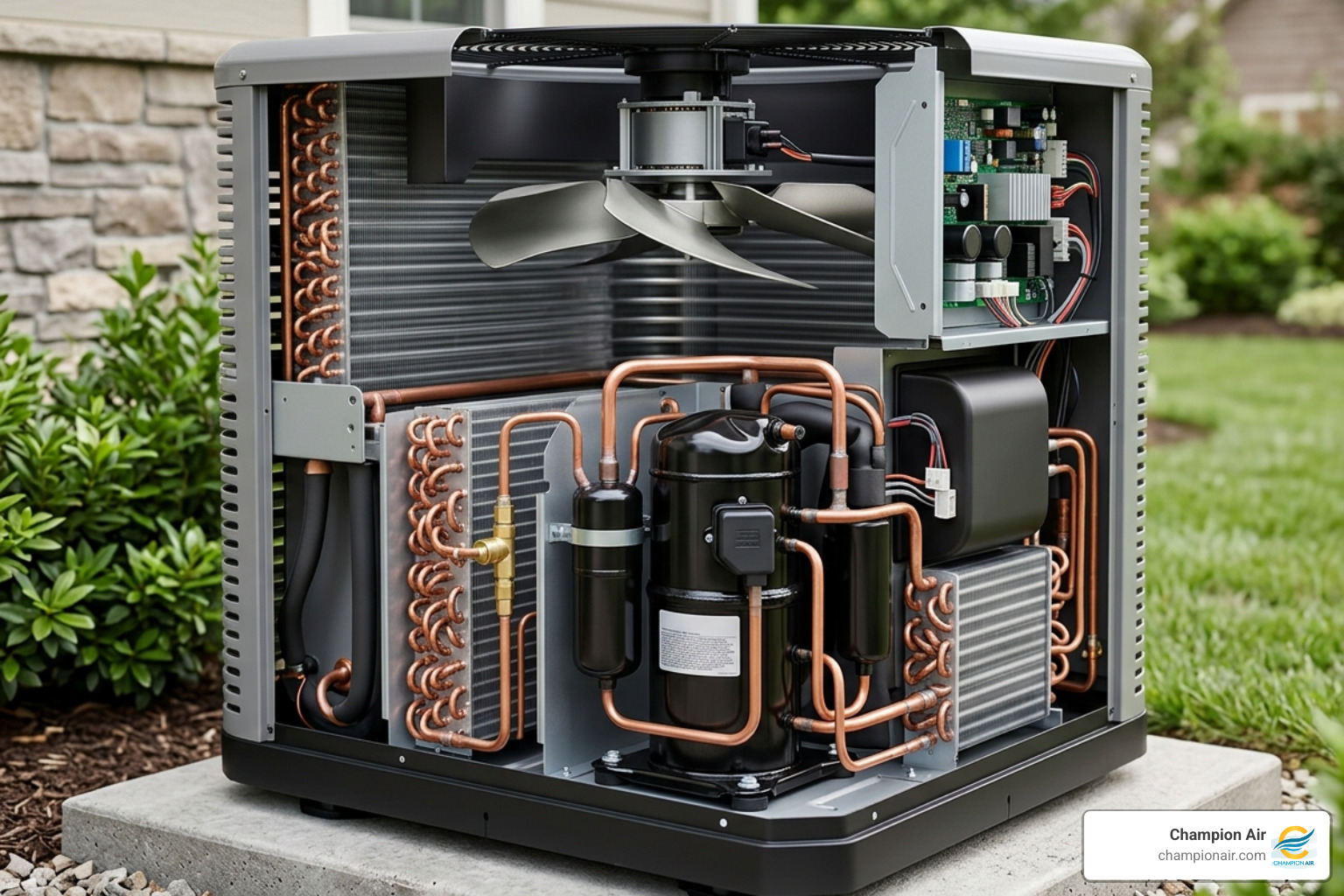
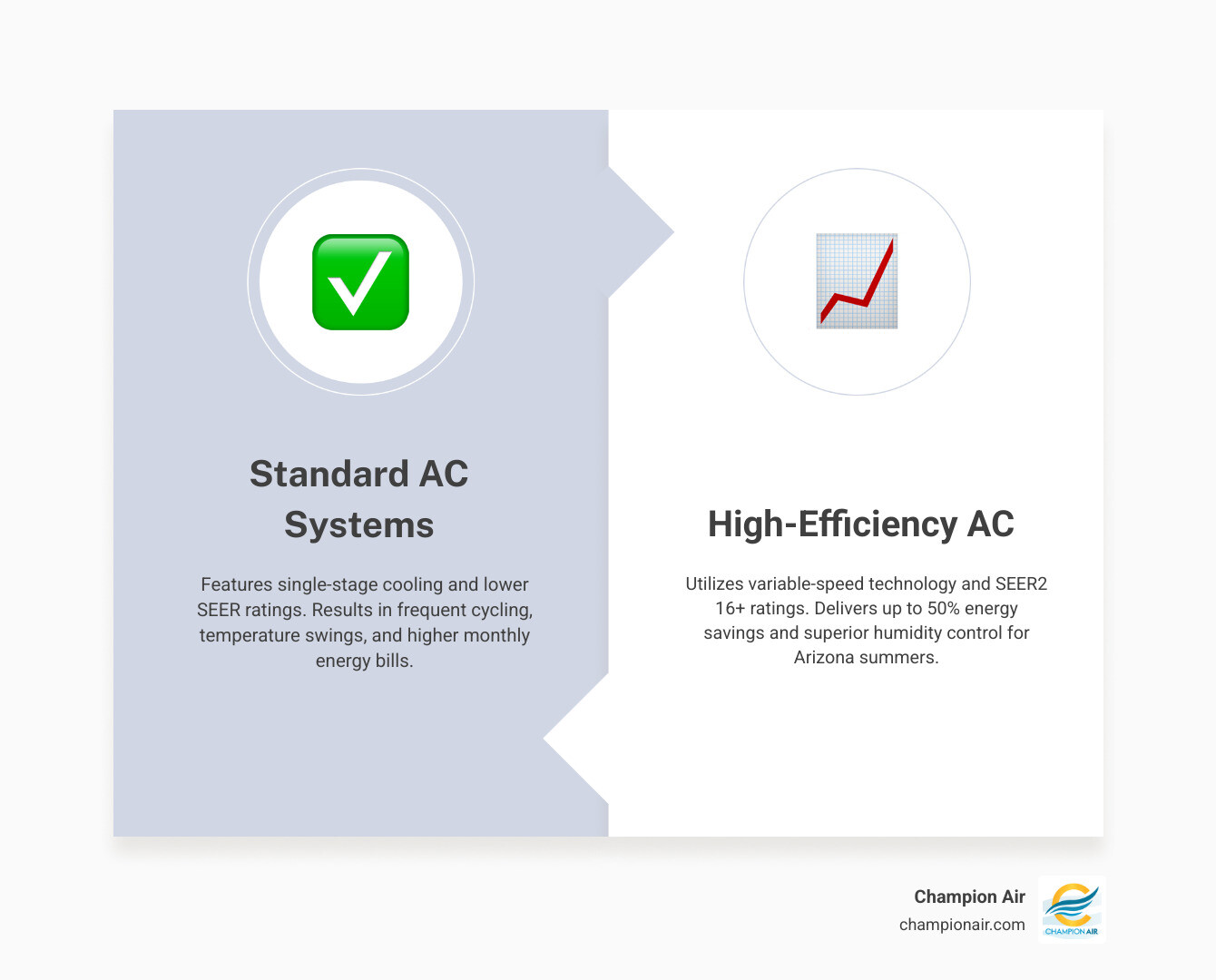
If the compressor is the "heart" of your AC, then variable-speed technology is like a heart that knows exactly how much blood to pump based on whether you're sleeping or running a marathon. Standard AC units are "single-stage," meaning they are either 100% on or 100% off. Imagine driving your car in Phoenix traffic with only two settings: floor the gas pedal or hit the brakes. It’s jerky, inefficient, and wears out the parts.
Variable-speed systems, also known as inverter-driven systems, can modulate their output in tiny increments—sometimes as small as 1%. The Benefits of Variable Inverter Air Conditioner Technology are massive for Arizona residents. Instead of the system "kicking on" with a loud hum and a blast of cold air, it starts softly and runs at a low, steady speed for longer periods.
When you Why Choose a Lennox Variable System, you’re investing in a unit that can meet your cooling needs about 80% of the time using its lower, more efficient settings. This prevents the constant "start-stop" cycle that consumes the most electricity and causes the most wear and tear on your equipment.
Maximizing Comfort with High Efficiency AC Features Worth Paying For
Comfort in Arizona isn't just about the temperature on the thermostat; it's about how the air feels. We’ve all been in a home that feels "cool but clammy." This usually happens because a standard unit cools the room so fast that it doesn't run long enough to pull moisture out of the air.
High-efficiency systems with variable-speed technology can remove twice as much moisture and humidity compared to standard units. This is a vital feature during our monsoon season in late summer. Furthermore, because these systems run longer at lower speeds, they provide superior air filtration. The air in your home passes through your high-quality filters more frequently, which is essential for managing the dust and allergens common in Scottsdale and Peoria. When you Maximize Home Comfort and Efficiency with Lennox Products, you’re ensuring that every corner of your home stays within half a degree of your target temperature, eliminating those annoying "hot spots" in rooms with west-facing windows.
High Efficiency AC Features Worth Paying For: ROI and Long-Term Savings
Is the higher upfront cost actually worth it? For most Valley homeowners, the answer is a resounding yes, but the math depends on how long you plan to stay in your home. Upgrading from a SEER 12 unit to a 16 SEER2 model can reduce annual cooling energy use by 31%. Over a 10-to-15-year lifespan, those savings add up to thousands of dollars.
| System Type | Avg. Energy Use Comparison | Comfort Level |
|---|---|---|
| Single-Stage (Standard) | 100% (Baseline) | Moderate (Temp swings) |
| Two-Stage | ~85% of Baseline | High (Stable) |
| Variable-Capacity (Inverter) | ~50-60% of Baseline | Ultra-High (Precise) |
Beyond monthly bills, How New HVAC Systems Save You Money through increased home value and extended warranties. High-efficiency models often come with 10- to 20-year warranties on major components, compared to the basic 5-year warranties found on entry-level units.
Additionally, the Inflation Reduction Act has made these upgrades more affordable than ever. Federal tax credits can now cover up to 30% of the cost of a new energy-efficient system (up to $600 for central AC or $2,000 for heat pumps). When you combine these with local utility rebates from providers like SRP or APS, the "payback period" for a high-efficiency unit can be as short as five to eight years.
Smart Integration and Zoning for Arizona Homes
A high-efficiency AC is only as smart as the person (or device) controlling it. This is Why You Need Smart Thermostats in Arizona. A smart or communicating thermostat doesn't just turn the air on; it "talks" to your variable-speed compressor to optimize every minute of runtime. All You Need to Know About Programmable Thermostat Savings suggests that setting your thermostat correctly can reduce cooling costs by approximately 10%.
However, even the best AC can't overcome leaky ducts. In many older Phoenix homes, leaky ducts waste 20% to 30% of the energy used to run the system. We highly recommend duct sealing as a critical efficiency feature. If your cold air is escaping into your attic before it reaches your bedroom, you're literally burning money. Pairing a high-efficiency unit with a zoning system—which allows you to cool the living room during the day and only the bedrooms at night—is the ultimate way to maximize your ROI.
Future-Proofing Your Home with Eco-Friendly Refrigerants and Proper Sizing
The HVAC industry is currently undergoing a massive shift in refrigerants. Older systems used R-410A, which is being phased out due to its high Global Warming Potential (GWP). The newest high-efficiency systems for 2025 and 2026 are transitioning to eco-friendly refrigerants like R-454B and R-32.
Choosing a system that uses these new refrigerants now is a smart move for future-proofing. As R-410A becomes less available, the cost to repair older systems will skyrocket. By investing in a new platform today, you ensure that parts and refrigerant will be readily available and affordable for the next two decades.
Before you choose a unit, however, you must answer one critical question: What Size AC Unit Do I Need?. In the past, many contractors used a "rule of thumb" based on square footage. This often led to oversized units that short-cycled, meaning they turned on and off too quickly to dehumidify the air.
For high-efficiency systems, we perform a professional Manual J load calculation. This looks at your home's insulation, window orientation, and local Scottsdale climate to determine the exact tonnage required. Whether you are comparing Carrier Infinity Variable Speed vs. Lennox Variable Speed, the "best" unit is the one that is perfectly matched to your home’s specific needs. We also verify "static pressure" during installation to ensure your ductwork can handle the airflow of a high-efficiency blower.
Frequently Asked Questions About High-Efficiency Cooling
Should I choose a heat pump or a ductless mini-split for my Phoenix home?
For most homes in the Valley, an air-source heat pump is an incredible value. It provides both high-efficiency cooling in the summer and cost-effective heating during our chilly winter nights. If you have a specific room that always stays hot—like a converted garage or a home office—a ductless mini-split is a fantastic high-efficiency supplement that avoids the energy loss of ductwork entirely.
How do high-efficiency units compare in terms of noise levels and decibel ratings?
High-efficiency units are significantly quieter. Because they use variable-speed fans and insulated compressor blankets, many operate at 50% lower noise levels than standard models. A high-end unit might run at 55–65 decibels (about the sound of a quiet conversation), while an older, standard unit can roar at 75 decibels or more.
What are the signs that my system is too old to benefit from maintenance?
We recommend the "$5,000 Rule." Multiply the age of your unit by the cost of the repair. If the total is more than $5,000, it’s usually time to replace it. Other signs include rising energy bills that maintenance can't fix, frequent breakdowns, or if your system still uses the phased-out R-22 refrigerant.
Conclusion
Investing in a new air conditioner is a major decision, especially in a climate as demanding as ours. By focusing on high efficiency ac features worth paying for, you aren't just buying a piece of machinery—you're buying lower monthly bills, a quieter home, and the peace of mind that comes with a future-proofed system.
At Champion Air, we’ve been serving Scottsdale, Phoenix, Mesa, and the surrounding Valley cities since 1947. We specialize in high-efficiency Lennox systems and offer 24/7 emergency service with no overtime charges. Our technicians are experts in Manual J calculations and precision installations, ensuring that your high-efficiency investment actually delivers the savings it promises.
Ready to upgrade your home’s comfort? Contact us for expert air conditioning solutions in the Valley today and let our team help you find the perfect system for your Arizona lifestyle.
Talk to a Champion
Have an HVAC question — or a quote you're not sure about?
Our free second opinion reviews any competitor quote line by line, and our team answers Valley HVAC questions every day. No pressure, no obligation — that's the Champion Air promise.
Talk to a Champion
Free Second Opinion
Already have a quote? We review it line by line, free. If it's fair, we'll tell you to take it.
About the Author
Champion Air
More Articles
View All PostsKeep Reading
Related Articles


Ready to Get Started?
Whether you need a repair, maintenance, or a new installation, our expert team is here to help.