Why Your Desert AC Needs More Love Than a Saguaro Cactus
Champion Air
Discover benefits of regular ac maintenance in the desert: boost efficiency, cut bills, extend lifespan in AZ heat. Schedule now!
Why the Benefits of Regular AC Maintenance in the Desert Are Too Important to Ignore
The benefits of regular ac maintenance in the desert go far beyond keeping your home comfortable — in Arizona's brutal climate, a well-maintained AC system is the difference between a safe, efficient home and a costly emergency on the hottest day of the year.
Here's a quick summary of what regular AC maintenance does for desert homeowners:
| Benefit | What It Means for You |
|---|---|
| Lower energy bills | A maintained system uses 10-25% less energy than a neglected one |
| Fewer breakdowns | Small problems are caught before they become expensive failures |
| Longer system life | Regular care can extend your AC's lifespan by 5-10 years in desert climates |
| Better indoor air quality | Clean filters and coils reduce dust, allergens, and pollutants inside your home |
| Warranty protection | Many manufacturers require documented maintenance to honor warranty claims |
| Peace of mind | Your system is ready before the first triple-digit day hits |
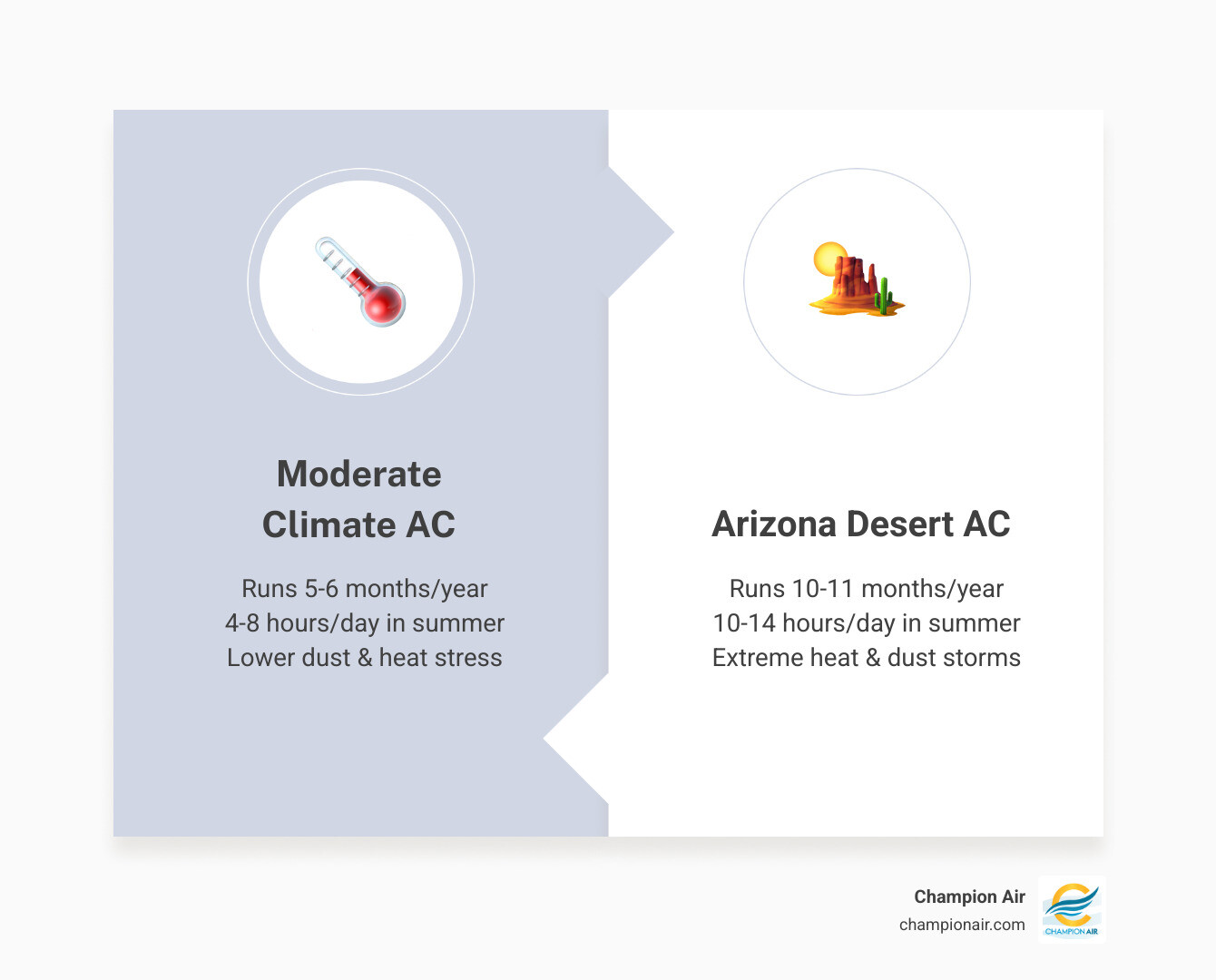
Most AC systems in moderate climates run 5 to 6 months a year. In Phoenix, Scottsdale, and Mesa, yours runs 10 to 11 months — often 10 to 14 hours a day during peak summer. That's not normal wear and tear. That's a marathon run in sand, every single year. And without regular maintenance, the compressor, capacitors, coils, and motors pay the price long before they should.
The good news? Consistent, professional maintenance is one of the most straightforward ways to protect your home, your family's comfort, and your investment in your HVAC system.
I'm Barry Farah, and alongside my son I lead one of Arizona's top residential HVAC companies — the largest Lennox family-owned residential replacement company in the state — so I've seen what the desert does to neglected AC systems, and I know exactly what the benefits of regular ac maintenance in the desert look like when homeowners take them seriously. In this guide, I'll walk you through everything you need to know to keep your system running strong all year long.
The Unique Challenges of Cooling a Home in the Arizona Desert
Living in the Valley of the Sun is a dream until July hits. While a Saguaro cactus is built to store water and thrive in the heat, your air conditioner is a mechanical beast that has to fight the environment every second it’s running. In cities like Phoenix, Gilbert, and Chandler, the environment is actively trying to wear your system down.
Extreme Heat Stress and High Duty Cycles
In May 2026, we are seeing the same patterns we've seen for decades: triple-digit temperatures that don't just peak in the afternoon but linger well into the night. When it’s 115°F outside, your AC isn't just "working"; it’s operating at its absolute mechanical limit. In moderate climates, a system might cycle on and off a few times an hour. In the desert, it might run for 10 to 14 hours straight. This high "duty cycle" accelerates the breakdown of lubricants and puts immense pressure on the compressor—the "heart" of your system.
Haboobs, Dust, and Sand
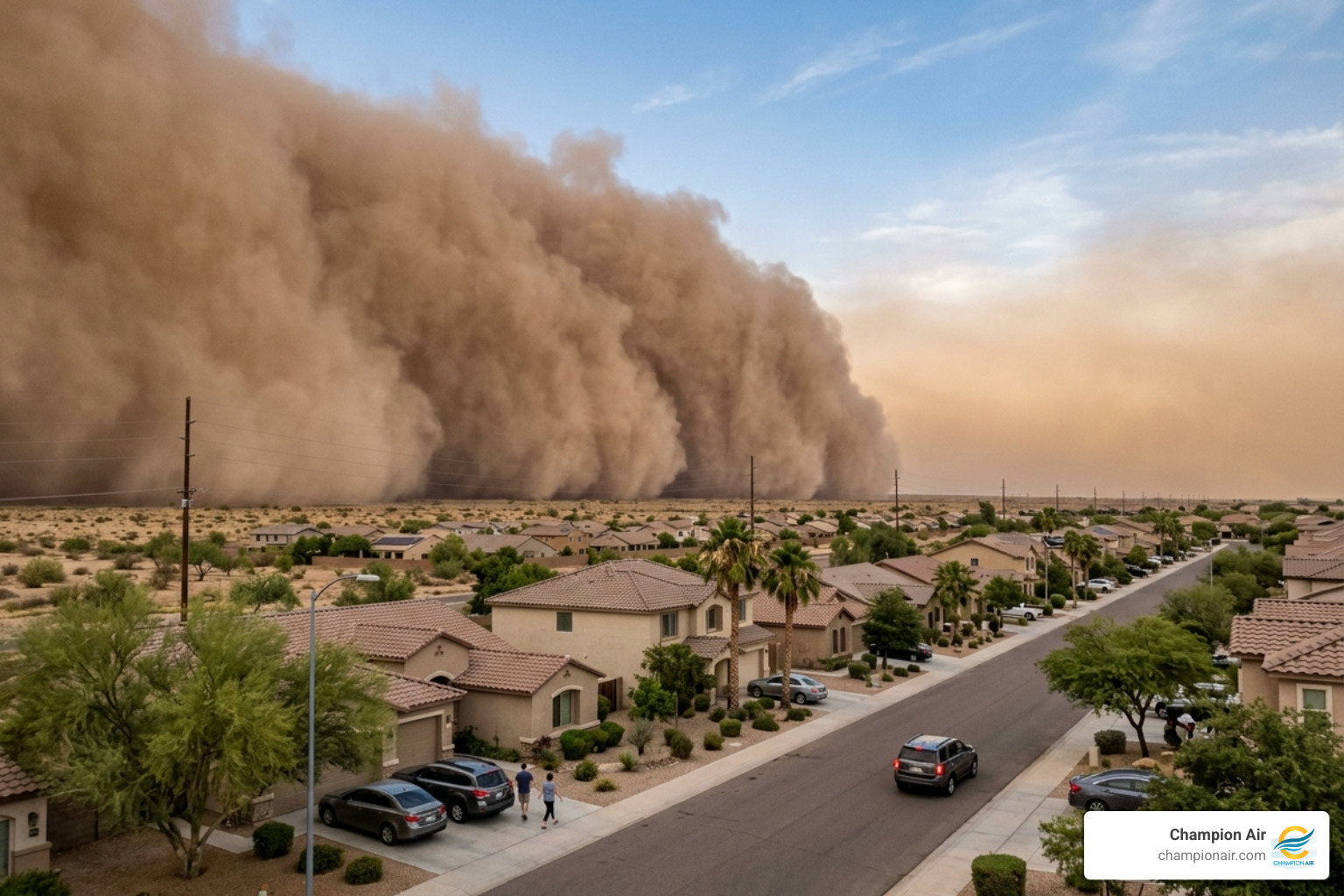
Arizona is famous for its haboobs—massive walls of dust that can swallow a neighborhood in minutes. While they make for dramatic photos, they are a nightmare for HVAC systems. Fine desert sand acts like an abrasive, wearing down moving parts, and it also acts as an insulator. When dust coats your outdoor condenser coils, it traps heat. This forces the system to work harder and run longer just to move the same amount of heat out of your home. Learning how to protect your HVAC in a dust storm is a vital skill for any local homeowner.
150-Degree Attic Temperatures
Most residential ductwork and air handlers in the Valley are located in the attic. During a typical Phoenix summer, attic temperatures can soar to 150°F or higher. This means your AC is trying to push cold air through pipes sitting in an oven. Any leak in your ductwork or lack of insulation can lead to massive efficiency losses.
Key Benefits of Regular AC Maintenance in the Desert
If you wouldn't drive your car across the country without checking the oil and tires, you shouldn't ask your AC to survive an Arizona summer without a tune-up. The benefits of regular ac maintenance in the desert are measurable and immediate.
| Feature | Maintained System | Neglected System |
|---|---|---|
| Energy Usage | 15-20% Lower | 10-25% Higher |
| Lifespan | 12-15+ Years | 8-10 Years |
| Repair Risk | Low (Pre-identified) | High (Emergency) |
| Air Quality | High (Filtered/Clean) | Low (Dust Accumulation) |
Energy Efficiency and Utility Bill Reduction
A clean system is a cheap system to run. According to the Department of Energy, well-maintained HVAC systems can cut energy use by 15-20%. In a place like Scottsdale or Peoria, where summer electric bills can be staggering, that 20% translates into hundreds of dollars in annual savings. By scheduling a seasonal HVAC tune-up, you ensure that your coils are clean and your refrigerant levels are perfect, allowing for maximum heat exchange with minimum electricity.
Breakdown Prevention
There is a specific kind of "drama" that happens when an AC fails on a Friday afternoon in July. Repair wait times skyrocket across the Valley, and your home becomes a sauna within hours. Most of these failures are caused by small components—like a $50 capacitor or a worn belt—that could have been caught during a spring AC tune-up. Maintenance is essentially "breakdown insurance."
Maximizing Energy Efficiency and Performance
During a professional visit, we focus heavily on airflow optimization. In the desert, even a small restriction in airflow can cause your evaporator coil to freeze up. We also perform thermostat calibration. If your thermostat is off by just two degrees, your system could be running hours longer than necessary, wasting energy and wearing out parts. Enrolling in maintenance plans ensures these checks happen automatically so you never have to remember to call.
Long-Term Benefits of Regular AC Maintenance in the Desert
The financial "win" of maintenance isn't just in the monthly bill; it’s in the replacement cycle. How long do AC units last in Arizona? Usually, about 10 to 15 years. However, a neglected unit in a high-dust area like Buckeye or Queen Creek might die in 8. By extending your AC's lifespan through regular motor lubrication and compressor health checks, you delay a major capital expense by half a decade or more.
What Happens During a Professional Desert AC Tune-Up?
When we send a licensed technician to your home in Phoenix or Mesa, they aren't just "looking" at the unit. A desert-grade tune-up is a rigorous process that usually takes 60 to 90 minutes.
- Electrical Connection Tightening: Extreme heat causes wires to expand and contract, which can loosen connections and lead to electrical shorts.
- Capacitor Testing: Capacitors are the most common "sudden death" part in Arizona. We test their "mfd" (microfarads) to see if they are weakening before they actually pop.
- Coil Cleaning: We remove the "mat" of desert dust from your outdoor coils to restore heat transfer.
- Condensate Drain Clearing: High-use systems produce a lot of moisture. We flush the lines to prevent water damage and mold growth.
- Refrigerant Check: We ensure there are no leaks. A small leak caught early might cost a hundred dollars to fix, while a dry system can lead to a $2,000 compressor failure.
If you’re looking for AC maintenance in Phoenix, you want a team that understands these specific local stressors.
Improving Indoor Air Quality
The desert isn't just hot; it's dusty. Your AC is your home's primary lung. If you have allergies or respiratory issues, the benefits of regular ac maintenance in the desert include much cleaner air. During a tune-up for AC maintenance in Scottsdale, we inspect your ductwork for leaks that might be pulling attic dust into your living space and recommend the right MERV-rated filters to trap desert particulates without suffocating your system.
Scheduling Your Maintenance: Timing is Everything in the Valley
In the Arizona desert, the "cooling season" is long—often from April through October. This means your window for preventative care is narrow.
- Spring Preparation (March-April): This is the "Gold Standard." You want to get your prepping for summer done before the first 100-degree day.
- Fall Recovery (October-November): After a brutal summer, your system has "scars." A fall checkup identifies parts that were pushed to the brink, ensuring your heater (or heat pump) is ready for the chilly desert nights.
Because our systems work twice as hard as those in the Midwest, once-a-year service is the bare minimum. For many homes in dusty areas or for older units, bi-annual service is highly recommended. This is why the importance of maintenance agreements cannot be overstated—they lock in your spot on the calendar before the "emergency season" begins.
Conclusion
At Champion Air, we've spent years keeping families cool from Surprise to Apache Junction. We know that in Scottsdale, Phoenix, and Mesa, an air conditioner isn't just a luxury—it's a survival tool. By investing in regular maintenance, you are choosing reliability over "drama," and efficiency over waste.
Watch for these warning signs that your AC is struggling:
- Weak airflow from your vents.
- Unusual grinding, banging, or squealing noises.
- A sudden spike in your monthly utility bill.
- The system "short-cycling" (turning on and off every few minutes).
- Strange odors coming from the ductwork.
How often should I change my air filters in Arizona?
In the desert, the "every 3 months" rule doesn't apply. During the peak of summer, you should check your filter every 30 days. If you have pets or live near open desert construction, you will likely need to replace it every 30 to 60 days to prevent dust from "choking" your motor.
What are the signs my AC needs immediate maintenance?
If you see ice on the copper lines, hear a loud humming but no air is moving, or find that your vents are blowing warm air, turn the system off immediately and call for help. These are signs of a system in distress that could lead to permanent damage if left running.
Is a spring tune-up really worth it for my home?
Absolutely. A spring tune-up is mathematically one of the best investments you can make in your home. It prevents emergency repairs that are often ten times more expensive than the maintenance visit itself and ensures you aren't overpaying the electric company all summer long.
Don't wait for the heat to win. Schedule your professional AC maintenance today with Champion Air and enjoy a worry-free summer.
ChampionCare Maintenance
Stay ahead of breakdowns — ChampionCare starts at $23/month.
Two seasonal tune-ups a year, waived diagnostic fees, 15% off repairs, and priority scheduling. It's the easiest way to keep an Arizona system efficient through triple-digit summers.
ChampionCare Maintenance
ChampionCare · $23/mo
Two tune-ups a year, waived diagnostics, 15% off repairs, priority scheduling. First system $23/month.
About the Author
Champion Air
More Articles
View All PostsKeep Reading
Related Articles


Ready to Get Started?
Whether you need a repair, maintenance, or a new installation, our expert team is here to help.