Air Purifier & Filter Repair & Service in Fountain Hills, AZ
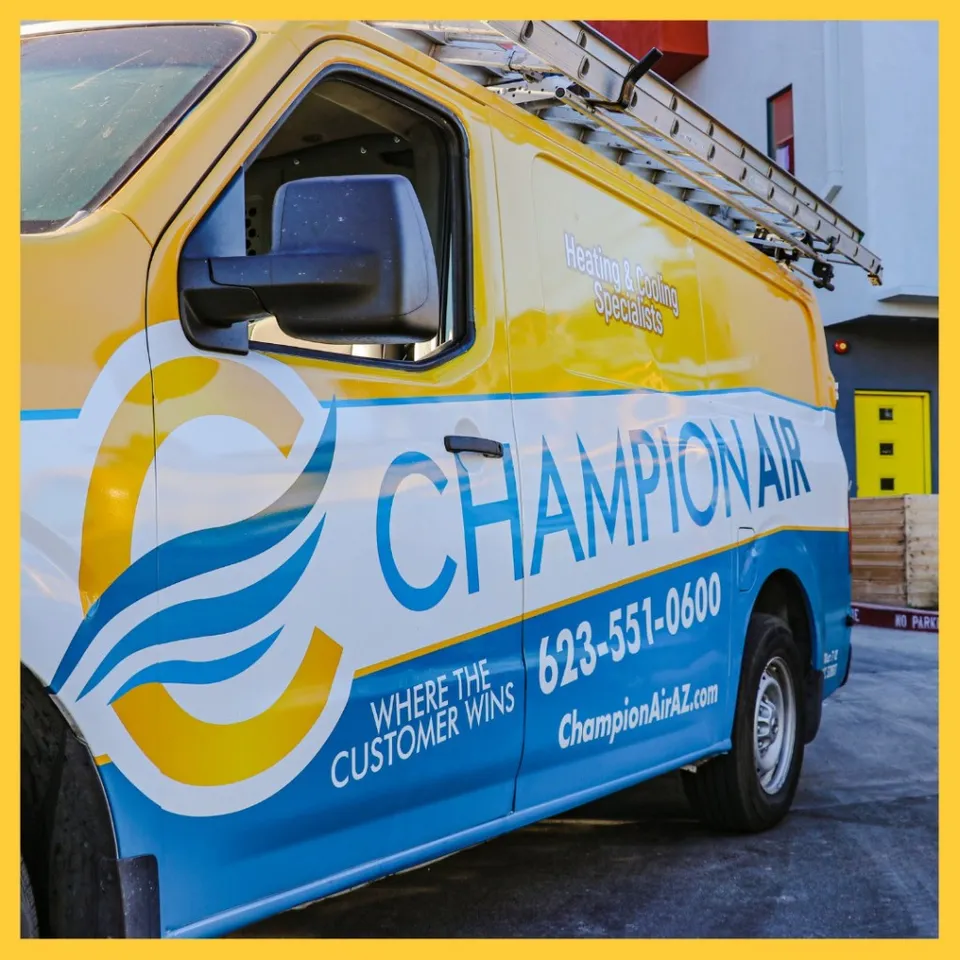
Professional HVAC service from Champion Air.
4.9★
Google Rating
1,000+
Reviews
Since 1982
Family owned
Dave Lennox
Award winner
24/7
Emergency service
Get Your AC Fixed Today
Same-day response · Transparent pricing · No pressure
- BBB A+ Rated
- Dave Lennox Award
- Licensed & Insured
- No Overtime Charges
- Pearl Certified
Has Your Fountain Hills Air Filtration System Quietly Stopped Working?
Did you notice a dusty haze in the morning light through your great-room windows, hear the blower straining to push air through one zone, or find the UV indicator gone dark on the air handler in the casita? Whole-home filtration that quietly fails is more common than most homeowners realize, and a real diagnosis matters more than guessing at part swaps. The team at Champion Air is ready to find what actually failed in your Fountain Hills filtration system.
Common Filtration Problems We See in Fountain Hills Homes
The Air Smells Stale or Musty Even When the System Runs
The system has been running for half an hour and the great-room air still feels heavy, with a faint musty edge near the wine cellar or the courtyard door. When the filtration media is overloaded or the UV bulb has stopped emitting at proper wavelength, the system is moving air without actually treating it, and you feel that absence as a stuffy quality the AC alone never fixes. The fix depends on which component failed — a media cell swap, a UV bulb replacement, or a deeper return-side cleaning — and that calls for a real diagnosis, not a guess at the most likely part.
One Zone Stays Dusty While the Others Are Fine
The wing fed by the second air handler is collecting dust on every surface within a day, while the master suite and great room stay reasonably clean. Multi-handler homes here often have one filter loaded up far beyond the others, restricting airflow on that zone and dropping its filtration efficiency to almost nothing. You may also see the affected zone running warmer or louder, because the blower for that handler is fighting elevated static pressure from a clogged or torn filter. Mapping which handler serves which area is step one.
Your Electronic Air Cleaner Indicator Is Red
The status light on your electronic cell has been red or amber for weeks, and you suspect it has not been pulling particles out of the air for a while. Electronic air cleaners depend on high-voltage cells that lose effectiveness as they accumulate buildup or as the cell stack shorts out from accumulated grime, and that failure is silent until you check the indicator. A proper service involves removing the cell, washing it under controlled conditions, testing the high-voltage power supply, and replacing the cell or the entire unit if performance no longer meets spec.
The UV Light Went Dark in the Casita
Your UV-paired filtration component on the casita air handler has not been glowing the soft blue you remember, and the secondary structure has felt different ever since. UV bulbs lose their germicidal output long before they go fully dark, and a bulb that still looks lit can already be operating well under the wavelength rating that does the actual sterilization work. Bulb replacement is straightforward, but the real value is verifying the entire UV assembly, ballast, and reflector geometry are still capable of delivering the dose your system was designed for.
Allergies Suddenly Got Worse After Years of Stable Air
The household has lived in the home for five years with stable indoor air, and over the past few months allergies have spiked for no obvious reason. The most common cause is a slow degradation in filtration performance — torn media, a bypass gap around a misseated filter, or an electronic cell that has lost most of its capture rate without anyone noticing. A real airflow and filtration audit identifies the actual leak in capture performance instead of throwing parts at the symptom.
Why Filtration Components Fail in Fountain Hills Custom Homes
Higher Particle Load Wears Components Faster
Foothill dust drift loads filtration components several times faster than a standard suburban environment. UV bulbs degrade on schedule no matter the dust load, but media cells and electronic cleaners accumulate buildup at a rate the original installer rarely accounted for. What looks like a premature failure is often just a component finishing its actual rated life under desert custom-home conditions, and tracking that timeline matters more than the calendar interval the manufacturer printed on the box.
Multi-Handler Imbalance Wears One Side Hardest
When two or three air handlers feed different wings of the home, one almost always runs more total hours than the others — typically the one serving the great room or the master suite. That handler's filtration loads up, fails, and gets replaced more often than the secondary handlers, which sit unused long enough to develop their own settled-dust problems. We map run-time hours and filter-load patterns across every handler so the next failure cycle does not surprise you.
Static Pressure Climbs Damage Adjacent Components
A clogged media cell or jammed media cabinet on one zone forces the blower to fight against elevated static pressure, accelerating wear on the blower motor, the variable-speed control board, and any electronic filtration component downstream. By the time the original filter problem is found, secondary damage has often already started. Catching the static-pressure climb during a service visit prevents the cascade — a simple media swap stays a simple repair instead of escalating into a blower or board replacement.
Casita-Side Components Sit Through Long Idle Stretches
Detached casita and pool-house air handlers run only when the structure is occupied, which leaves UV bulbs, electronic cells, and media filters sitting idle for weeks at a time. Idle UV bulbs degrade in a different pattern than active ones, and idle electronic cells accumulate dust on de-energized plates that then short-circuit the moment the system is restarted. A casita-specific service interval — separate from the main-house schedule — is the only realistic way to keep secondary filtration loops working.
What to Expect When We Service Your Filtration System
When our Champion Air technician arrives, the first step is a full filtration audit across every air handler on the property — including the secondary structures. We test static pressure across each filter, inspect every media cell or electronic component for wear and bypass, verify UV output where ultraviolet components are installed, and walk you through what is actually failing in plain language before quoting a single repair.
You receive a clear breakdown of which components need replacement now, which can wait through the next service interval, and which are simply at end of life and need a fresh install. Our NATE-certified team carries the most common filtration parts on every truck, so the majority of repair calls in custom homes here resolve on the first visit.
How We Diagnose Multi-Handler Filtration Problems
Multi-zone filtration problems live or die on whether the technician maps the entire return-air topology before pulling parts. We open every filter slot, check airflow at the supply registers fed by each handler, and confirm which zones are actually losing capture performance and which are masking a problem somewhere else. Skipping that mapping step leads to repair-after-repair calls where each visit chases a different symptom of the same upstream filtration issue.
Protecting Your Indoor Air Quality Investment
A real filtration repair includes a check on adjacent components — return-air ductwork integrity, air-handler cabinet seals, and UV reflector geometry — because a single torn return boot or unsealed cabinet can render a freshly serviced filtration system half as effective. We touch these adjacent items on every service visit.
Coordinated indoor-air-quality service also pairs naturally with humidifier and dehumidifier diagnosis, since the same return-air infrastructure carries every component that conditions your indoor environment. Catching one filtration issue often surfaces the next-stage opportunity to stabilize humidity or upgrade to a higher-rated media cabinet.
The Real Cost of Letting a Filtration System Fail Quietly
A failing filtration system that nobody notices is genuinely costly in custom homes here. You inhale higher particle loads for months, sensitive household members develop respiratory symptoms with no obvious source, and the fine cabinetry and finishes throughout the home accumulate damage from dust and UV-untreated airborne contaminants.
There is also a slow drag on the equipment side. A clogged filter or shorted electronic cell forces the blower into elevated static pressure for every run cycle, quietly accelerating wear on motors and boards that were never designed for that duty cycle. A small filtration repair caught early stays a small repair — the cascade out of an ignored failure runs into thousands.
Schedule Your Fountain Hills Air Purifier and Filter Repair Today
Whether your UV bulb has gone dark, an electronic cell has quit pulling particles, or one zone of the house has clearly stopped getting clean air, the right diagnosis fixes the root cause instead of the symptom. Reach out to Champion Air today to schedule your filtration repair visit, and let our local technicians get every component in your Fountain Hills system performing the way it was designed to.
Ready to book your visit?
Related Services In This Area
View areaAreas We Serve
All Service AreasWhy Choose Us
- Licensed, Bonded & Insured
- Upfront, Honest Pricing
- 100% Satisfaction Guarantee
- Same-Day Service Available
- Certified Lennox Premier Dealer
More Services
Related Services
Need a different service?
Ready to Get Started?
Contact us today for a free estimate on your Air Purifier & Filter Repair & Service in Fountain Hills, AZ needs.