Phoenix Home Additions: Your Guide to Optimal HVAC Planning
Champion Air
Why Planning HVAC for Your Phoenix Home Addition Matters
Home addition hvac in phoenix, az requires careful planning due to the extreme desert climate and its impact on your existing cooling system. When you add square footage to your Phoenix home, your current HVAC system may struggle to maintain comfort throughout the entire space.
Quick Guide to Home Addition HVAC Options:
- Extend Existing Ductwork - Works for small additions (200-300 sq ft) if your current system has adequate capacity
- Upgrade Central HVAC Unit - Best for larger additions or when your existing system is near the end of its lifespan
- Install Ductless Mini-Split - Ideal for independent temperature control and avoiding ductwork modifications
- Add Zoning System - Helps manage comfort differences between original home and new addition
The challenge is straightforward: Phoenix temperatures regularly exceed 100°F for months at a time, creating enormous cooling demands. Your existing air conditioner was sized for your home's original square footage—not the additional space. Without proper HVAC planning, homeowners frequently experience new additions that are 15-20°F warmer than the rest of the house, along with energy waste and unnecessary wear on mechanical components.
Need help with your home addition HVAC? Learn more about our comprehensive HVAC services or schedule a consultation to ensure your new space stays comfortable year-round.
I'm Barry Farah, and as the leader of Arizona's largest Lennox family-owned residential replacement company, I've guided countless Phoenix homeowners through successful home addition hvac in phoenix, az projects. Our team specializes in designing integrated comfort solutions that account for Arizona's unique climate challenges, ensuring your investment delivers lasting comfort and efficiency.
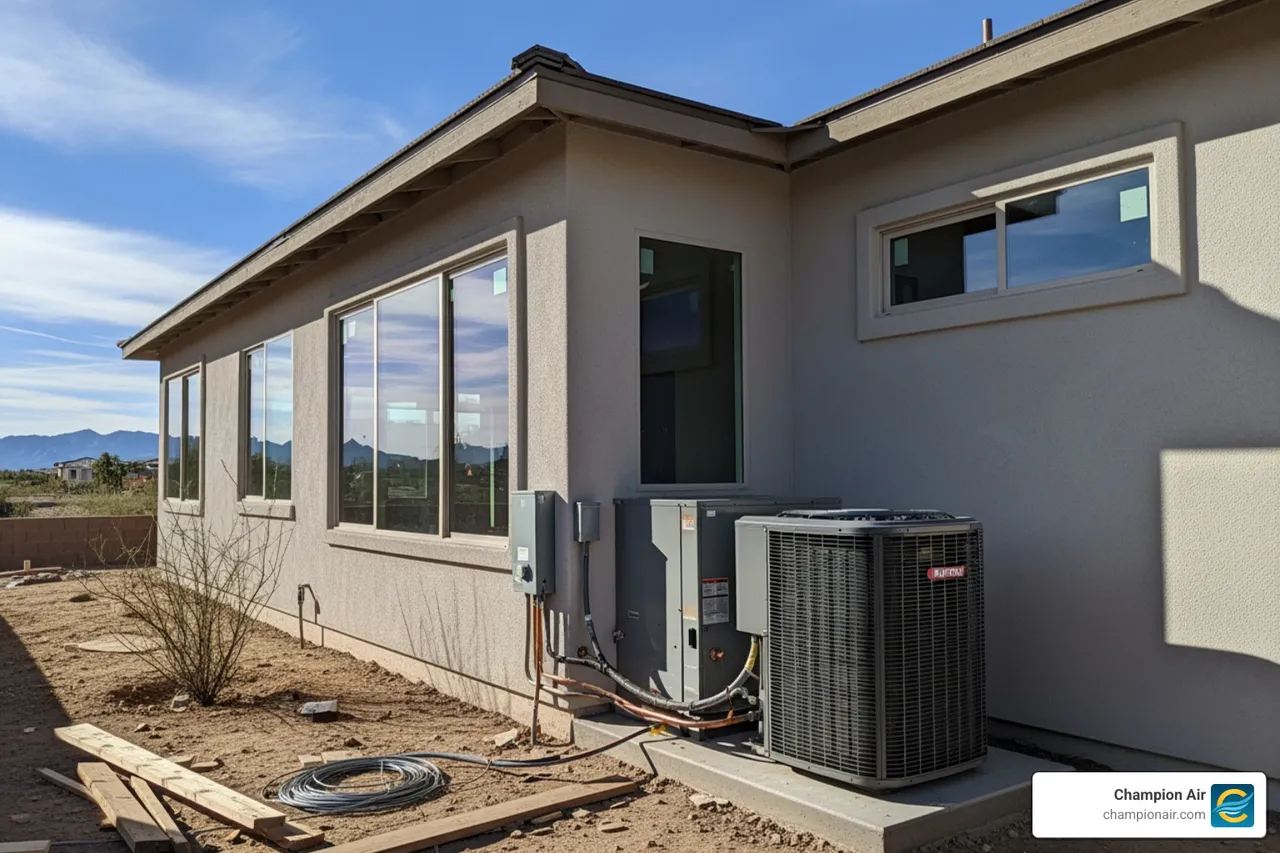
Navigating Home Addition HVAC in Phoenix, AZ: Key Challenges and Considerations
Phoenix's climate presents unique challenges for indoor comfort, especially with a home addition. With summer temperatures frequently exceeding 100°F, efficient HVAC is a necessity. Any expansion to your home can significantly impact your existing heating and cooling system if not properly addressed.
Imagine adding a new master suite, only to find it's always warmer than the rest of the house. This common issue arises because your existing HVAC system wasn't designed for the extra square footage and intense solar heat gain. The result is often hot spots, poor airflow, and a struggling system, leading to higher utility bills and accelerated wear. We help you avoid these pitfalls, ensuring your entire home remains a cool oasis.
We understand the unique demands our climate places on your home's comfort system. That's why we offer expert Air Conditioning Services to combat the intense heat and reliable Heating Services for those surprisingly chilly desert nights.
The Impact of New Square Footage on Your Current System
Think of your existing air conditioning unit like a car engine designed for a certain weight. Adding significant square footage is like asking that engine to pull a much heavier load. The result is an HVAC system that becomes undersized for the new, larger space.
An undersized system runs almost continuously, struggling to reach the set temperature, especially on the hottest days. This constant operation fails to dehumidify the air effectively, leaving your home feeling clammy. It can also cause "short cycling"—frequent on/off cycles that don't complete a full cooling process.
Both issues put stress on components, increasing wear and the likelihood of breakdowns over time. This inefficiency drastically increases utility bills for less comfort. Without proper HVAC planning, Phoenix homeowners often see temperature differences of 15-20°F between the new addition and the original home, undermining the investment and reducing comfort.
To learn more about how home additions affect your HVAC system, visit our dedicated page on Heating and Air Conditioning for a Home Addition.
Why Insulation and Windows Matter
In Phoenix, the battle against heat starts with your home's envelope—its insulation and windows. These elements determine how much heat enters your home and how hard your HVAC system must work.
The quality of your insulation is critical. In our scorching climate, poor insulation allows heat to pour into your home, drastically increasing the cooling load. Well-insulated walls, ceilings, and floors act as a thermal barrier, keeping heat out and cool air in.
Windows are another critical factor. The addition's orientation, along with the number and type of windows, directly impacts solar heat gain. South and west-facing windows allow significant heat in, turning your addition into a greenhouse. Opting for energy-efficient, double-pane, or Low-E glass significantly reduces heat transfer. Shading from awnings or overhangs also makes a big difference.
Your choices in insulation and windows directly affect HVAC requirements. Better materials mean a smaller cooling load, allowing for a more efficient HVAC system. This integrated approach improves comfort and contributes to better indoor Air Quality by maintaining stable temperatures and reducing pollutant infiltration.
Core HVAC Solutions for Your Phoenix Home Addition
When planning a home addition in Phoenix, you'll encounter a few primary HVAC solutions. Choosing the right option depends on the size of your addition, the condition of your existing system, your budget, and your desired level of comfort. Below, we outline the main strategies to integrate comfort into your new space.
| Feature / Option | Extending Existing Ductwork | Upgrading Central Unit | Installing a Ductless Mini-Split System |
|---|---|---|---|
| Pros | - Lowest upfront investment if feasible | - Whole-home uniform comfort | - Zoned comfort, independent control |
| - Uses existing infrastructure | - Improved energy efficiency with new unit | - No new ductwork needed | |
| - Can handle larger additions | - High energy efficiency | ||
| - Can replace an aging system | - Flexible installation options | ||
| Cons | - Only suitable for small additions | - Higher upfront investment | - Higher initial investment than extending ducts |
| - Requires existing system to have excess capacity | - May require ductwork modifications | - Visible indoor unit(s) | |
| - Risk of reduced efficiency in original home | - Disruption during installation | - Requires outdoor unit placement | |
| - Potential for hot/cold spots in addition | - Less granular control than zoning or mini-splits | - Best for single zones or specific areas | |
| Best For | Very small additions where original system is oversized | Larger additions, replacing old systems, whole-home solution | Targeted cooling/heating, specific rooms, no duct access |
| Phoenix Climate Fit | Limited applicability, risky for extreme heat | Good, especially with high-efficiency units | Excellent for precise temperature control in new space |
No matter which path you choose, our team is ready to provide expert HVAC Services custom to your home addition.
Option 1: Extending Existing Ductwork
Extending existing ductwork can seem like a straightforward solution, but it's crucial to understand the pros and cons, especially in Phoenix's demanding climate.
Pros:
- Lower Upfront Investment: If your existing system has surplus capacity, extending ductwork can be less expensive initially.
- Seamless Integration: The new space uses the same central system, maintaining a uniform feel.
Cons:
- Capacity Limitations: This is the biggest hurdle. Your AC was sized for your original home. Adding square footage significantly increases the cooling load. If your system lacks excess capacity, it can't cool the addition without compromising comfort elsewhere.
- Reduced Efficiency: An undersized system runs longer and harder, consuming more energy and driving up utility bills.
- Airflow Issues: Extending Ductwork can disrupt airflow balance, leading to new hot spots.
- Re-balancing Required: Extending ducts will necessitate a professional re-balancing of your entire system to ensure proper airflow.
This option is generally only viable for very small additions (under 200-300 sq ft) and only after a professional assessment confirms your system can handle the load. If your current system already struggles, this option will likely create more problems. For a deeper dive, check out our guide on AC Sizing for Home Additions: What You Need to Know When Adding a Room or Remodeling.
Option 2: Upgrading Your Central HVAC Unit
Upgrading to a larger central AC unit is often the most comprehensive solution, especially for a substantial addition or if your existing system is nearing its 10-15 year lifespan.
When is upgrading the best option?
- Significant Square Footage Added: If your addition adds considerable space (a master suite, large family room), your existing unit won't keep up. A new, larger unit can be properly sized for the entire home's new cooling load.
- Aging System: If your HVAC system is old, inefficient, or needs frequent repairs, a home addition is the perfect time to replace it with a modern, high-efficiency unit.
- Desire for Whole-Home Uniformity: Upgrading your central unit ensures consistent temperatures and comfort throughout the entire home, old and new sections alike.
Modern central AC units offer significant energy efficiency gains with higher SEER (Seasonal Energy Efficiency Ratio) ratings. A higher SEER rating means lower utility bills—a major advantage in Phoenix. While the upfront investment is higher, the long-term energy savings and improved comfort make it a worthwhile choice.
We specialize in high-efficiency Heat Pumps that provide both cooling and heating, making them an excellent choice for a new central system in Phoenix. Our team can help you explore all your options for a full HVAC Services upgrade.
Option 3: Installing a Ductless Mini-Split System
For additions where extending ductwork isn't feasible or a full central system upgrade is more than you need, ductless mini-splits offer a versatile and efficient solution popular in the Phoenix climate.
Benefits and Drawbacks of Mini-Splits for Home Additions:
Benefits:
- Zoned Comfort and Independent Control: This is the biggest advantage. Each mini-split operates independently, letting you set the temperature in your addition separately. You can cool a guest room or office only when it's in use, saving energy.
- High Energy Efficiency: Mini-splits are among the most energy-efficient systems available, using INVERTER-driven compressors that match the precise cooling demand, helping avoid energy waste from on-off cycling.
- Flexible Installation: As the name suggests, they are "ductless," requiring no invasive ductwork. This makes them ideal for additions where extending ducts is impractical. Installation involves a small conduit connecting the indoor unit to an outdoor compressor.
- Quiet Operation: Indoor units operate very quietly, contributing to a peaceful environment.
- Multiple Indoor Unit Styles: Mini-splits come in various styles (wall-mounted, floor-mounted, ceiling cassettes) to fit your addition's aesthetic.
Drawbacks:
- Visible Indoor Units: Unlike central systems, the indoor unit is visible in the room. Modern designs are sleek, but this is a consideration for some homeowners.
- Outdoor Unit Placement: Each system requires an outdoor condenser unit that needs discreet placement.
- Higher Initial Investment (compared to simple duct extension): A mini-split can have a higher upfront investment than extending ductwork, but long-term energy savings often help balance this.
For targeted, efficient, and flexible comfort in your home addition, a ductless mini-split system is an excellent choice. Our team specializes in Ductless Mini Split Installation and can help determine if this is the right solution for you.
Ensuring Optimal Performance: Sizing, Design, and Professional Installation
The success of your home addition hvac in phoenix, az project hinges on meticulous planning, accurate sizing, and professional installation. It's not enough to simply add a unit; the entire system must be designed and installed to work seamlessly with your home's existing structure and, most importantly, to handle Phoenix's extreme climate conditions.
We strongly recommend involving an HVAC professional early in the home addition design process. This means bringing us in when you're still sketching out plans with your architect or contractor, not after the walls are up. Early involvement allows us to assess your home's original system, understand the specific characteristics of your new addition, and design an integrated comfort solution from the ground up. This proactive approach prevents costly retrofits, ensures proper ductwork routing, and supports long-term efficiency and comfort. A properly sized and installed HVAC system for a home addition can improve energy efficiency significantly, supporting lower utility usage in our high-demand cooling season. Our expertise in Home Additions HVAC ensures your project's success.
What is a Manual J Load Calculation and Why is it Crucial?
A Manual J load calculation is the industry standard for accurately determining the precise heating and cooling requirements for a home or specific space, like a new addition. It's a complex, scientific process that goes far beyond simply estimating based on square footage. For home addition hvac in phoenix, az, this calculation is absolutely crucial.
Here's what a Manual J calculation considers:
- Square Footage: The overall size of the new space.
- Ceiling Height: Taller ceilings mean a larger volume of air to heat or cool.
- Insulation Levels: The R-value of insulation in walls, ceilings, and floors.
- Window Types and Sizes: Number, size, type (single, double-pane, Low-E), and orientation of windows.
- Exterior Wall Construction: Materials and thickness of exterior walls.
- Local Climate Data: Phoenix's specific design temperatures for both heating and cooling.
- Home Orientation: Which direction the addition faces relative to the sun.
- Number of Occupants: The heat generated by people in the space.
- Internal Heat Gains: Heat from appliances, lighting, and electronics.
- Ductwork Leakage: Estimated air loss through ducts.
Why is it so important?
- Accurate Sizing: It helps prevent the common and costly mistakes of installing an HVAC system that is either too large or too small.
- Avoiding Oversized Units: An oversized unit will cool the space too quickly, then shut off before it can properly dehumidify the air. This leads to "short cycling," which wastes energy, can cause uncomfortable clammy air, and puts excessive wear and tear on the system.
- Avoiding Undersized Units: An undersized unit will struggle to keep up with demand, especially during Phoenix's peak summer temperatures. It will run continuously, never quite reaching the desired temperature, leading to high energy bills, hot spots, and unnecessary strain on components.
- Ensuring Comfort: A properly sized system, based on a Manual J calculation, helps ensure consistent temperatures, optimal humidity control, and efficient operation, maximizing comfort throughout your new addition and the rest of your home.
The Role of Zoning for Improved Comfort
Even with a perfectly sized central HVAC system, maintaining uniform comfort across an entire home, especially one with a new addition, can be a challenge. This is where zoning systems come into play, offering a sophisticated solution for personalized comfort control and energy efficiency.
A zoning system divides your home into separate temperature-controlled "zones," each with its own thermostat. For a home addition, this means your new space can be its own zone, allowing you to set its temperature independently from the rest of your house.
How zoning systems work:
- Multiple Thermostats: Each zone has its own thermostat, giving you individual control over its temperature.
- Motorized Dampers: These are installed within your ductwork, opening and closing to direct airflow only to the zones that need heating or cooling.
- Central Control Panel: This panel orchestrates the system, responding to the demands of each zone's thermostat.
Benefits of zoning for home additions:
- Custom Comfort Control: No more arguments over the thermostat. If your new addition is a home office, you can keep it cooler during work hours without freezing the rest of the house. If it's a guest room, you can keep it comfortable only when guests are present.
- Energy Savings: By not heating or cooling unoccupied zones, you can significantly reduce your energy consumption. This is particularly beneficial in Phoenix, where cooling needs can be substantial. You're only conditioning the spaces that need it, when they need it.
- Managing Temperature Differences: Zoning directly addresses the problem of hot or cold spots that often arise with additions. It ensures that your new space receives the precise amount of conditioned air it needs to stay comfortable, regardless of the temperature in the older parts of the house.
- Increased System Lifespan: A zoned system can reduce the overall run time of your central unit by intelligently distributing conditioned air, which can support a longer service life.
Whether you're extending your central system or upgrading to a new one, incorporating a zoning system can lift the comfort and efficiency of your entire home with an addition.
Local Considerations for Phoenix Metro Homeowners
Living in the Phoenix metropolitan area means our HVAC needs are distinct. The intense heat, coupled with specific building codes and energy efficiency standards, requires local expertise. When planning your home addition hvac in phoenix, az, partnering with a local HVAC provider who understands these nuances is invaluable.
Our team at Champion Air proudly serves numerous communities across the Phoenix Metro area, including:
- Anthem
- Apache Junction
- Avondale
- Buckeye
- Carefree
- Cave Creek
- Chandler
- El Mirage
- Fountain Hills
- Gilbert
- Glendale
- Litchfield Park
- Mesa
- Paradise Valley
- Peoria
- Phoenix
- Queen Creek
- Scottsdale
- Sun City
- Sun City West
- Surprise
- Tempe
- Tolleson
- Waddell
Our deep understanding of the local climate, common architectural styles, and specific challenges like dust and monsoon season allows us to design and install HVAC solutions that are not just effective but also durable and efficient in our unique environment. We don't just install systems; we provide comfort solutions custom for life in Arizona.
Frequently Asked Questions about Home Addition HVAC
We often hear similar questions from Phoenix homeowners considering a home addition. Here are some of the most common ones, along with our expert answers:
When should I involve an HVAC professional in my home addition project?
It's best to involve an HVAC professional during the initial design and planning phase. This ensures that ductwork, system capacity, and placement are integrated into the architectural plans from the start, preventing costly changes and helping ensure optimal comfort in your new space. Bringing us in early means we can collaborate with your architect and builder to optimize insulation, window choices, and overall system design for maximum efficiency and comfort in our demanding Phoenix climate. This proactive step can save you significant time and headaches down the road.
Can I just use a window AC unit for my new addition?
While a window unit is a temporary option, it is generally inefficient, noisy, and less effective at managing Phoenix's extreme heat compared to a properly sized central or mini-split system. Window units are designed for spot cooling and often lack the capacity and efficiency to properly condition a new addition, especially one that's well-integrated into your home. They also typically don't offer heating capabilities or contribute to overall indoor air quality, which are essential for a permanent, comfortable living space. For long-term comfort and energy efficiency in your investment, we recommend a more integrated HVAC solution.
Will a new HVAC system for my addition require a permit in Phoenix?
Yes, most HVAC installations and significant modifications, including those for home additions, typically require a permit from your local municipality in the Phoenix area. This is to help ensure that the work complies with local building codes, safety regulations, and energy efficiency standards. A professional HVAC contractor will handle the permitting process to help ensure the work is up to code and passes inspection, giving you peace of mind that your new system is safe, efficient, and compliant.
Plan Your Addition's Comfort with Confidence
Starting on a home addition project is an exciting venture, and ensuring the comfort of your new space is paramount to its long-term enjoyment. By understanding the unique challenges of home addition hvac in phoenix, az and carefully considering your options, you can protect your investment and create a truly comfortable environment for years to come.
Don't let overlooked HVAC considerations turn your dream addition into a hot spot or a drain on your energy use. With proper planning, accurate sizing through a Manual J load calculation, and professional installation, your entire home will remain an oasis of comfort, even during our scorching Phoenix summers.
We are here to provide the expert guidance you need every step of the way, from initial design consultations to seamless installation and ongoing maintenance. Our team at Champion Air is dedicated to delivering award-winning comfort solutions custom to your home and our unique Arizona climate.
Ready to ensure your home addition is as comfortable as it is beautiful? Schedule an Appointment with our experts today. Contact Us for personalized advice. Learn more about our specialized home addition HVAC solutions and how we can help you achieve optimal comfort and efficiency.
About the Author
Champion Air
More Articles
View All Posts
Ready to Get Started?
Whether you need a repair, maintenance, or a new installation, our expert team is here to help.