Don't Sizzle This Summer: Staying Cool in the Grand Canyon State
Champion Air
Don't Sizzle This Summer: Staying Cool in the Grand Canyon State
Arizona Heat Waves Are No Joke — Here's What Every Resident Needs to Know
Knowing how to stay cool during arizona heat waves could save your life. Phoenix regularly hits temperatures above 110°F in summer, and extreme heat kills more people in Arizona each year than any other weather-related hazard. That's not a statistic to scroll past.
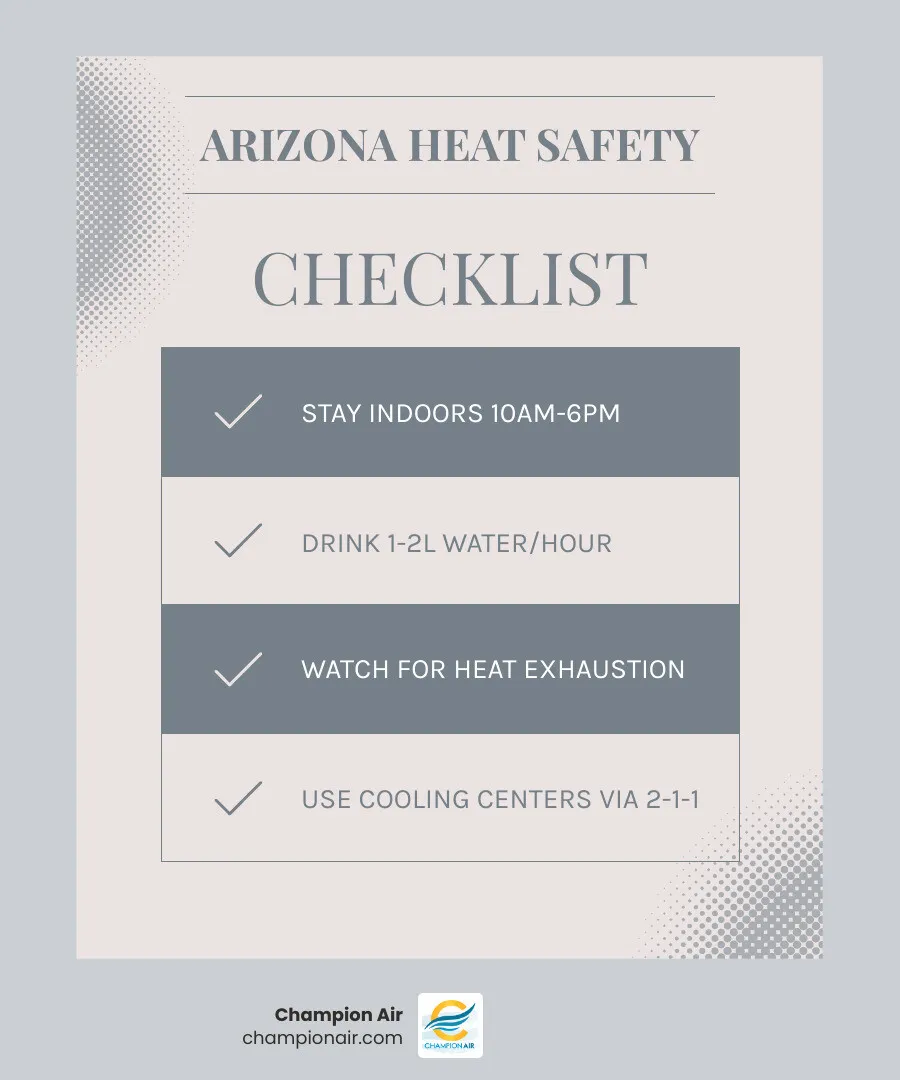
Here's a quick overview of the most important ways to stay safe:
- Stay indoors during peak heat hours (10 a.m. to 6 p.m.) and use air conditioning whenever possible
- Drink water constantly — aim for 1 to 2 liters per hour during any outdoor physical activity
- Know the warning signs of heat exhaustion (heavy sweating, dizziness, nausea) and heat stroke (body temperature above 103°F, confusion, no sweating)
- Protect your home by covering sun-facing windows, weather-stripping doors, and keeping your AC well-maintained
- Find free cooling at local heat relief sites — visit hrn.azmag.gov or call 2-1-1 if you need help
Whether you're a long-time Arizona resident or a newcomer facing your first brutal summer, this guide covers everything you need — from daily habits and hydration to home cooling and emergency resources.
I'm Barry Farah, and after years of leading one of Arizona's top HVAC companies, I've seen what happens when the heat catches people off guard — especially when a cooling system fails at the worst possible moment. My goal with this guide is to give you the practical knowledge on how to stay cool during arizona heat waves so you and your family stay safe all summer long.
How to Stay Cool During Arizona Heat Waves: A Comprehensive Safety Plan
Surviving May 2026 in the Valley of the Sun requires more than just a strong constitution; it requires a physiological strategy. One of the most overlooked aspects of how to stay cool during arizona heat waves is the concept of heat acclimatization. Your body is an incredible machine, but it needs time to adjust to the "blast furnace" conditions of a Phoenix July.
It typically takes about two weeks for a healthy adult to fully acclimatize to extreme temperatures. During this window, your body undergoes "amazing adaptations." Your plasma volume expands, which reduces the strain on your heart and makes your cardiovascular system more efficient at pumping blood to the skin for cooling. You also begin to sweat more quickly and retain more salt. If you've just moved to Scottsdale or Phoenix, don't jump into a midday hike during your first week. You literally aren't built for it yet.
Understanding the intensity of our climate is the first step. You can learn more about the local weather patterns in our guide on How Hot Does Phoenix Get in the Summer.
Daily routine adjustments for how to stay cool during Arizona heat waves
In Arizona, the sun dictates the schedule. Peak solar radiation and air temperatures generally hit their stride between 10 a.m. and 6 p.m. If you are planning outdoor activities—whether it’s running, yard work, or walking the dog—you must conclude these tasks by 9 a.m.
We often recommend that residents "reverse" their day. High-elevation areas, known as "Sky Islands," or Northern Arizona can provide a temporary reprieve, but for those of us in low-elevation desert areas like Mesa or Glendale, the early morning is our only safe window. If you find your home isn't staying cool even during the night, it might be time to consider high-efficiency cooling options like Heat Pumps Perfect for Arizona.
Recognizing the warning signs of heat-related illness
Heat-related illness exists on a spectrum, and moving from "uncomfortable" to "emergency" happens faster than most people realize.
- Heat Exhaustion: This is the body’s warning shot. Symptoms include heavy sweating, cold or clammy skin, a fast but weak pulse, nausea, and dizziness. If you feel this, move to a cool place immediately, apply wet cloths to pulse points (wrists, neck, and ankles), and sip water.
- Heat Stroke: This is a life-threatening emergency. The body's temperature regulation fails completely, and internal temperatures can reach 106°F within 10 to 15 minutes. Signs include a body temperature above 103°F, red, hot, dry skin (no more sweating), a rapid pulse, and confusion. Call 9-1-1 immediately.
While you wait for help, move the person to shade and use ice packs or cool water to lower their temperature. Interestingly, modern AC systems have safety features like float switches to prevent home damage, but your body doesn't have an automatic "off" switch. You can learn about mechanical safety in our article on What Does AC Float Switch Do.
Optimizing Your Phoenix Home for Extreme Summer Temperatures
Your home is your primary fortress against the heat. In the Valley, we often talk about the "urban heat island effect," where concrete and asphalt soak up heat all day and release it slowly at night. This prevents the city from cooling down, meaning your AC has to work 24/7.
To keep your system from giving up the ghost, we recommend the 78°F rule. Setting your thermostat to 78°F when you are home provides a balance of comfort and efficiency. Remember the "20-degree rule": most AC systems are designed to maintain a temperature about 20 degrees cooler than the outside air. When it's 115°F outside, asking for 68°F indoors is asking for a breakdown.
Proper preparation is key. Check out our tips on Prepping Your HVAC System for Summer and 9 Tips for Extending the Lifespan of Your Air Conditioner to ensure your unit is ready for the long haul.
Troubleshooting your cooling system for how to stay cool during Arizona heat waves
If your home starts feeling like a "crematorium," as some locals jokingly put it, don't panic. Start with the basics. A dirty air filter is the number one cause of AC failure in Arizona. Dust and monsoon silt clog the airflow, forcing the motor to overwork until it trips a breaker or freezes the coils.
If you are wondering Why Is AC Not Cooling, check these common culprits:
- Air Filters: This is why Why Changing Air Filters Is So Important in our dusty climate.
- Refrigerant: Look for Signs Your Air Conditioner Is Low in Freon, such as hissing noises or ice on the lines.
- Mechanical Failure: If you notice the Why AC Fan Not Spinning, it could be a failed capacitor—a common victim of triple-digit heat.
Passive cooling strategies to reduce mechanical load
You can significantly reduce the strain on your HVAC system by using passive cooling. Outdoor awnings or louvers are incredibly effective, potentially reducing the heat entering your home by up to 80 percent.
| Method | Heat Reduction Potential | Cost Level |
|---|---|---|
| Outdoor Awnings | Up to 80% | Moderate |
| Blackout Curtains | 25% - 33% | Low |
| Weather-stripping | 15% - 20% | Very Low |
| Professional AC Tune-Up | 20% - 30% Efficiency Gain | Moderate |
By sealing leaks and blocking direct sunlight, you can help manage How Long Should My AC Run in Arizona without seeing your utility bill skyrocket.
Mastering Desert Hydration and Protective Gear
Hydration in a "dry heat" is deceptive. Because sweat evaporates almost instantly, you often don't feel "sweaty" or "sticky." This leads many to underestimate their fluid loss. In Arizona, the standard "eight glasses a day" rule is insufficient. When you are active outdoors, you should be drinking 1 to 2 liters of water per hour.
Don't just drink plain water, though. Excessive water without electrolytes can lead to a "wrung-out" feeling or even dangerous hyponatremia. Mix in coconut water, a pinch of salt, or electrolyte powders to maintain your mineral balance. Pro-tip: Pre-hydrate by drinking a quart of water before you even step outside. For those maintaining their homes, a well-timed AC Maintenance Tune-Up Phoenix AZ ensures you can recover in a cool environment after your outdoor chores.
Essential clothing for the Arizona sun
The right gear is a game-changer for how to stay cool during arizona heat waves. While it might seem counterintuitive, long-sleeved, loose-fitting clothing made of natural fibers like cotton or linen can actually keep you cooler by protecting your skin from direct solar radiation and allowing for evaporative cooling.
- UPF Protection: Look for clothing specifically rated for UV protection.
- Wide-Brimmed Hats: Protect your face, ears, and neck.
- Sun Umbrellas: These are surprisingly effective in the desert, providing portable shade that can drop the perceived temperature by 15 degrees.
Just as you protect yourself, your home's "lungs" need protection too. Learn How to Protect HVAC in Dust Storm to keep your indoor air clean.
Protecting pets and children from extreme heat
Children and pets are at higher risk because their bodies regulate heat differently. Children rely more on "flushing" (sending blood to the skin) than sweating, which is less efficient in extreme heat.
For pets, remember the 7-second rule: Place the back of your hand on the pavement. If you can't hold it there for seven seconds, it is too hot for your dog's paws. Asphalt can easily reach 160°F, enough to cause second-degree burns. Since dogs primarily cool themselves through panting, they can overheat rapidly in humid or stagnant air. If you're staying indoors to protect the family, ensure your system is up to the task with AC Installation Replacement Phoenix AZ.
Accessing Arizona Heat Relief and Utility Assistance Programs
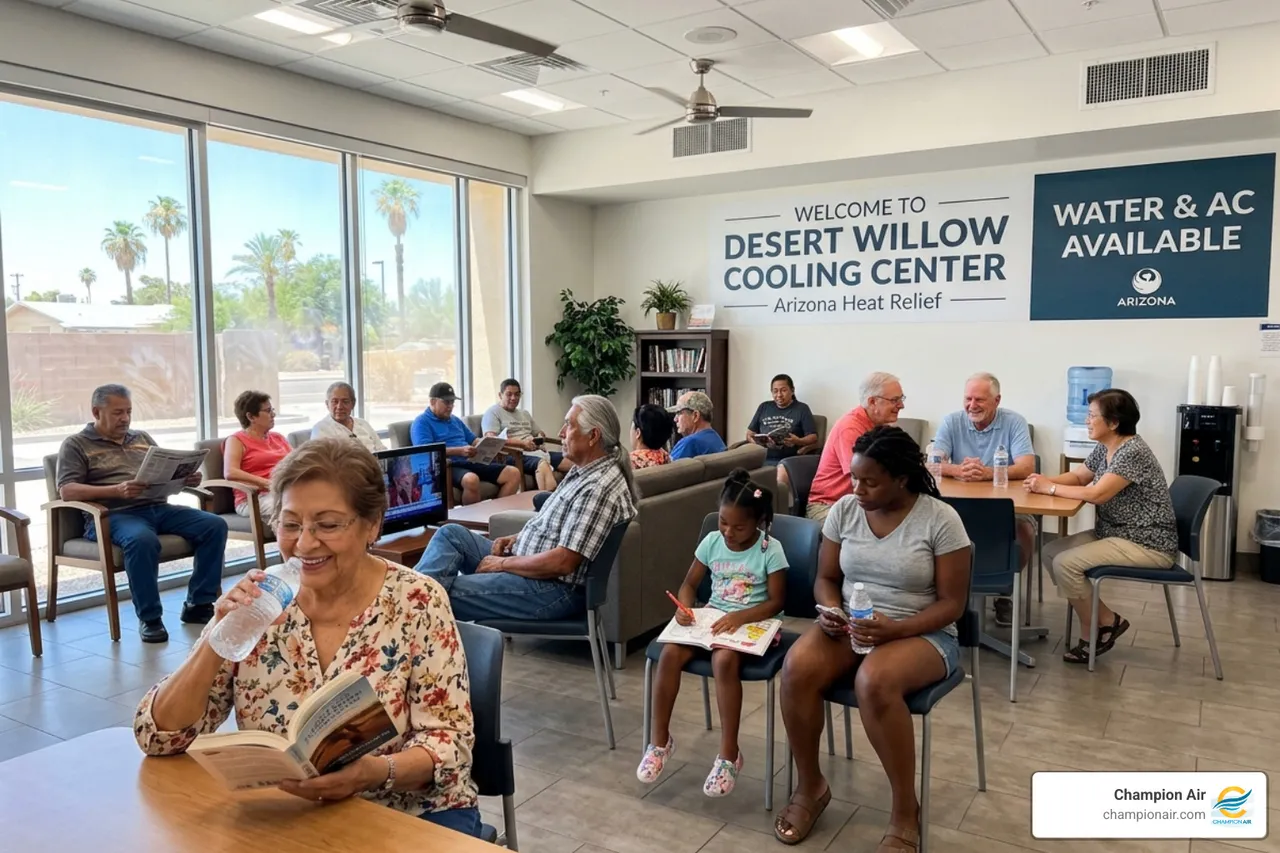
No one should have to suffer through the heat alone. Maricopa County operates a massive Heat Relief Network from May 1 to September 30 each year. This network includes:
- Cooling Centers: Indoor, air-conditioned spaces like libraries and community centers.
- Respite Centers: Places where you can lie down and rest in the AC.
- Hydration Stations: Sites specifically set up to distribute free water.
You can find a map of these locations at hrn.azmag.gov or by calling 2-1-1. This service is vital for those who may be facing an AC Repair Service Phoenix AZ emergency and need a safe place to stay while waiting for a technician.
Financial support and legal protections for residents
Arizona has specific laws to protect residents during extreme heat. Regulated electric utilities are generally forbidden from disconnecting power for non-payment during extreme weather events. Additionally, the Low Income Home Energy Assistance Program (LIHEAP) provides financial aid for those struggling with summer cooling bills.
For renters, Arizona law requires landlords to maintain cooling systems in good working order. If your AC fails, you must provide written notice, and the landlord typically has a 10-day window to make repairs. Knowing How Long Do Air Conditioners Last in Arizona can help you anticipate when a system might be nearing its end, whether you are a homeowner or a tenant.
Frequently Asked Questions About Staying Cool in Arizona
How much water should I drink during a heat wave?
You should aim for 1 to 2 liters per hour if you are outdoors or exerting energy. Even if you are just staying indoors, try to drink at least one gallon of water throughout the day. Remember to supplement with electrolytes, as sweating drains your body of salt and minerals. Keeping your body hydrated is just as important as keeping your AC hydrated (in a sense) with a Reasons Schedule Spring AC Tune-Up.
What should I do if my home AC fails in 110-degree heat?
First, relocate to the ground floor, as heat rises. Close all blinds and curtains immediately. If the temperature indoors becomes unsafe, use the 2-1-1 resource to find the nearest cooling center. You can also take "cool" (not cold) showers to lower your core temperature. If you notice symptoms like What to Do When Water Drips from Air Conditioner, it might indicate a clogged drain line that could shut your system down—address these signs early!
Why is the "dry heat" more dangerous for dehydration?
In humid climates, sweat stays on your skin, giving you a physical reminder that you are hot and losing fluid. In Arizona's dry heat, sweat evaporates the moment it hits the air. You might feel bone-dry while actually losing significant amounts of water. This "invisible sweat" often leads to a diminished thirst mechanism, meaning you are dehydrated long before you feel thirsty. This same dry air can cause electrical issues, which is often Why AC Keeps Tripping Breaker during the height of summer.
Conclusion
Staying safe in Arizona isn't just about luck; it's about preparation and respecting the power of the desert sun. From understanding your body's need for acclimatization to ensuring your home's HVAC system is running at peak efficiency, every step you take makes a difference.
At Champion Air, we are proud to serve Scottsdale, Phoenix, Mesa, and the surrounding communities. We know that an AC failure in 115-degree weather isn't just an inconvenience—it's an emergency. That’s why we offer 24/7 emergency support with no overtime charges and same-day service to keep your family safe.
If you’re worried about your system’s ability to handle the next heat wave, or if you need expert advice on improving your home’s comfort, we’re here to help. Explore our full range of Air Conditioning services and let us help you stay cool all summer long. Don't wait for the sizzle—give us a call today!
About the Author
Champion Air
More Articles
View All Posts
Ready to Get Started?
Whether you need a repair, maintenance, or a new installation, our expert team is here to help.