Choosing an AC for Arizona Triple Digit Summers: A Survival Guide
Champion Air
Choosing an AC for Arizona Triple Digit Summers: A Survival Guide
Why Knowing How to Choose the Right AC System for Desert Homes Could Save Your Summer
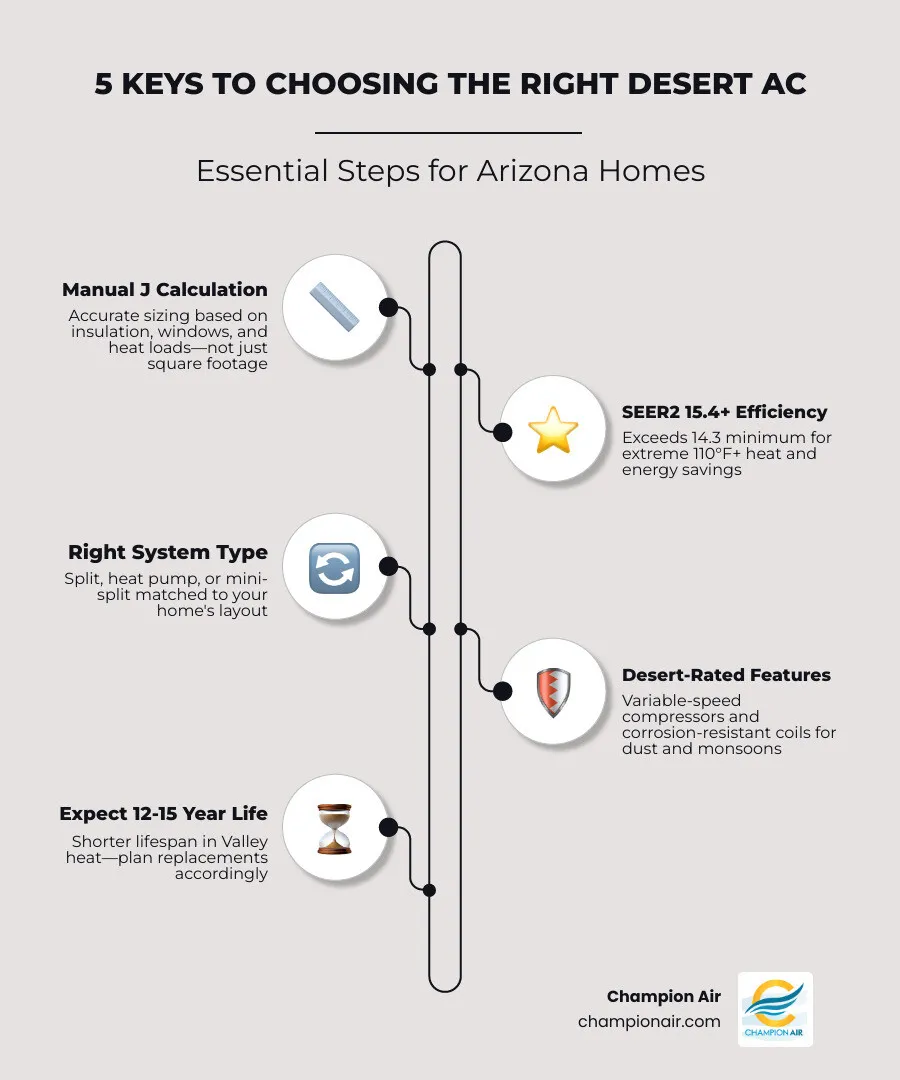
Knowing how to choose the right ac system for desert homes comes down to five key steps:
- Get a Manual J Load Calculation — never size by square footage alone
- Choose a SEER2 rating of 15.4 or higher — the legal minimum of 14.3 is not enough for Arizona heat
- Select the right system type — split systems, heat pumps, or ductless mini-splits each suit different homes
- Look for desert-rated features — variable-speed compressors and corrosion-resistant coils matter here
- Plan for shorter lifespans — Arizona ACs typically last 12 to 15 years, not the 15 to 20 years you see in cooler climates
In Phoenix, Scottsdale, and across the Valley, your air conditioner is not a luxury. It is a survival tool. Temperatures regularly push past 110°F, dust storms clog filters overnight, and monsoon humidity adds a seasonal twist that most standard AC guides never mention. The result? A system that works perfectly in Denver or Dallas may struggle, fail early, or drain your wallet in Arizona.
The stakes are real. A unit that is too small runs nonstop and burns out fast. A unit that is too large short-cycles, leaves your home feeling sticky, and racks up unnecessary wear. Getting the size, efficiency rating, and system type right the first time is not just about comfort — it is about protecting your home and your family during the hottest months of the year.
I'm Barry Farah, and alongside my son I lead one of Arizona's largest Lennox family-owned residential HVAC replacement companies — experience that has given me a deep, hands-on understanding of how to choose the right ac system for desert homes across thousands of Arizona installations. Everything in this guide reflects what we have learned working through real Arizona summers, not just textbook theory.
Why Desert Climates Demand Specialized Cooling Systems
Living in the "Valley of the Sun" means our HVAC systems face a level of environmental stress that most manufacturers' warranties barely anticipate. When the mercury hits 110°F or higher, your outdoor condenser unit is sitting in a literal oven. This extreme heat forces the system to work at peak capacity for hours on end, which is why how long air conditioners last in Arizona is a different conversation than in other states. While a unit in a temperate climate might breeze through 20 years of service, Phoenix-area systems typically reach retirement age between 12 and 15 years.
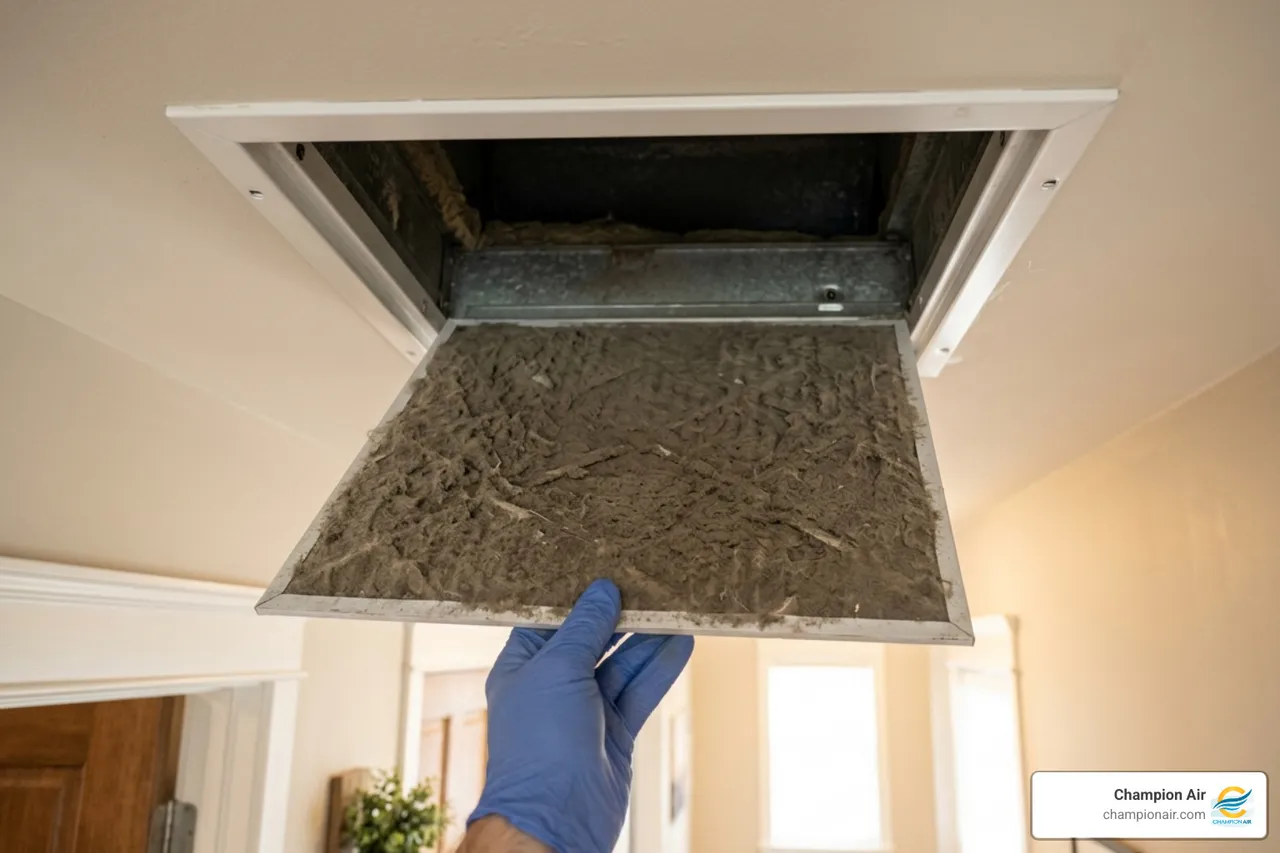
It isn't just the heat; it's the environment. Our famous haboobs send fine desert silt deep into the delicate fins of your condenser coils. If not addressed, this "insulation" of dust causes the compressor to overheat. Furthermore, the arrival of the monsoon season introduces a spike in humidity that requires your AC to shift from simple cooling to intensive dehumidification. Without a system designed for these swings, you’ll end up with a home that feels "clammy" despite the AC running.
How to Choose the Right AC System for Desert Homes: Sizing and Capacity
One of the most common mistakes we see homeowners make is assuming "bigger is better." In the desert, an oversized unit is just as problematic as an undersized one. If you are wondering, "What size AC unit do I need?," the answer is never a simple guess based on your home's square footage.
AC capacity is measured in BTUs (British Thermal Units) and tonnage. One "ton" of cooling equals 12,000 BTUs. While general charts exist to provide a baseline, they don't account for the unique thermal heat gain of a home in Mesa or Surprise.
| Square Footage | Estimated Cooling Tonnage | Estimated BTUs |
|---|---|---|
| 1,000 – 1,200 | 2.0 Tons | 24,000 |
| 1,200 – 1,500 | 2.5 Tons | 30,000 |
| 1,500 – 1,800 | 3.0 Tons | 36,000 |
| 1,800 – 2,100 | 3.5 Tons | 42,000 |
| 2,100 – 2,400 | 4.0 Tons | 48,000 |
| 2,400 – 3,000 | 5.0 Tons | 60,000 |
If your unit is undersized, it will run 24/7 during a July heatwave and still never reach your thermostat's set point, leading to a premature mechanical heart attack. If it is oversized, you face "short-cycling." This is when the unit turns on, blasts the house with cold air, and shuts off before it has a chance to remove humidity or circulate air evenly. This leads to hot spots, high energy bills, and increased wear on the compressor.
Why Manual J is the Gold Standard for How to Choose the Right AC System for Desert Homes
To avoid the "Goldilocks" problem of sizing, we use a Manual J Load Calculation. This is a scientific assessment of your home’s "envelope." We look at:
- Insulation Quality: Is your attic at an R-30 or R-60 level?
- Window Orientation: Do you have massive west-facing windows that soak up the afternoon sun?
- Ceiling Height: Vaulted ceilings in large Arizona homes create a massive volume of air that needs to be cooled, regardless of floor square footage.
- Occupant Density: Every human (and pet) in the house generates heat.
- Ductwork Integrity: In many Phoenix homes, leaky ducts in a 150°F attic can waste 20% to 30% of your cooling before it even reaches your living room.
Selecting Efficiency with SEER2 Ratings for How to Choose the Right AC System for Desert Homes
Efficiency is measured by the Seasonal Energy Efficiency Ratio (SEER2). As of 2023, the Department of Energy raised the legal minimum for the Southwest region to 14.3 SEER2. However, for understanding SEER ratings in a desert context, we generally recommend a minimum of 15.4.
Why go higher? Because our cooling season is so long. A high-efficiency unit (reaching up to 28 SEER2 in premium models like the Lennox SL28XCV) can pay for itself through lower monthly utility bills. Additionally, major utilities like APS and SRP often offer rebates ranging from $200 to $1,000 for homeowners who install high-efficiency systems, making the upgrade much more affordable.
Comparing System Types for Arizona Environments
When comparing system options, you'll generally find three main contenders in the Valley:
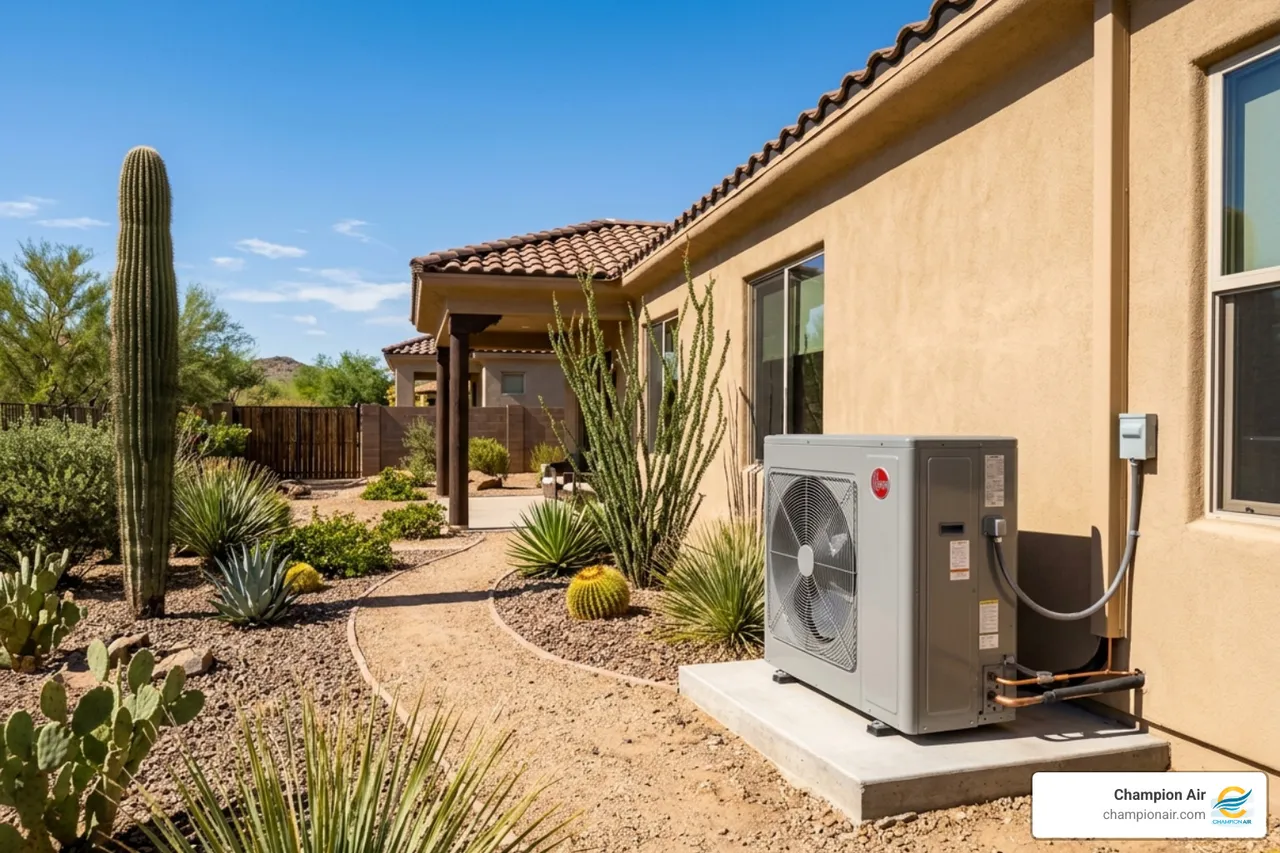
- Split Systems: The most common residential setup. You have an outdoor condenser and an indoor air handler (usually in the attic or a closet). These are highly efficient because the indoor components are shielded from the extreme heat.
- Packaged Units: These are "all-in-one" boxes often found on rooftops. While they save indoor space, they are entirely exposed to the elements, which can slightly shorten their lifespan compared to split systems.
- Heat Pumps: Many people ask about choosing air conditioners vs. heat pumps. In Arizona, heat pumps are fantastic. They provide high-efficiency cooling in the summer and can extract enough heat from the 40°F winter air to keep you warm without the need for a furnace.
For specific needs, like a converted garage or a "hot room" at the end of a long duct run, ductless mini-splits offer zoned cooling that doesn't rely on your central ductwork.
Key Features for Maximum Efficiency in Triple-Digit Heat
If you want a system that thrives in 115°F weather, look for these specific "desert-proof" features:
- Variable-Speed Compressors: Unlike standard units that are either "on" or "off," variable inverter technology allows the system to scale its output. It might run at 30% capacity on a 90-degree May morning and ramp up to 100% in the heat of July. This provides much more consistent comfort and lower energy use.
- Corrosion-Resistant Coils: Monsoon moisture combined with desert dust can lead to "formicary corrosion." All-aluminum coils or specialized coatings are essential for longevity.
- Smart Thermostats: These allow you to "pre-cool" your home during off-peak energy hours and monitor your system's health remotely.
- Advanced Filtration: With our dust levels, a standard 1-inch filter isn't always enough. High-efficiency MERV-rated filters (typically MERV 8 to 11) help keep your indoor air clean and your equipment free of debris.
When choosing between top-tier brands, such as Lennox vs. Trane, look for the specific model's performance at high ambient temperatures. Some units are designed to maintain efficiency even when the outdoor air is scorching.
Signs It Is Time for a Replacement Before Summer Hits
No one wants their AC to fail on a Friday afternoon in July. Identifying the indicators it is time to replace your HVAC can save you from an emergency "no-cooling" situation. Watch for:
- The $5,000 Rule: Multiply the age of your unit by the cost of the repair. If the result is over $5,000, a replacement is usually the smarter investment.
- Frequent Breakdowns: If you know your technician’s first name because they’ve been to your house three times this year, it’s time.
- Rising Utility Bills: If your bills are climbing but your habits haven't changed, your unit is likely losing its efficiency.
- R-22 Refrigerant: If your unit still uses the old "Freon" (R-22), repairs are becoming prohibitively expensive due to the environmental phase-out.
If your system is over 12 years old and struggling, scheduling an AC installation or replacement in Phoenix during the spring is often easier and more cost-effective than waiting for the summer rush.
Frequently Asked Questions about Desert AC Systems
What is the best SEER2 rating for a home in Scottsdale or Phoenix?
While the legal minimum is 14.3, we recommend at least 15.4 for our climate. If you plan to stay in your home for more than five years, investing in a high-efficiency unit (18–20+ SEER2) often pays for itself through energy savings and utility rebates.
How often should I replace my AC filters during the dusty desert summer?
In the Valley, you should check your filters every month. During the peak of summer or after a major dust storm, you may need to replace them every 30 days. At a minimum, don't go longer than 90 days without a fresh filter.
Can a heat pump handle both Arizona’s summer heat and winter nights?
Absolutely. Modern heat pumps are incredibly efficient at cooling in 110°F+ weather. In the winter, they can effectively pull heat from the outdoor air even when temperatures drop into the 40s, which covers almost every night in the Phoenix metro area.
Conclusion
Choosing the right AC system for your desert home is about more than just picking a brand; it’s about engineering a solution that can withstand some of the harshest living conditions in North America. From the initial Manual J calculation to selecting a unit with the right SEER2 rating and variable-speed technology, every decision impacts your comfort and your bank account for the next decade.
At Champion Air, we understand the unique demands of Scottsdale, Phoenix, and Mesa homes. Our licensed technicians specialize in high-efficiency installations that are built to last in the Arizona heat. Whether you need a 24/7 emergency repair or you are ready to upgrade to a modern, energy-saving system, we are here to ensure your home remains a cool sanctuary.
Schedule your professional AC Installation & Replacement today and let us help you survive the summer in comfort.
About the Author
Champion Air
More Articles
View All Posts
Ready to Get Started?
Whether you need a repair, maintenance, or a new installation, our expert team is here to help.