Is Your AC a Desert Mirage? Real Lifespan Facts
Champion Air
Is Your AC a Desert Mirage? Real Lifespan Facts
How Long Does an AC System Last in Arizona? (The Short Answer)
How long does an ac system last in arizona is one of the most important questions you can ask as a homeowner here — and the answer is shorter than most people expect.
Here's a quick breakdown:
| Climate Zone | Average AC Lifespan |
|---|---|
| National Average | 15–20 years |
| Arizona (general) | 10–15 years |
| Phoenix Valley (extreme heat zones) | 8–12 years |
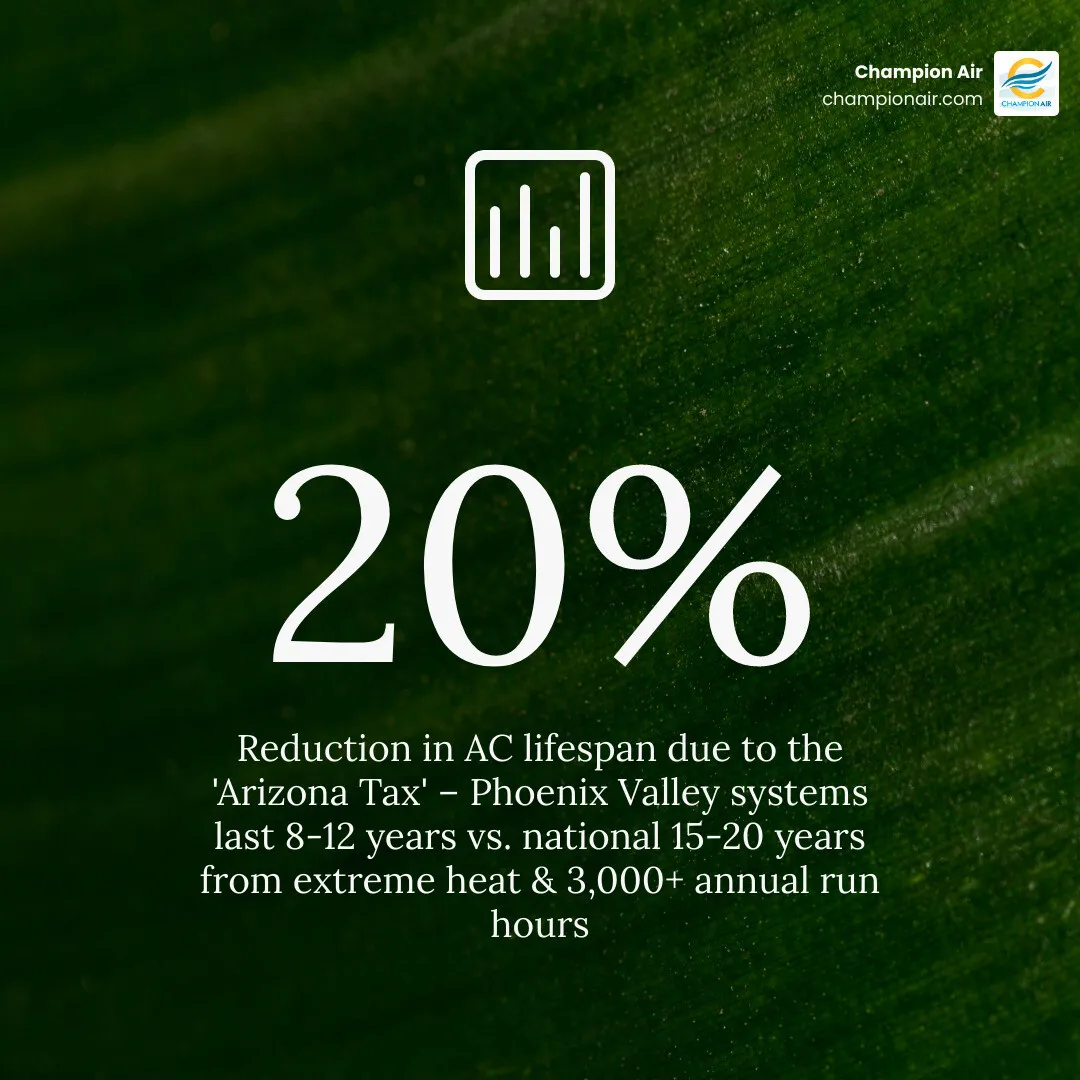
The core reason is simple: Arizona's heat doesn't let up. Phoenix sees roughly 300 days of sunshine per year, with summer temperatures regularly topping 110°F — and those conditions force your AC to run almost constantly for 8 to 9 months straight. In moderate climates, a central air system might log 1,000 to 1,500 operating hours per year. In the Phoenix Valley, that number climbs to 3,000 or more. The result is what HVAC professionals often call the "Arizona Tax" — a roughly 20% reduction in system lifespan compared to the national average, simply because of where you live.
That's not a scare tactic. It's just physics.
I'm Barry Farah, and leading Arizona's largest Lennox family-owned residential HVAC replacement company has given me a front-row seat to exactly how the desert climate shapes how long does an ac system last in Arizona — and what separates systems that reach 15 years from ones that fail before year 10. Read on for everything you need to know to protect your investment and stay comfortable all year long.
The Reality of How Long Does an AC System Last in Arizona
When we talk about the lifespan of mechanical equipment, we often think in terms of calendar years. However, in cities like Scottsdale, Peoria, and Chandler, we have to think in "mechanical miles." Just like a car driven 30,000 miles a year wears out faster than one driven 5,000, your AC unit in the Sonoran Desert is running a marathon every single summer.
While the national average for a central air conditioner is 15 to 20 years, the How Long Do Air Conditioners Last in Arizona reality is closer to 10 to 15 years. In the hottest pockets of the Phoenix Valley, where the urban heat island effect keeps temperatures high even at night, many systems begin to show serious signs of failure between year 8 and year 12.
Environmental Stressors in the Phoenix Valley
Why does the desert chew through machinery so quickly? It's a combination of several brutal factors:
- Extreme Thermal Cycling: In May and June, your unit might face a 40-degree temperature swing between the heat of the afternoon and the cool of the night. This causes metal components to expand and contract rapidly, leading to refrigerant leaks and electrical fatigue.
- 3,000+ Annual Run Hours: Most systems in the U.S. get a "break" during the shoulder seasons. In Arizona, we often start our cooling season in March and don't turn the units off until November.
- UV Degradation: The intense Arizona sun isn't just hard on your skin; it’s hard on your AC. High UV exposure can physically degrade the plastic components, wire insulation, and paint on your outdoor condenser unit.
- Constant High Pressure: When it's 115°F outside, the compressor has to work at much higher pressures to dump heat from your home into the outdoor air. This puts immense strain on the "heart" of your system.
If you are using a heat pump, the timeline can be even tighter. Because these units provide both heating and cooling, they never truly get a season off. You can learn more about How Long Do Heat Pumps Last to see how year-round operation impacts their durability compared to a standard straight-cool system.
The Impact of Dust and Monsoons
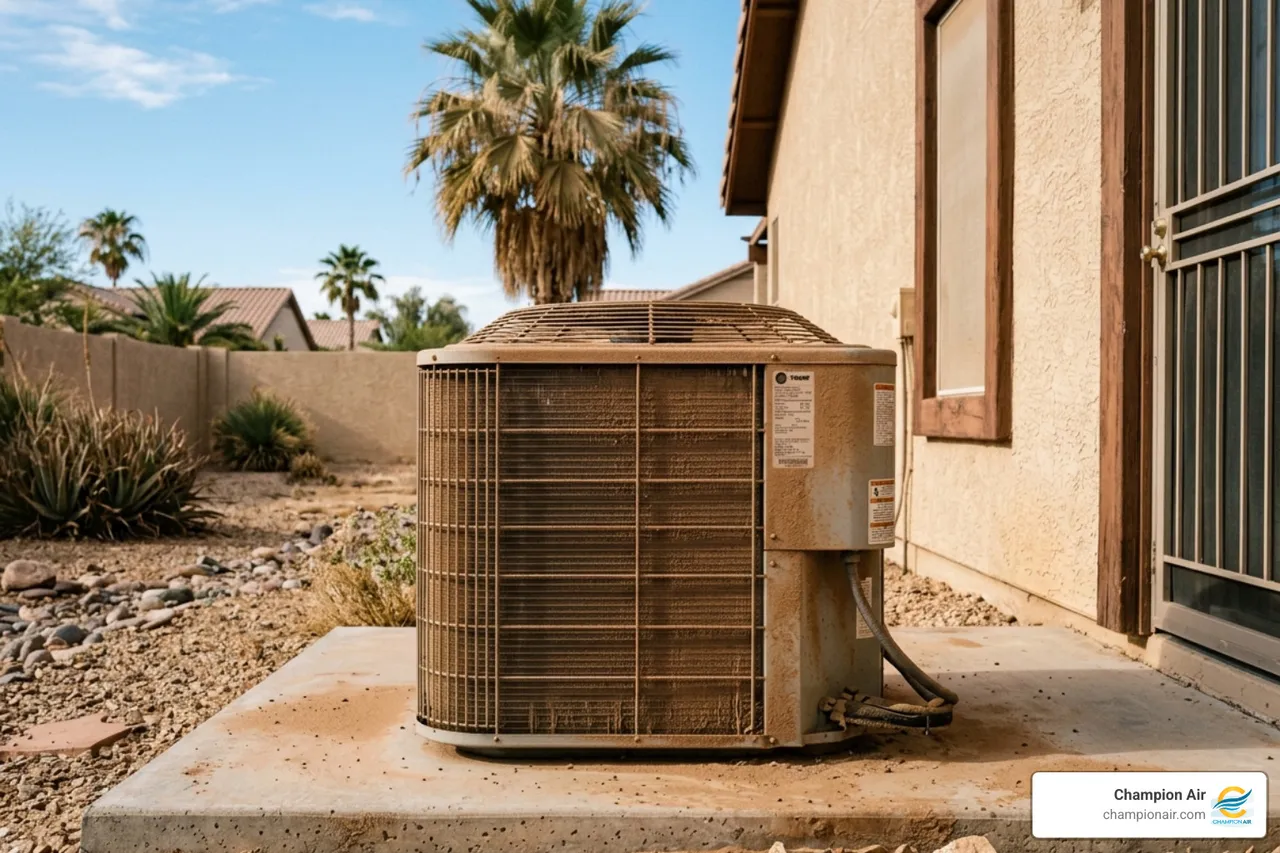
It’s not just the heat; it’s the air itself. Arizona is a dusty environment, and our famous haboobs (massive dust storms) are essentially "clogging events" for your HVAC system. When fine desert silt gets sucked into your outdoor condenser coils, it acts like a blanket, insulating the coils and preventing them from releasing heat. This forces the system to run longer and hotter to achieve the same cooling effect.
Furthermore, the monsoon season introduces sudden spikes in humidity. While we are a "dry heat" state, the moisture in July and August makes the air harder to cool and introduces a risk of biological growth and mineral scaling on components. If your unit isn't cleaned after a major storm, that layer of mud on the coils can reduce efficiency by as much as 30% almost overnight.
Critical Factors for System Longevity
Not every unit in Arizona is destined for an early retirement. Several factors within your control can help push your system toward that 15-year mark.
First and foremost is proper sizing. In the past, some contractors followed a "bigger is better" philosophy. However, an oversized unit will "short-cycle," turning on and off too frequently. This creates massive wear on the compressor and prevents the system from properly dehumidifying your home. Conversely, an undersized unit will run 24/7 and still never reach the thermostat setting. Professional load calculations are the only way to ensure your system is perfectly matched to your home's square footage, insulation levels, and window placements.
Brand quality also matters. While most modern units are built to high standards, some manufacturers specifically design equipment for high-ambient-temperature environments. For instance, understanding How Long Do Lennox Air Conditioners Last reveals that premium components often handle the 120°F desert peaks better than budget-grade models.
Impact of Maintenance on How Long an AC System Lasts in Arizona
If you want to maximize how long does an ac system last in Arizona, you cannot skip maintenance. Think of it as an oil change for your home's most expensive appliance. We recommend bi-annual tune-ups — once in the spring to prep for the summer onslaught, and once in the fall.
During these visits, a technician can identify "cascading failures." For example, a $200 capacitor that is starting to fail can be replaced easily. If left alone, a weak capacitor can cause the compressor to overheat and burn out, leading to a repair that costs thousands. Regular maintenance can preempt up to 80% of all air conditioning repairs.
Our 9 Tips for Extending the Lifespan of Your Air Conditioner guide highlights the basics: keeping coils clean, ensuring proper refrigerant levels, and checking electrical connections that can loosen due to the vibration of constant running.
Operational Habits for Homeowners
How you interact with your thermostat also dictates the lifespan of your hardware. While it’s tempting to set the AC to 68°F when it’s 115°F outside, doing so forces the unit to work at its absolute limit for hours on end.
The Department of Energy and local utilities like SRP and APS generally recommend a setting of 78°F when you are home. Every degree you drop the thermostat below 78°F can increase your energy usage by about 3% and significantly increase the mechanical load on the compressor.
Using a smart thermostat can help by managing "recovery times," ensuring the house is cool when you arrive without forcing the unit to run at full tilt all day while the house is empty. Additionally, providing shade for your outdoor unit (while ensuring plenty of airflow) can lower the ambient temperature around the coils by 10 to 15 degrees, making it much easier for the system to do its job.
Indicators It Is Time to Replace Your HVAC System
Even with the best care, every system eventually reaches the end of its road. Recognizing the Indicators It Is Time to Replace HVAC System can save you from a mid-July emergency when temperatures are at their most dangerous.
Common warning signs include:
- The "Age-Out": If your unit is over 12 years old and starts needing annual repairs, it’s likely on its last legs.
- Rising Utility Bills: If your energy costs are 25% to 30% higher than they were two summers ago (with similar usage), your system’s efficiency has likely bottomed out.
- Strange Noises: Grinding, squealing, or banging sounds often point to failing motors or a dying compressor.
- Inconsistent Cooling: If some rooms are freezing while others are sweltering, the system may no longer have the "oomph" to move air effectively through your ductwork.
Maximizing How Long an AC System Lasts in Arizona
When a major repair pops up, how do you decide whether to fix it or replace it? We often suggest using the "5,000 Rule." Multiply the age of your unit by the cost of the repair. If the result is more than 5,000, it is usually smarter to invest that money into a new system. For example, a $600 repair on a 10-year-old unit equals 6,000 — making replacement the better financial move.
Another factor is the type of refrigerant your system uses. If your unit was built before 2010, it likely uses R-22 (Freon), which has been phased out by the EPA. Repairing a leak in an R-22 system is often prohibitively expensive because the coolant is no longer produced.
Upgrading isn't just about avoiding repairs; it's about the ROI. Modern systems with high SEER2 ratings are significantly more efficient than units from just a decade ago. You can see How New HVAC Systems Save You Money through lower monthly bills and improved home comfort.
When to Schedule Your Replacement
If you know your system is struggling, don't wait for it to die on a 118-degree Saturday in July. That is when demand is highest and you may have to wait for parts or a crew.
The best time to replace an AC unit in Arizona is during the "shoulder seasons" — late fall (October/November) or early spring (February/March). During these months, scheduling is more flexible, and you can take the time to choose the right SEER2-compliant system without the pressure of a heatwave looming over you. Proactive replacement allows you to research rebates from local utilities and ensures your home stays a sanctuary all summer long.
Frequently Asked Questions about Arizona AC Lifespan
Is it normal for my AC to run all day during a Phoenix summer?
Yes. When outdoor temperatures exceed 105°F, it is perfectly normal for a properly sized AC unit to run almost continuously to maintain your indoor set point. As long as the home is staying cool and the air coming out of the vents is roughly 15 to 20 degrees cooler than the air going in, the system is doing its job. However, if it runs all day and the house stays at 85°F, you likely have an issue.
Should I repair or replace a 10-year-old unit?
This depends on the "5,000 Rule" mentioned above and the type of refrigerant. If it’s a minor fix like a contactor or capacitor, repair it. If it’s a major component like the compressor or the evaporator coil, and the unit uses R-22 refrigerant, replacement is almost always the better long-term investment.
How often should I change my air filters in the desert?
In most parts of the country, every 90 days is fine. In Arizona, you should check your filters every 30 days during the summer. If you have pets or live near a construction site or an area prone to dust, you might even need to change them every 3 weeks. A clogged filter makes your AC "breathe through a straw," which is a leading cause of premature blower motor failure.
Conclusion
Understanding how long does an ac system last in Arizona is about managing expectations and being proactive. While the desert climate is undeniably tough on machinery, a combination of professional installation, consistent maintenance, and smart operational habits can help you get the most out of your investment.
At Champion Air, we’ve spent decades helping homeowners in Scottsdale, Phoenix, Mesa, and throughout the Valley navigate these challenges. Our licensed technicians specialize in everything from 24/7 emergency repairs to high-efficiency replacements tailored for the Arizona heat. We believe in honest assessments — if your unit has a few good years left, we’ll help you keep it running. If it’s time for an upgrade, we’ll ensure it’s sized perfectly for your home.
Don't let your home comfort become a desert mirage. Schedule your professional AC maintenance with Champion Air today! and ensure your system is ready for whatever the Arizona summer throws its way.
About the Author
Champion Air
More Articles
View All Posts
Ready to Get Started?
Whether you need a repair, maintenance, or a new installation, our expert team is here to help.