How a Tune-Up Improves Heat Pump Efficiency
Champion Air
Discover how a tune up improves heat pump efficiency and lowers bills with expert maintenance in Arizona.
How a Tune-Up Improves Heat Pump Efficiency
Why Understanding How a Tune-Up Improves Heat Pump Efficiency and Lowers Bills Can Save You Real Money
How a tune-up improves heat pump efficiency and lowers bills comes down to a few key actions that restore your system to peak performance:
- Cleaning coils so heat transfers properly and your system doesn't overwork
- Clearing airflow restrictions so the blower moves air freely and cycles end faster
- Checking refrigerant levels so the compressor isn't strained running longer than it should
- Inspecting electrical components so nothing is drawing extra power or wearing out early
- Calibrating the thermostat so your system responds accurately and doesn't overshoot
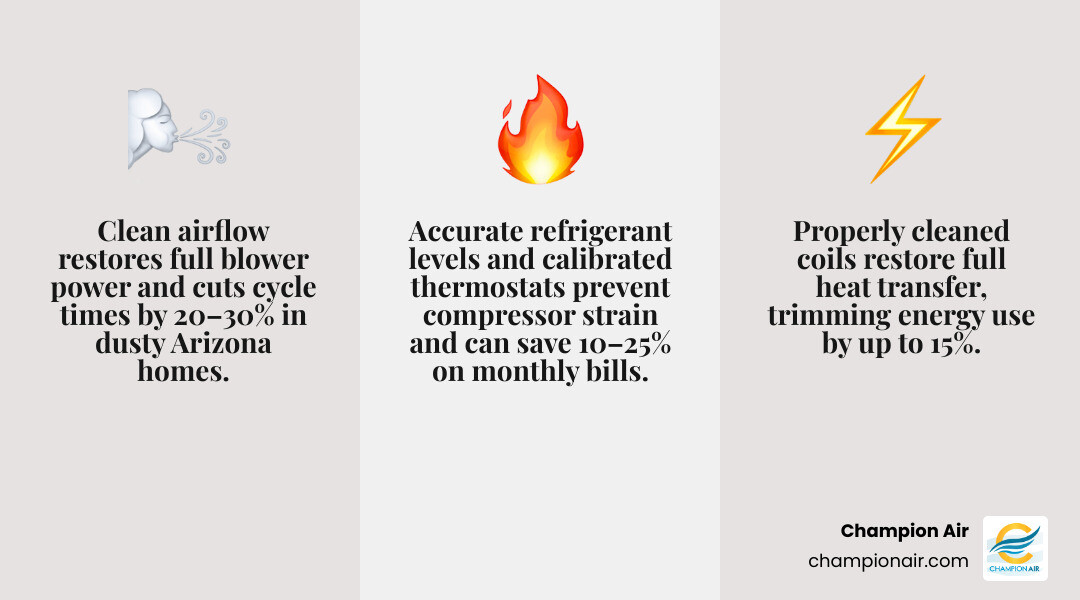
Together, these steps can cut energy use by 10–25% and help your heat pump run shorter, cleaner cycles — which means a noticeably lower utility bill every month.
In Arizona, heat pumps don't get a break. Unlike most climates where a system gets a rest between seasons, Arizona homeowners run their heat pumps hard almost year-round. Summer temperatures routinely push past 110°F in the Phoenix area, and even a small drop in performance can cause your system to run 20–30% longer than it should — quietly driving up your electricity costs without any obvious warning sign. Add in the fine desert dust that clogs coils and filters faster than nearly anywhere else in the country, and it becomes clear why proactive maintenance isn't just a nice-to-have — it's essential for comfort and cost control.
I'm Barry Farah, and as the leader of one of Arizona's top residential HVAC companies with decades of experience helping homeowners understand how a tune-up improves heat pump efficiency and lowers bills, I've seen what neglected systems cost families — and how much a single well-executed tune-up can change that picture. In this guide, I'll walk you through exactly what happens during a professional tune-up, why it matters in Arizona's climate, and what you can do between visits to keep your system running at its best.
What a Heat Pump Tune-Up Includes and Why It Matters
When we talk about a heat pump tune-up, we aren't just talking about a quick glance at your outdoor unit. A professional maintenance visit is a comprehensive, multi-point inspection, cleaning, and calibration service. Think of it like a medical checkup for your home’s most hardworking appliance. In 2026, with energy costs continuing to be a major household expense, ensuring every component is functioning as intended is the only way to keep those monthly bills in check.
What homeowners can expect during a professional visit
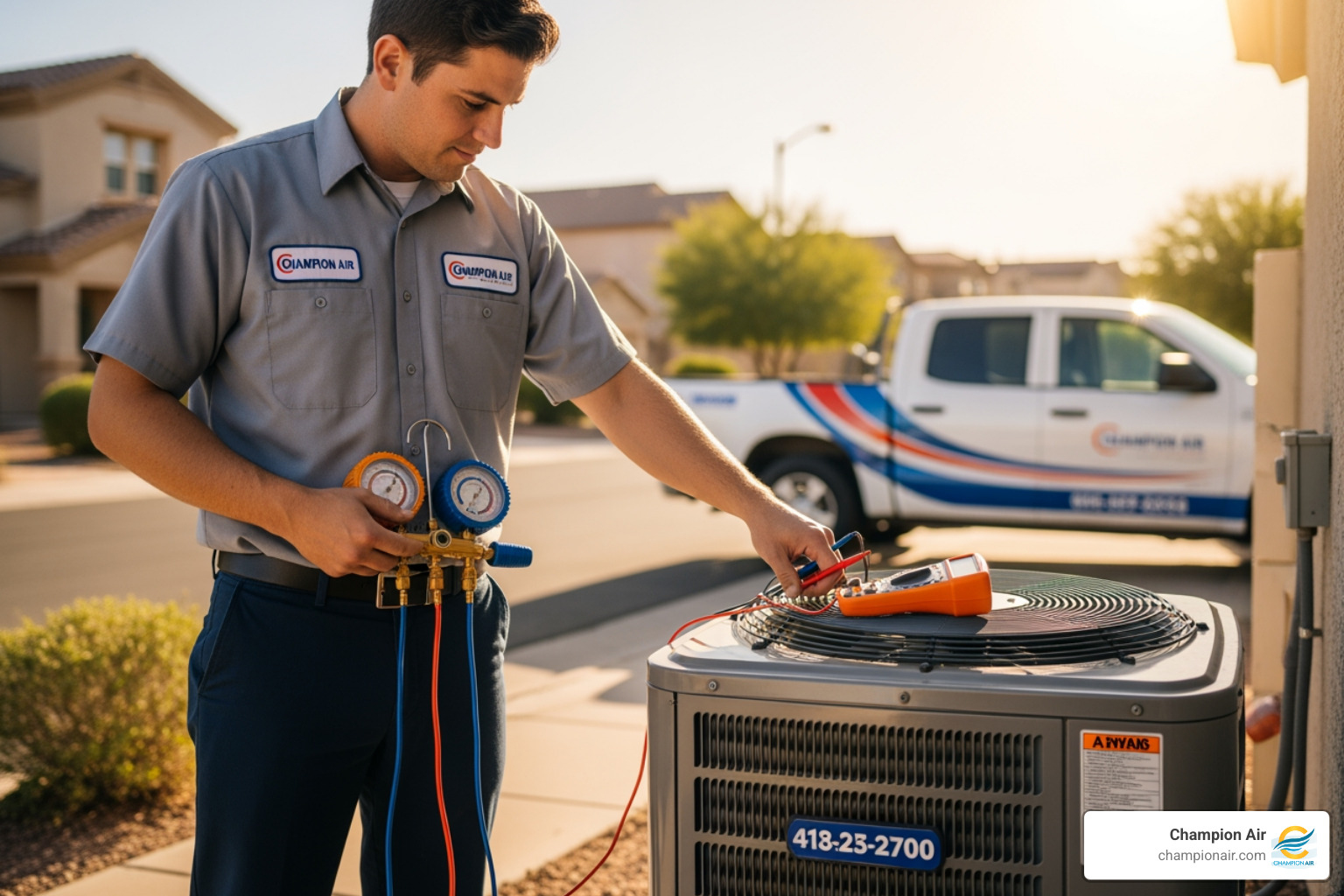
A thorough heat pump tune-up typically takes between 1 and 2 hours. During this time, our technicians at Champion Air perform a deep dive into both the indoor and outdoor units. We aren't just looking for what's broken; we’re looking for what’s "tired."
The service includes:
- Component Cleaning: We wash the outdoor condenser coils and inspect the indoor evaporator coils.
- Airflow Optimization: We check the blower motor and wheel. A dirty blower wheel can reduce airflow by up to 20%, forcing the system to run longer to reach your desired temperature.
- Electrical Inspection: We tighten all electrical connections and measure the "draw" of your motors. If a motor is pulling more amps than it should, it’s a sign of impending failure and high energy waste.
- Refrigerant Verification: We test the refrigerant charge. A system that is even slightly low on refrigerant can run 20–30% longer than a balanced system, significantly increasing your energy consumption.
For residents in the Valley, scheduling a Heat Pump Maintenance Tune-Up Phoenix AZ ensures that these technical details are handled by experts who understand our unique environmental challenges.
The difference between a tune-up and a repair
It is a common misconception that you only need to call an HVAC professional when the air stops blowing. However, a tune-up is preventative maintenance, while a repair is reactive.
A tune-up identifies small issues—like a worn capacitor or a slightly clogged drain line—before they cause a total system shutdown. For example, a tune-up prevents a frozen coil; a repair visit is what you need once the coil is already an ice block and your house is 85 degrees. By investing in a tune-up, you are essentially paying to avoid the much higher costs of emergency repairs and the stress of a breakdown during a Phoenix heatwave.
Why heat pumps need more maintenance than many systems
Unlike a traditional furnace that only runs in the winter, or a standard AC that might get a break in the fall, a heat pump is a year-round workhorse. It provides both heating and cooling by moving heat from one place to another.
In our desert climate, this continuous operation means the system is constantly exposed to dust, pollen, and extreme thermal stress. This "no-off-season" reality is why a Heat Pump Maintenance Tune-Up Scottsdale AZ is so critical. Without regular care, the wear and tear from 12 months of operation accumulates rapidly, leading to a system that might only last 8–10 years instead of the 15+ years it’s capable of reaching with proper maintenance.
How a Tune Up Improves Heat Pump Efficiency and Lowers Bills
The core reason how a tune up improves heat pump efficiency and lowers bills is by restoring the system's ability to transfer heat effectively. Heat pumps don't "create" cold air; they remove heat from your home and move it outside (in cooling mode). Anything that slows down that heat transfer makes the system work longer and harder, which is exactly what shows up on your utility bill.
How a tune up improves heat pump efficiency and lowers bills through better airflow
Airflow is the lifeblood of your heat pump. If the air can’t move freely through your system, the heat exchange process stalls. During a tune-up, we address several airflow killers:
- Dirty Filters and Blower Wheels: Even a thin layer of dust on a blower wheel acts like a weight, slowing it down and reducing the volume of air it can push.
- Blocked Vents and Ductwork: We ensure your registers are open and check for obvious duct leakage. Did you know that the average house loses 20% of its cooled air through leaks in the ductwork? In some cases, leaky ducts can reduce efficiency by up to 40%.
When airflow is restored, your home reaches the target temperature faster. Shorter runtimes mean less electricity used and lower bills.
How a tune up improves heat pump efficiency and lowers bills by restoring heat transfer
The coils in your heat pump are where the magic happens. The outdoor coil releases heat in the summer, and the indoor coil absorbs it.
- The "Blanket" Effect: Desert dust coats these coils, acting like an insulating blanket. This forces the refrigerant to work much harder to release or absorb heat.
- Refrigerant Balance: If refrigerant levels are off, the system's "heat-carrying" capacity is diminished.
- Thermostat Accuracy: We calibrate your thermostat to ensure it isn't telling the system to run when it doesn't need to.
By cleaning the coils and balancing the refrigerant, we maximize the amount of heat moved during every minute the compressor is running. This is how homeowners often see a 10–25% reduction in their energy costs immediately following a professional service.
Why neglected systems use more electricity over time
Efficiency doesn't stay static; it’s a "use it or lose it" metric. A neglected system suffers from "friction" in every sense of the word. Mechanical parts without lubrication create physical friction; dirty coils create thermal friction.
Systems with restricted airflow or low refrigerant often run 20–30% longer than properly balanced systems. If your neighbor’s maintained heat pump runs for 15 minutes to cool the house, and yours runs for 20 minutes because it’s dirty, you are paying 33% more for the exact same amount of comfort. Over a long Arizona summer, that adds up to hundreds of dollars in wasted electricity.
| Feature | Maintained Heat Pump | Neglected Heat Pump |
|---|---|---|
| Typical Lifespan | 12–15+ Years | 8–10 Years |
| Energy Consumption | Optimized (Lower Bills) | 10–25% Higher |
| Runtime | Efficient Cycles | 20–30% Longer Cycles |
| Repair Frequency | Rare / Preventable | Frequent / Emergency |
| Airflow | Strong and Consistent | Weak or Uneven |
The Most Common Efficiency Problems a Tune-Up Catches Early
One of the biggest benefits of a professional inspection is catching the "silent killers" of efficiency. These are issues that don't necessarily stop the system from running but do stop it from running well.
Warning signs your heat pump needs maintenance
Your heat pump will often try to tell you it’s struggling. You just need to know what to listen (and look) for:
- Rising Utility Bills: If your bills are higher than they were this time last year but your usage hasn't changed, your efficiency is dropping.
- Unusual Noises: Grinding, squealing, or banging sounds often point to motor issues or loose components.
- Frequent Cycling: If the system turns on and off every few minutes (short-cycling), it’s likely overheating or has a sensor issue.
- Poor Comfort: Hot and cold spots or weak airflow from the vents are classic signs of a system that needs a tune-up.
- Ice Buildup: Seeing ice on your outdoor unit in the middle of a summer day is a major red flag, usually indicating low refrigerant or a severe airflow restriction.
Small issues that can turn into big repairs
We often find that "catastrophic" failures start as minor problems. A $10 capacitor that is slightly out of spec might seem minor, but it puts immense strain on the compressor. If that capacitor fails completely, it can take the compressor with it—turning a simple component replacement into a multi-thousand-dollar repair. Similarly, a clogged primary drain line is a simple fix during a tune-up, but if it's ignored, it can lead to water damage in your ceiling or mold growth in your air handler.
Arizona-specific reasons heat pumps lose efficiency faster
In places like Mesa, Gilbert, and Chandler, our environment is particularly tough on HVAC equipment. The extreme heat means the system is operating at its absolute limit for months at a time. Furthermore, the "haboobs" and general dust of the Sonoran Desert mean that coils get dirty much faster than they would in a greener, more humid climate. A Heat Pump Maintenance Tune-Up Mesa AZ is designed specifically to combat these local stressors, ensuring your system doesn't succumb to the desert elements.
When to Schedule Tune-Ups and What You Can Do Between Visits
Timing is everything when it comes to HVAC maintenance. To maximize the impact on your bills, you want your system in peak shape before the extreme weather hits.
How often homeowners should schedule professional maintenance
For most homes, we recommend a professional tune-up twice a year: once in the spring to prepare for the cooling season and once in the fall to prepare for the heating season. Because heat pumps work year-round, they experience double the usage of a furnace-only or AC-only system.
Regular maintenance is also a requirement for most manufacturer warranties. If you skip your annual service and a major component fails, the manufacturer may deny your warranty claim. You can learn more about the ideal timing in our guide on How Often Should You Schedule Maintenance and our specific Seasonal HVAC Tune-Up advice.
Safe DIY maintenance between professional tune-ups
While a professional needs to handle the technical side, there are several things you can do to support your system's efficiency:
- Change Filters Regularly: This is the #1 thing you can do. In Arizona, check your filter every 30 days. If it looks dirty, change it. We recommend MERV 8 to MERV 11 filters for the best balance of filtration and airflow.
- Clear the Outdoor Unit: Keep at least 2 feet of clearance around your outdoor unit. Trim back bushes and remove any debris like leaves or trash that might be blocking the fins.
- Visual Checks: Periodically look at your outdoor refrigerant lines. If the insulation is dry-rotted or missing, your system is losing energy before the air even gets inside.
- Keep Vents Open: Don't close off more than 10% of the vents in your home. This actually increases pressure and strain on the blower motor rather than "saving" energy in those rooms.
DIY vs professional maintenance for effectiveness and safety
While changing a filter is a great DIY task, a full tune-up requires specialized tools and licensing. Only a certified technician should handle refrigerant or test high-voltage electrical components. Furthermore, a professional has the training to spot the subtle signs of wear that a homeowner might miss. Ensuring you have a professional record of service is vital for your home’s value and warranty protection. For more on this, see our article on How Often Should You Service Your AC in Arizona.
Long-Term Benefits of Regular Heat Pump Maintenance
The immediate drop in your utility bill is fantastic, but the long-term benefits of regular maintenance are where the real value lies.
How tune-ups help prevent costly repairs and extend equipment life
By keeping the system clean and well-lubricated, we reduce the physical stress on every moving part. A well-maintained heat pump can easily last 15 years or more. In contrast, a neglected system often starts seeing major component failures around year 8 or 9. Given the cost of a new system installation, extending the life of your current unit by 5–7 years is an incredible return on investment.
What homeowners may notice after a proper tune-up
Beyond the lower bills, a properly tuned system simply feels better. Homeowners often report:
- Quieter Operation: No more rattles or groans when the system starts up.
- Consistent Temperatures: No more "hot rooms" or "cold spots" because the airflow is finally balanced.
- Faster Cooling: The system reaches the thermostat setting quickly and shuts off, rather than running for hours on end.
- Better Air Quality: Cleaning the coils and blower helps reduce the amount of dust and allergens circulated through your home.
Why ongoing maintenance supports better home efficiency
System balance is a holistic goal. When your heat pump is running efficiently, it interacts better with your thermostat and your ductwork. It also manages humidity more effectively, which is a key part of feeling comfortable in the Arizona heat. Maintenance agreements are a great way to ensure this happens automatically. We discuss the value of these in detail here: Why HVAC Maintenance Agreements Are Important.
Frequently Asked Questions about How a Tune-Up Improves Heat Pump Efficiency and Lowers Bills
How much can homeowners typically save on energy bills after a tune-up?
Most homeowners see a savings of 10–25% on their monthly heating and cooling costs. If your summer bill is typically $300, a proper tune-up could save you $30–$75 every month. Over the course of a year, the tune-up essentially pays for itself.
Will a tune-up fix a heat pump that is not working properly?
A tune-up is designed for a system that is currently operational. If your system won't turn on at all, you need a repair visit. However, if your system is "working" but blowing lukewarm air or making noise, a tune-up is often exactly what is needed to find and fix those performance issues.
Is one tune-up a year enough for Arizona heat pumps?
While one is better than none, twice a year is the gold standard for Arizona. Because our systems handle both the 115°F summers and the chilly desert winter nights, they do double the work of systems in other parts of the country.
Conclusion
At Champion Air, we believe that every Arizona homeowner deserves a home that is both comfortable and affordable to run. Understanding how a tune-up improves heat pump efficiency and lowers bills is the first step toward taking control of your home’s energy future. Whether you are in Peoria, Surprise, or Buckeye, regular maintenance is the smartest investment you can make in your home's HVAC system.
Don't wait for the next record-breaking heatwave to find out your system isn't up to the task. From Scottsdale to Glendale and everywhere in between, our team is ready to help you maximize your efficiency and minimize your bills.
Ready to experience the difference a professional touch makes? Schedule your Heat Pump Maintenance Tune-Up Chandler AZ today and keep your home running at its best. For more information on our full range of services, visit our Heat Pump Services page.
About the Author
Champion Air
More Articles
View All PostsKeep Reading
Related Articles


Ready to Get Started?
Whether you need a repair, maintenance, or a new installation, our expert team is here to help.