Keeping Your House Cozy: Expert Residential Furnace Repair in Phoenix
Champion Air
Why Reliable Heating Matters in the Valley of the Sun
Furnace repair residential in phoenix, az is essential when desert nights turn cold. Because many systems sit unused for months, issues like dust buildup and worn parts can appear the moment you turn on the heat.
Quick Answer: Finding Furnace Repair in Phoenix
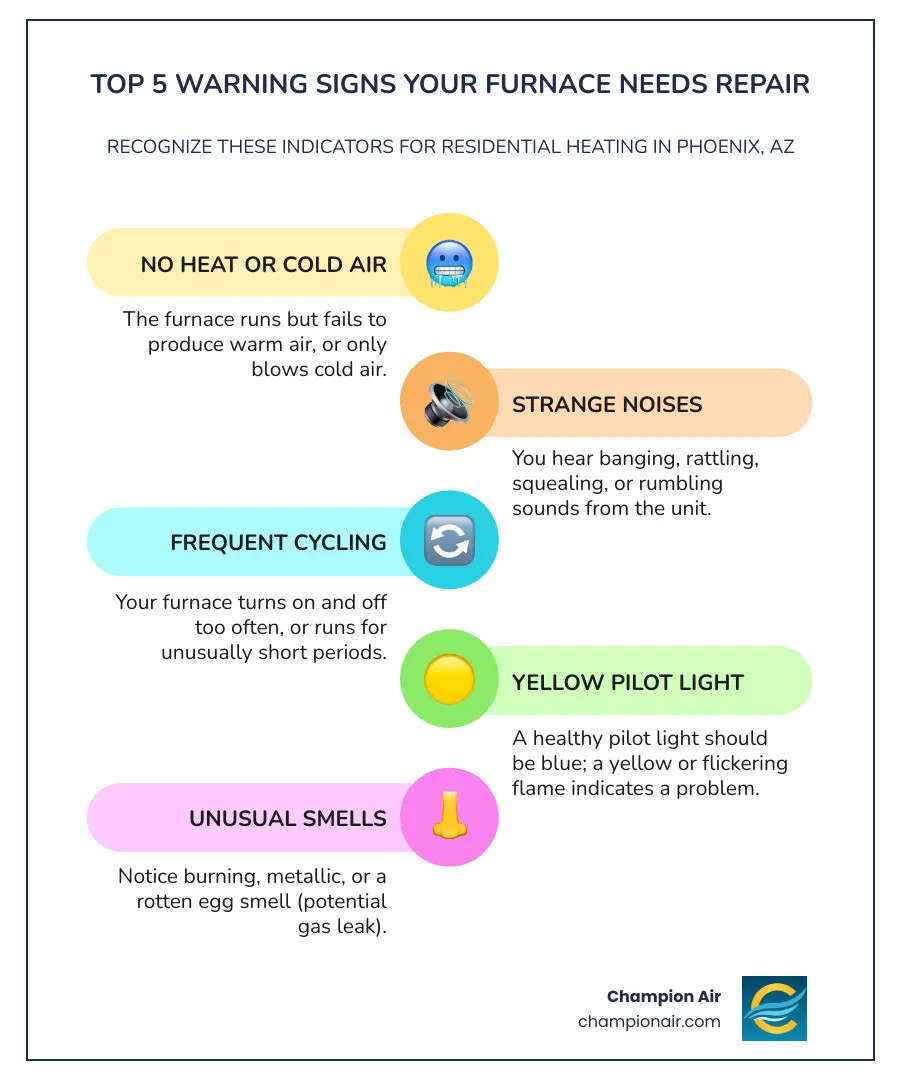
- Common signs: No heat, strange noises, frequent cycling, yellow pilot light, or unusual smells.
- Emergency situations: Gas smells or carbon monoxide symptoms require immediate evacuation.
- What to check first: Thermostat settings, air filter, circuit breaker, and vents.
- When to call a pro: For gas-related issues or if basic checks do not restore heat.
- Phoenix-specific concerns: Dust accumulation and infrequent use can trigger startup problems.
For comprehensive HVAC solutions, explore our heating services, or schedule a furnace repair with our certified technicians today.
As Barry Farah, leading Arizona's largest Lennox family-owned residential HVAC company, I have seen how Phoenix dust and long off-seasons affect home heating. My team is committed to keeping Valley homes safe and efficient.
Why Your Furnace is Essential in the Phoenix Climate
Phoenix is known for heat, but desert winters bring chilly nights. A dependable furnace keeps your home comfortable and prevents small issues from turning into mid-winter breakdowns. Because many Arizona furnaces sit idle, they can struggle with dust and debris when finally turned on, making furnace repair residential in phoenix, az a seasonal priority.
The Unique Challenges for Furnaces in Arizona
- Dust buildup: Clogs filters and coats components, reducing airflow.
- Infrequent use: Reveals ignition, sensor, or startup issues after months of downtime.
- Seasonal humidity: Monsoon moisture can contribute to musty odors or indoor air quality concerns.
Preparing Your Furnace for a Phoenix Winter
- Test run: Run your furnace for 20 minutes before the first cold snap to listen for unusual noises.
- Check batteries: Replace thermostat batteries annually for reliable communication.
- Clear area: Keep at least three feet of clearance around the unit for safety.
- Schedule maintenance: A fall tune-up confirms safe operation and keeps warranties valid.
Common Signs Your Furnace Needs Professional Attention
Most furnaces show warning signs before failing. Catching issues early helps you avoid bigger repairs. If you see these symptoms, it may be time for furnace repair residential in phoenix, az.
Strange Noises and What They Mean
- Banging: Loose parts or ductwork shifting during startup.
- Rattling: Vibrating panels, hardware, or duct connections.
- Squealing: Often tied to blower belt or motor issues.
- Rumbling: Can indicate duct issues or an aging unit.
Performance Problems and Inefficiency
- Short-cycling: Often caused by restricted airflow or a dirty filter.
- Clogged filter: A common source of weak airflow and reduced efficiency.
- Weak airflow: May involve the blower, motor, or ductwork.
- Thermostat issues: Incorrect readings or dead batteries can cause comfort problems.
- Cold air: Could involve ignition or sensors and should be diagnosed by a technician.
Dangerous Smells and Pilot Light Issues
- Musty smells: Suggest moisture-related issues or duct concerns.
- Metallic or burning odors: May indicate electrical problems or overheating.
- Rotten egg smell: Treat as a possible gas issue and take safety precautions.
- Yellow pilot light: A healthy flame is blue; yellow can indicate carbon monoxide risk.
Critical Safety Issues and Immediate Actions
Some furnace problems are safety emergencies. If you suspect a gas leak or carbon monoxide (CO) issue, act immediately.
Recognizing a Gas or Carbon Monoxide Leak
- Rotten egg smell: Utility companies add this odorant to help detect gas.
- Hissing: Could indicate escaping gas near lines or the furnace.
- Physical symptoms: Dizziness, headaches, nausea, and fatigue can be signs of CO exposure.
- Yellow pilot light: Indicates incomplete combustion or venting problems.
- Soot streaks: Dark residue around vents can signal combustion issues.
What to Do in a Heating Emergency
- Evacuate immediately: Get everyone outside, including pets.
- Do not use electronics: Avoid switches or phones that could create a spark.
- Call 911: Contact emergency services or your gas company from a safe location.
- Contact a pro: Turn off the furnace if safe, stay outside, and call for emergency repair. Champion Air offers 24/7 emergency service with no overtime charges.
Your Guide to Furnace Repair Residential in Phoenix, AZ
When your furnace acts up, some quick checks can solve simple problems. For anything involving gas or recurring failures, professional furnace repair residential in phoenix, az is the safest path. Champion Air's licensed technicians provide quality repairs for all brands with 24/7 emergency service.
Simple DIY Checks for Phoenix Homeowners
- Check the air filter: Replace dirty filters every 1 to 3 months.
- Inspect the thermostat: Confirm it is set to heat and replace batteries if needed.
- Reset the circuit breaker: Reset a tripped breaker once. If it trips again, call a pro.
- Open vents: Confirm supply vents are not blocked by furniture or rugs.
- Call a pro: If these steps do not fix the issue, stop troubleshooting and schedule service.
When to Repair vs. Replace Your Furnace
- Furnace age: Systems 15 to 20 years old are often candidates for replacement.
- Frequency of repairs: Repeated breakdowns point to declining reliability.
- Energy efficiency: Newer systems run more efficiently than older equipment.
- Performance: Persistent noise or uneven heating may justify replacement.
Champion Air will assess your system and explain whether repair or replacement is the better path.
Introduction
Furnace repair residential in phoenix, az is essential when chilly winter nights arrive. Phoenix homeowners face unique challenges, from dusty conditions to furnaces that sit idle much of the year.
Quick Answer: Finding Furnace Repair in Phoenix
- Signs: No heat, strange noises, frequent cycling, or unusual smells.
- Emergencies: Gas smells or CO symptoms require immediate evacuation.
- DIY checks: Thermostat settings, air filter, and circuit breaker.
- When to call: For gas issues or if basic checks do not resolve the problem.
For comprehensive HVAC solutions, explore our heating services, or schedule a furnace repair today.
As Barry Farah of Champion Air, I have seen how Phoenix's climate affects heating. My team is committed to maintaining safe, efficient systems year-round.
Why Your Furnace is Essential in the Phoenix Climate
Desert nights get surprisingly chilly in winter. A reliable furnace keeps your home comfortable and prevents small issues from becoming breakdowns. Phoenix homes face unique stressors: systems sit unused for long stretches, and desert dust builds up on internal components. This combination leads to startup problems and reduced efficiency, making timely furnace repair residential in phoenix, az vital.
The Unique Challenges for Furnaces in Arizona
- Dust buildup: Clogs filters and reduces airflow.
- Infrequent use: Reveals ignition or sensor issues after months of downtime.
- Seasonal humidity: Monsoon moisture can contribute to musty odors or duct concerns.
Preparing Your Furnace for a Phoenix Winter
- Test run: Run the furnace for 20 minutes before cold weather to check for odors.
- Check batteries: Replace thermostat batteries annually.
- Clear area: Keep three feet of clearance around the unit.
- Schedule maintenance: A fall tune-up confirms safe operation and efficient performance.
Common Signs Your Furnace Needs Professional Attention
Your furnace often gives warning signs before failing. Catching problems early reduces costs and restores comfort. If you notice these issues, schedule furnace repair residential in phoenix, az.
Strange Noises
- Banging: Loose parts or ductwork shifting during startup.
- Rattling: Vibrating panels or hardware.
- Squealing: Tied to blower belt or motor issues.
- Rumbling: May indicate duct issues or an aging unit.
Performance Problems
- Short-cycling: Often caused by restricted airflow or a dirty filter.
- Clogged filter: A common source of weak airflow.
- Weak airflow: May involve the blower, motor, or ductwork.
- Thermostat issues: Incorrect readings or dead batteries.
- Cold air: Could involve ignition or sensors and needs professional diagnosis.
Dangerous Smells
- Musty: Suggests moisture or duct concerns.
- Metallic/Burning: May indicate electrical problems or overheating.
- Rotten egg: Treat as a possible gas issue immediately.
- Yellow pilot light: Can indicate combustion concerns and carbon monoxide risk.
Critical Safety Issues and Immediate Actions
Some furnace problems are safety emergencies. If you suspect a gas leak or carbon monoxide (CO) exposure, act immediately.
Recognizing a Gas or Carbon Monoxide Leak
- Rotten egg smell: Added to gas to help detect leaks.
- Hissing: Could indicate escaping gas near the furnace.
- Physical symptoms: Dizziness, headaches, nausea, and fatigue are signs of CO exposure.
- Yellow pilot light: Indicates incomplete combustion or venting problems.
- Soot streaks: Dark residue around vents signals combustion issues.
What to Do in a Heating Emergency
- Evacuate immediately: Get everyone outside quickly.
- Do not use electronics: Avoid switches or phones that could create a spark.
- Call 911: Contact emergency services from a safe location.
- Contact a pro: Turn off the furnace if safe and call for emergency repair. Champion Air offers 24/7 service with no overtime charges.
Your Guide to Furnace Repair Residential in Phoenix, AZ
When your furnace acts up, quick checks may solve simple problems. Anything involving gas or electrical faults should be handled by a professional. Champion Air provides careful diagnostics and quality furnace repair residential in phoenix, az for all brands.
Simple DIY Checks
- Air filter: Replace dirty filters every 1 to 3 months.
- Thermostat: Confirm it is set to heat and has fresh batteries.
- Circuit breaker: Reset a tripped breaker once. If it trips again, call a pro.
- Vents: Confirm supply vents are not blocked by furniture.
- Call a pro: If these steps do not restore heat, schedule professional service.
When to Repair vs. Replace
- Age: Systems 15 to 20 years old are candidates for replacement.
- Frequency: Repeated breakdowns point to declining reliability.
- Efficiency: Newer furnaces run more efficiently than older units.
- Performance: Uneven heating or persistent noise may justify replacement.
Champion Air will assess your system and help you decide the best path for your home.
Why Your Furnace is Essential in the Phoenix Climate
Phoenix nights can be surprisingly chilly. A reliable furnace keeps your home comfortable and prevents small issues from turning into breakdowns. Our climate creates challenges: furnaces sit unused for long stretches, and desert dust clogs filters. These issues cause startup problems and reduced efficiency, making furnace repair residential in phoenix, az essential.
The Unique Challenges for Furnaces in Arizona
- Dust buildup: Clogs filters and reduces airflow.
- Infrequent use: Reveals ignition or sensor issues after months of downtime.
- Seasonal humidity: Monsoon moisture can contribute to musty odors if ductwork is not clean.
Preparing Your Furnace for a Phoenix Winter
- Test run: Run your furnace for 20 minutes before cold weather to check for noises.
- Check batteries: Replace thermostat batteries annually.
- Clear area: Keep three feet of clearance around the unit.
- Schedule maintenance: A fall tune-up confirms safe operation and efficient performance.
Common Signs Your Furnace Needs Professional Attention
Your furnace often gives warning signs before failing. Catching issues early reduces costs. If you notice these symptoms, schedule furnace repair residential in phoenix, az.
Strange Noises
- Banging: Loose parts or ductwork shifting.
- Rattling: Vibrating panels or connections.
- Squealing: Tied to blower belt or motor issues.
- Rumbling: May indicate duct issues or an aging unit.
Performance Problems
- Short-cycling: Often caused by restricted airflow or dirty filters.
- Clogged filter: A common source of weak airflow.
- Weak airflow: May involve the blower or motor.
- Thermostat issues: Incorrect readings or dead batteries.
- Cold air: Could involve ignition or sensors and needs professional diagnosis.
Dangerous Smells
- Musty: Suggests moisture or duct concerns.
- Metallic/Burning: May indicate electrical problems.
- Rotten egg: Treat as a possible gas issue.
- Yellow pilot light: Indicates combustion concerns and carbon monoxide risk.
Critical Safety Issues and Immediate Actions
Some furnace problems are safety emergencies. If you suspect a gas leak or carbon monoxide (CO) exposure, act immediately.
Recognizing a Gas or Carbon Monoxide Leak
- Rotten egg smell: Added to gas to help detect leaks.
- Hissing: Could indicate escaping gas near the furnace.
- Physical symptoms: Dizziness, headaches, and nausea are signs of CO exposure.
- Yellow pilot light: Indicates incomplete combustion.
- Soot streaks: Dark residue around vents signals combustion issues.
What to Do in a Heating Emergency
- Evacuate immediately: Get everyone outside.
- Do not use electronics: Avoid sparks from switches or phones.
- Call 911: Contact emergency services from a safe location.
- Contact a pro: Turn off the furnace if safe and call for emergency repair. Champion Air offers 24/7 service with no overtime charges.
Your Guide to Furnace Repair Residential in Phoenix, AZ
While basic checks may solve simple problems, anything involving gas or combustion should be handled by a professional. Champion Air provides quality furnace repair residential in phoenix, az for all brands with 24/7 emergency service.
Simple DIY Checks
- Air filter: Replace dirty filters every 1 to 3 months.
- Thermostat: Confirm it is set to heat and has fresh batteries.
- Circuit breaker: Reset a tripped breaker once. If it trips again, call a pro.
- Vents: Confirm supply vents are not blocked.
- Call a pro: If these steps do not restore heat, schedule service.
When to Repair vs. Replace
- Age: Systems 15 to 20 years old are candidates for replacement.
- Frequency: Repeated breakdowns point to declining reliability.
- Energy efficiency: Newer furnaces run more efficiently.
- Performance: Uneven heating or noise may justify replacement.
Champion Air will assess your system and help you decide the best path for your home.
Why Your Furnace is Essential in the Phoenix Climate
Phoenix nights bring significant temperature drops, making a reliable heating system crucial for comfort. Our unique climate presents specific challenges for residential furnaces. Systems often sit dormant for long stretches, and desert dust can impact performance. We specialize in furnace repair residential in phoenix, az, ensuring your system is ready when you need it.
The Unique Challenges for Furnaces in Arizona
- Dust and debris: Fine particles infiltrate HVAC systems, clogging filters and internal components.
- Infrequent use: Can lead to ignition or sensor issues after months of downtime.
- Monsoon humidity: Can contribute to mold growth if not properly managed.
Preparing Your Furnace for a Phoenix Winter
- Test run: Run your furnace for 20 minutes before cold weather to identify unusual noises.
- Check batteries: Replace thermostat batteries annually.
- Clear area: Keep three feet of clear space around your furnace.
- Schedule maintenance: A fall tune-up supports efficient performance and safety.
Common Signs Your Furnace Needs Professional Attention
Your furnace usually gives hints before breaking down. Recognizing these signals is the first step toward restoring comfort. If you need furnace repair residential in phoenix, az, look for inadequate heat, poor air quality, or rising bills.
Strange Noises
- Banging: Indicates loose panels or blower wheel issues.
- Rattling: Often due to loose panels or ductwork vibration.
- Squealing: Points to a problem with the blower belt.
- Rumbling: Could indicate ductwork issues or unit failure.
Performance Problems
- Short-cycling: Often due to airflow issues or a clogged filter.
- Clogged filter: Reduces intake and efficiency, making the furnace work harder.
- Airflow issues: Weak airflow may involve the blower or ductwork.
- Thermostat malfunction: Can lead to inadequate heat or the fan constantly running.
- Cold air: May involve the heat exchanger, ignition system, or blower.
Dangerous Smells and Pilot Light Issues
- Musty smells: Could indicate mold growth within ductwork.
- Burning odors: Sign of electrical issues or overheating components.
- Rotten egg smell: Associated with natural gas problems; take immediate precautions.
- Yellow pilot light: Indicates incomplete combustion and carbon monoxide risk.
Critical Safety Issues and Immediate Actions
Some issues go beyond comfort and enter the field of safety. Gas leaks and carbon monoxide exposure require immediate action. Knowing how to respond is essential for furnace repair residential in phoenix, az.
Recognizing a Gas or Carbon Monoxide Leak
- Rotten egg smell: A recognizable sign of a natural gas problem.
- Hissing sounds: Could indicate gas escaping from a pipe.
- Physical symptoms: Dizziness, headaches, and nausea are signs of CO exposure.
- Yellow pilot light: Indicates incomplete combustion and potential CO risk.
- Soot streaks: Dark residue around vents can signal a combustion problem.
What to Do in a Heating Emergency
- Evacuate immediately: Get everyone out of the house quickly.
- Do not use electronics: Avoid sparks that could ignite gas.
- Call 911: Contact emergency services from a safe location.
- Contact a pro: Turn off the furnace if safe and call for emergency repair. Champion Air offers 24/7 emergency services with no overtime charges.
Your Guide to Furnace Repair Residential in Phoenix, AZ
While minor issues can be addressed with DIY checks, most furnace repair residential in phoenix, az benefits from professional expertise. Champion Air's licensed technicians provide careful diagnostics and quality workmanship with 24/7 support.
Simple DIY Checks
- Air filter: Check monthly and change every 1 to 3 months to maintain airflow.
- Thermostat: Ensure it is set to heat and check the batteries.
- Circuit breaker: Reset a tripped breaker once. If it trips again, call a pro.
- Vents: Ensure all heating vents are open and unblocked by furniture.
- Call a pro: If basic checks do not resolve the issue, contact Champion Air.
When to Repair vs. Replace Your Furnace
- Age: Systems 15 to 20 years old may be better candidates for replacement.
- Frequency: Repeated breakdowns often justify a new system.
- Efficiency: Upgrading can support lower energy use and consistent comfort.
- Performance: Uneven temperatures or excessive noise may recommend replacement.
Champion Air will assess your system and clearly explain the best path for your home.
About the Author
Champion Air
More Articles
View All Posts
Ready to Get Started?
Whether you need a repair, maintenance, or a new installation, our expert team is here to help.