Critical Steps to Achieve a Professional Heat Pump Tune-Up
Champion Air
Discover what does a professional heat pump tune up include for Arizona homes with essential maintenance steps that boost efficiency and extend system life.
Critical Steps to Achieve a Professional Heat Pump Tune-Up
What a Professional Heat Pump Tune-Up Actually Covers (And Why It Matters in Arizona)
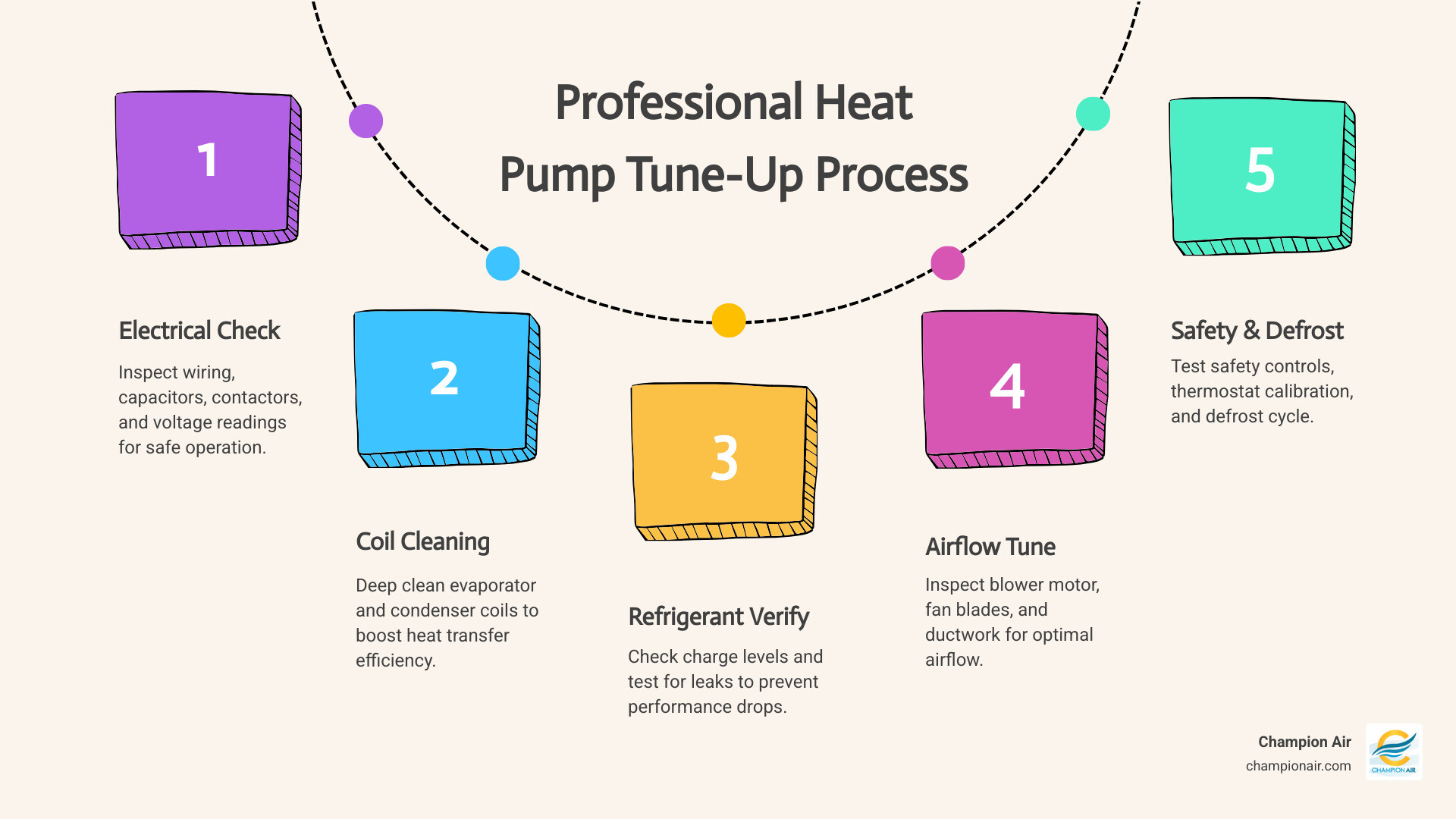
What does a professional heat pump tune up include? Here's a quick answer:
- Electrical inspection - Checking wiring, capacitors, contactors, and voltage readings
- Coil cleaning - Cleaning both evaporator and condenser coils for efficient heat transfer
- Refrigerant check - Verifying charge levels and inspecting for leaks
- Airflow and blower inspection - Checking fan blades, blower motor, and ductwork
- Thermostat calibration - Confirming accurate temperature readings and controls
- Condensate drain flush - Clearing drain lines to prevent water damage or shutdowns
- Lubrication - Reducing friction on all moving mechanical parts
- Defrost cycle test - Verifying the system switches modes correctly
- Safety controls test - Confirming all protective systems are functioning
- Filter inspection - Checking or replacing the air filter for proper airflow
Your heat pump is one of the hardest-working systems in your home. In Arizona, it doesn't get a break. While other parts of the country give their heat pumps a rest between seasons, here in Phoenix, Scottsdale, and Mesa, your system runs nearly year-round — pushing through brutal summers and cool desert winters without stopping.
That kind of continuous use creates real wear. Dust, debris, and heat take a toll on components that most homeowners never think about — until something breaks. According to the U.S. Department of Energy, the difference in energy consumption between a well-maintained heat pump and a neglected one can reach 10 to 25%. That's not a rounding error. On a hot July utility bill in Arizona, that gap is felt.
Think of a professional tune-up the way you'd think of a car oil change. You wouldn't skip it and hope for the best. Skipping heat pump maintenance works the same way — small problems quietly build until they become expensive ones, often on the hottest day of the year when every HVAC tech in your zip code is already booked.
I'm Barry Farah, and leading one of Arizona's top residential HVAC companies has given me a front-row seat to what happens when heat pumps are properly cared for — and what happens when they're not. Understanding what does a professional heat pump tune up include is the first step toward protecting your comfort, your energy bills, and your system's long-term health. Let's walk through exactly what a professional tune-up covers so you know what to expect and what to ask for.
What does a professional heat pump tune up include basics:
- heat pump tune up guide for arizona homeowners
- how a heat pump tune up prevents breakdowns in extreme heat
Why Regular Maintenance is Essential for Arizona Heat Pumps
In the Valley of the Sun, our weather puts an incredible amount of stress on heating and cooling equipment. Because nearly 50% of the energy used in a typical home goes directly to heating and cooling, keeping your system running efficiently is the fastest way to control your monthly utility bills.
Unlike a traditional furnace and air conditioner pair—where each unit rests for half the year—a heat pump is a year-round workhorse. It cools your home during our blistering 115°F summers and reverses its cycle to keep you warm during chilly desert nights. This continuous operation means a heat pump accumulates twice the wear and tear of a single-season system in the same calendar year.
Furthermore, our desert environment presents unique challenges. Airborne dust, pollen, and debris from seasonal Valley dust storms settle deep into the outdoor unit's coils. When dust builds up, it acts as an insulating blanket, forcing the compressor to work harder and run longer to move heat. This extra strain doesn't just waste electricity; it actively shortens your system's lifespan.
While a neglected heat pump might only survive 8 to 10 years before suffering a major component failure, a properly maintained system can easily last 15+ years. Utilizing our comprehensive Heat Pump Tune-Up Guide for Arizona Homeowners helps ensure your equipment receives the precise care it needs to handle our climate. Investing in seasonal maintenance keeps your system running at peak performance, ensuring your home remains a cool haven even in the middle of summer.
What Does a Professional Heat Pump Tune Up Include?
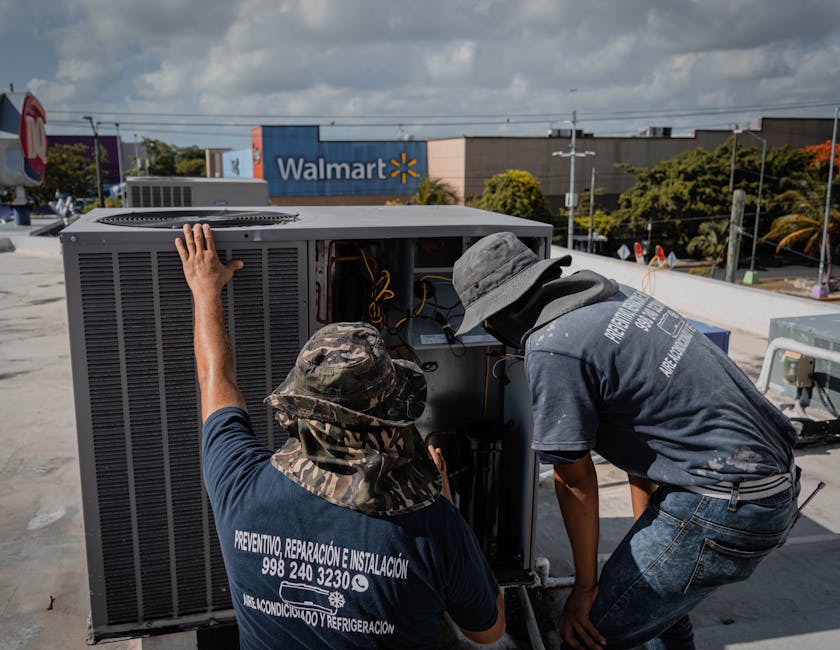
When a professional technician arrives at your home, they don't just glance at the thermostat and swap out a filter. A true professional tune-up is an intensive, 60-to-90-minute process that combines deep cleaning, safety testing, and mechanical calibration. It is designed to restore your system to its original manufacturer specifications.
To get the most out of your system, check out our guide on Beat the Heat: Comprehensive Heat Pump Maintenance for Phoenix Homes. A thorough tune-up addresses the entire system, ensuring every component is ready to perform.
To understand the difference between basic homeowner upkeep and what our professional technicians handle, review this comparison:
| Maintenance Task | DIY (Homeowner) | Professional Technician |
|---|---|---|
| Air Filter Replacement | Yes (Every 1-3 months) | Yes (Inspect & replace if needed) |
| Clear Outdoor Debris | Yes (Maintain 2-foot clearance) | Yes (Deep clean coils & interior cabinet) |
| Thermostat Calibration | No | Yes (Verify and update settings) |
| Refrigerant Charge & Leak Testing | No | Yes (Using specialized gauges) |
| Electrical Component Diagnostics | No | Yes (Test capacitors, contactors, & wiring) |
| Condensate Drain Line Flush | No | Yes (Clear blockages & prevent leaks) |
| Defrost Cycle & Reversing Valve Test | No | Yes (Ensure proper winter/summer switching) |
Electrical and Safety Component Inspections
Your heat pump relies on high-voltage electricity to power the compressor and blower motor. Over time, the vibration of normal operation can loosen electrical connections, leading to arcing, damaged components, or system failure.
During the electrical and safety portion of a tune-up, a technician will:
- Tighten All Electrical Connections: Loose wires increase resistance, which draws more electricity and generates excess heat that can melt wire insulation.
- Test Capacitors: Capacitors act like temporary batteries that give your motors the boost they need to start up. If a capacitor is weak, the compressor or fan motor will struggle to start, eventually burning out. We measure these microfarads precisely to catch failing capacitors before they leave you without cooling.
- Inspect Contactors: The contactor is the switch that turns your outdoor unit on and off. Pitting or electrical burns on the contactor contacts can cause the system to get stuck "on" or refuse to start at all.
- Measure Voltage and Amperage Draw: Testing the electrical draw of the compressor and fan motors ensures they are operating within safe, normal parameters. High amp draw is a clear warning sign of a motor under mechanical stress.
Mechanical and Airflow Adjustments: What Does a Professional Heat Pump Tune Up Include?
Without proper airflow, your heat pump cannot transfer heat effectively, regardless of how well the electrical components are working. In fact, replacing a dirty, restrictive air filter with a clean one can cut your system's energy use by 5% to 15% instantly.
During the mechanical inspection, our technicians focus on maximizing airflow and reducing friction:
- Blower Motor and Fan Inspection: We examine the indoor blower wheel and the outdoor fan blades. Dust accumulation on blower blades reduces their aerodynamic efficiency, forcing the motor to work harder.
- Lubrication of Moving Parts: While many modern motors are sealed, any accessible bearings and moving parts must be lubricated to minimize friction, reduce noise, and prevent premature wear.
- Ductwork Evaluation: Leaky ductwork can waste up to 30% of your conditioned air before it ever reaches your living spaces. We inspect accessible duct connections for obvious leaks, gaps, or fallen insulation. To understand how these checks fit into your yearly schedule, read about How Often to Schedule HVAC Maintenance.
- Airflow Rate Verification: We measure the static pressure and temperature differential across the indoor coil to verify that air is moving through your home at the correct velocity.
Refrigerant and Coil Maintenance: What Does a Professional Heat Pump Tune Up Include?
Refrigerant is the lifeblood of your heat pump. It doesn't get "used up" like gasoline; instead, it circulates in a closed loop, absorbing heat from one area and releasing it in another. If your system is low on refrigerant, it means you have a leak that needs to be located and repaired.
A professional technician will handle these critical tasks:
- Verify Refrigerant Charge: Using digital pressure gauges, we check that the refrigerant levels match the manufacturer's precise specifications for both heating and cooling modes. Running a system with even a 10% undercharge can drop your cooling efficiency by 20% and damage the compressor.
- Deep Clean Coils: We gently wash the outdoor condenser coil and inspect the indoor evaporator coil. Removing the buildup of desert dust and pollen restores optimal heat transfer, allowing your system to cool your home faster.
- Test the Defrost Cycle: During the winter, moisture in the outdoor air can freeze on the outdoor coil. The heat pump must periodically enter a defrost cycle to melt this ice. We test the defrost controls and the reversing valve to ensure this cycle functions perfectly.
Signs Your Phoenix Heat Pump Needs Immediate Attention
While we recommend scheduling preventative maintenance before the summer heat arrives, your system will often tell you when it needs attention between visits. Keep an eye out for these warning signs:
- Rising Utility Bills: If your monthly energy bills are climbing but your household habits haven't changed, your heat pump is likely losing efficiency due to dirty coils, low refrigerant, or failing components.
- Weak or Warm Airflow: If the air coming out of your registers feels weak or isn't as cool as it should be, you could be dealing with a clogged filter, blower motor issues, or a refrigerant leak.
- Unusual Noises: Squealing, grinding, rattling, or metallic banging sounds are never normal. They usually indicate loose components, worn motor bearings, or a failing compressor.
- Short Cycling: If your heat pump turns on and off rapidly without ever completing a full cooling cycle, it is short cycling. This places immense stress on the compressor and is often caused by overheating, electrical faults, or airflow blockages.
- Ice on the Coils: Finding ice on your indoor or outdoor coils during the summer is a major red flag. It typically points to severely restricted airflow or a refrigerant leak, both of which require immediate professional service to prevent compressor failure.
If you notice any of these warning signs, don't wait for a complete system breakdown. Read our guide on Don't Sweat It: Finding the Best Heat Pump Maintenance in Phoenix, AZ to learn how to address these issues before they leave you stranded in the heat.
Frequently Asked Questions About Heat Pump Maintenance
How often should I schedule a professional heat pump tune-up in Arizona?
In Arizona's demanding climate, you should schedule a professional heat pump tune-up twice a year—once in the spring before the cooling season starts, and once in the fall before the winter heating season begins. Because heat pumps operate year-round to provide both heating and cooling, they accumulate twice the runtime of single-season systems, making bi-annual service essential to prevent breakdowns and maintain efficiency.
Can I perform a heat pump tune-up myself?
Homeowners can and should handle basic preventative maintenance tasks, such as replacing the air filter every 30 to 90 days, keeping the outdoor unit clear of weeds and debris, and ensuring indoor registers remain unblocked. However, a complete technical tune-up must be left to a licensed professional. Tasks involving high-voltage electrical diagnostics, refrigerant pressure measurements, and sealed system repairs require specialized tools, training, and EPA certification to perform safely and legally.
Will skipping professional maintenance void my heat pump warranty?
Yes, in almost all cases. Major HVAC manufacturers require proof of regular professional maintenance to keep your parts warranty valid. If a critical component like your compressor fails, the manufacturer may request service records dating back to your installation. Skipping your seasonal tune-ups could leave you paying out of pocket for a repair that would have otherwise been fully covered under warranty.
Conclusion
Your heat pump is your home’s primary defense against the extreme Arizona climate. Knowing what does a professional heat pump tune up include helps you make informed decisions to protect your comfort, keep your energy bills manageable, and extend the lifespan of your system.
At Champion Air, we provide top-tier heating, cooling, and indoor air quality solutions throughout Scottsdale, Phoenix, Mesa, and the surrounding Valley communities. Our experienced, licensed technicians are ready to keep your system operating at peak efficiency, no matter the weather outside.
Ready to protect your comfort and ensure your system is running efficiently? Contact us today to schedule your comprehensive Heat Pump Services and experience the peace of mind that comes with professional care.
About the Author
Champion Air
More Articles
View All PostsKeep Reading
Related Articles


Ready to Get Started?
Whether you need a repair, maintenance, or a new installation, our expert team is here to help.