



HVAC Company in Sun City Grand, AZ
Is Your Climate Control System Failing Under Intense Desert Heat?
Facing unbearable heat with an underperforming air conditioner can quickly turn your home from a sanctuary into a safety hazard, especially during the peak summer months. If your system is blowing warm air or refusing to turn on, contact us immediately for emergency dispatch or to inquire about our financing options. Champion Air provides prompt, professional HVAC services to restore your comfort swiftly and efficiently.
- Immediate dispatch and comprehensive service for urgent repairs.
- Transparent pricing structures and flexible financing options for system replacements.
- Comprehensive maintenance plans designed to prolong system efficiency in extreme climates.
- All services are performed by licensed professionals with a satisfaction guarantee.
What to Expect From Professional HVAC Diagnostics and Service
When your cooling or heating system falters in Sun City Grand, you need a precise diagnosis rather than a quick patch that fails a week later. The initial phase of any service call involves a thorough evaluation of the entire system. Technicians do not simply look at the thermostat; they inspect the mechanical heart of the unit to identify the root cause of the inefficiency or failure. This process is critical because a symptom like a frozen evaporator coil is often caused by a completely different issue, such as low refrigerant or restricted airflow.
A comprehensive service visit typically includes a multi-point inspection. This ensures that every component, from the electrical connections to the mechanical moving parts, is functioning within manufacturer specifications. In desert environments, specific attention is paid to components that suffer from heat stress, such as capacitors and compressor motors. The goal is to restore the unit to its original factory performance standards, ensuring it can handle the load of a 100°F+ day without overheating.
Technicians arrive equipped to handle the majority of repairs on the spot. Service trucks are stocked with universal parts and common manufacturer-specific components to minimize downtime. If a system is short-cycling, making unusual noises, or causing energy bills to spike, the diagnostic process will uncover the issue. You receive a clear explanation of what is broken, why it broke, and the specific steps required to fix it, along with a straightforward quote before any work begins.
The Process of System Installation and Replacement
There comes a point where a system is too old or damaged to repair economically, necessitating a full replacement. Installing a new HVAC system is a complex construction project that requires precise calculation and skilled labor. It is not merely swapping one box for another. The process begins with a load calculation, often referred to as a Manual J calculation. This determines the exact cooling and heating requirements of your specific home layout, taking into account square footage, insulation levels, window orientation, and local climate data.
Correct sizing is the most critical factor in installation. An undersized unit will run continuously, failing to reach the set temperature and driving up electricity costs. Conversely, an oversized unit will cool the space too quickly and shut off before it has removed the humidity, leading to “short cycling” which accelerates wear and tear on the compressor. Once the correct size and SEER (Seasonal Energy Efficiency Ratio) rating are selected, the physical installation process begins.
- First, the existing unit is safely disconnected and removed, with all refrigerants recovered according to EPA regulations to prevent environmental contamination.
- Next, the technicians inspect and modify the ductwork if necessary to ensure it can handle the airflow of the new, high-efficiency system.
- Then, the indoor evaporator coil and outdoor condensing unit are positioned, leveled, and secured to minimize vibration and noise.
- Technicians then braze the copper refrigerant lines, creating a sealed loop, and pressure test the system with nitrogen to guarantee there are no leaks.
- A vacuum pump is used to remove all moisture and air from the lines before the factory-specified amount of refrigerant is weighed in.
- Finally, the system is started, and technicians measure static pressure, temperature splits, and airflow to verify the installation meets all performance metrics.
Throughout this process, Champion Air ensures that your property is protected, using drop cloths and shoe covers to maintain cleanliness. The focus is on a turnkey solution where the old equipment is hauled away, and the new system is fully calibrated for immediate use.
Determining When to Repair vs. Replace Your Unit
Homeowners often struggle with the decision of whether to pour more money into an aging unit or invest in a modern replacement. This decision should be based on data and financial logic rather than guesswork. The “5,000 Rule” is a common industry metric used to aid this decision. Multiply the age of the equipment by the estimated repair cost. If the total exceeds 5,000, replacement is generally the more improved financial option. For example, a 12-year-old unit requiring a $500 repair equals 6,000, suggesting replacement is wise.
Age is a primary factor. In the intense heat of Arizona, the average lifespan of an air conditioner is often shorter than the national average, typically falling between 10 to 14 years depending on maintenance history. If your unit is approaching or has surpassed this age range, major components like the compressor are likely nearing the end of their operational life. Investing in a costly repair for a compressor on an old unit is often throwing good money after bad, as another component is likely to fail shortly after.
Efficiency is the second major consideration. Older units may have SEER ratings of 10 or 12, whereas modern standards require a minimum of SEER 14 or 15, with high-efficiency units reaching SEER 20+. Replacing an obsolete unit can result in immediate savings on monthly utility bills, which helps offset the cost of the new system over time. Furthermore, as refrigerant standards change (such as the phase-out of R-22), repairing older units becomes significantly more expensive due to the scarcity of the required refrigerant.
- Consider replacement if the unit requires frequent repairs, defined as more than two service calls in a single season.
- Evaluate the comfort levels in the home; if some rooms are hot while others are cold, the current system may be improperly sized or failing.
- Check the warranty status; if the parts and labor warranty has expired, you are fully liable for all repair costs, making a new unit with a 10-year warranty more attractive.
- Assess noise levels; failing systems often run louder, vibrating or grinding, which indicates internal mechanical failure.
Navigating Local Climate Factors and Regulations
Operating HVAC equipment in a desert environment presents unique challenges that do not exist in milder climates. The extreme ambient temperatures place immense pressure on the condensing unit. When the outside air is 115°F, the system has to work significantly harder to reject heat from inside the home. This requires the condenser coils to be kept meticulously clean. In areas like Sun City Grand, dust storms and monsoons can coat these coils in a layer of mud and debris, acting as an insulator and causing the system to overheat. Regular maintenance in this region is not optional; it is a requirement for system survival.
Local building codes and permitting requirements also play a significant role in HVAC projects. Most municipalities in the valley require a permit for system replacements to ensure the installation meets safety and energy codes. This includes verifying that the electrical circuit is sized correctly for the new unit and that the condensate drain lines are properly routed to prevent water damage. Licensed contractors handle the permitting process, ensuring the homeowner is not liable for uninspected work.
Seasonality affects service availability and system performance. The “monsoon season” brings humidity, which changes the cooling load on the air conditioner. A system that cools effectively in dry June might struggle in humid August if it is not operating at peak efficiency. Furthermore, utility companies in the region often offer rebate programs for upgrading to high-efficiency equipment. These incentives can significantly lower the net cost of a new installation but typically require the contractor to submit specific load calculation documentation and proof of AHRI-matched systems.
- Monsoon storms bring heavy dust that can clog filters and outdoor coils rapidly, requiring mid-season checks.
- High ambient heat degrades electrical components like capacitors and contactors faster than in cooler climates.
- Proper insulation of refrigerant lines is essential to prevent heat gain before the refrigerant reaches the indoor coil.
- Condensate drain lines must be treated regularly to prevent algae growth, which thrives in the warm, dark environment of the drain pan.
Why Professional Execution is Non-Negotiable
The difference between a system that runs efficiently for 15 years and one that fails in five often comes down to the quality of the installation and maintenance. HVAC systems are complex thermal engines involving high-voltage electricity, high-pressure gases, and combustion fumes (in the case of gas furnaces). Improper handling of these elements poses safety risks, including electrical fires or carbon monoxide leaks. Professional technicians undergo rigorous training and certification to handle these hazards safely.
Beyond safety, technical expertise ensures you get the efficiency you paid for. A study by the National Institute of Standards and Technology found that improper installation can reduce a system’s efficiency by up to 30%. This means buying a high-end, energy-efficient unit but installing it poorly results in the performance of a low-end model. Professionals use calibrated tools to measure airflow, static pressure, and superheat/subcooling to tune the system precisely. This level of detail is impossible to achieve without specialized training and equipment.
Warranties are another critical aspect of professional service. Manufacturers generally require proof of professional installation and regular maintenance to honor their parts warranties. If a compressor fails three years into a ten-year warranty, you will need to show that the system was maintained by a licensed provider. Professional service creates a documented history of care for the unit, protecting your investment.
Securing Long-Term Comfort
Maintaining a comfortable home environment in the desert requires a proactive approach to your heating and cooling needs. Whether you are dealing with an sudden breakdown in the middle of summer or planning a strategic replacement to improve energy efficiency, the quality of the service provider determines the outcome. From accurate load calculations to precise refrigerant charging, every step matters.
Residents in Sun City Grand deserve reliable cooling that stands up to the harshest weather conditions. By choosing a provider that prioritizes technical accuracy and transparent communication, you ensure your home remains a cool refuge regardless of the temperature outside. Champion Air is dedicated to delivering that peace of mind through expert craftsmanship and reliable service.
Contact us today to schedule your service or request a free estimate on a new system installation.
Our Promotions
Empowered to Serve You with Exceptional Service
Expect more when
you choose
Champion Air Expect more when you
choose Champion Air
you choose
Champion Air Expect more when you
choose Champion Air
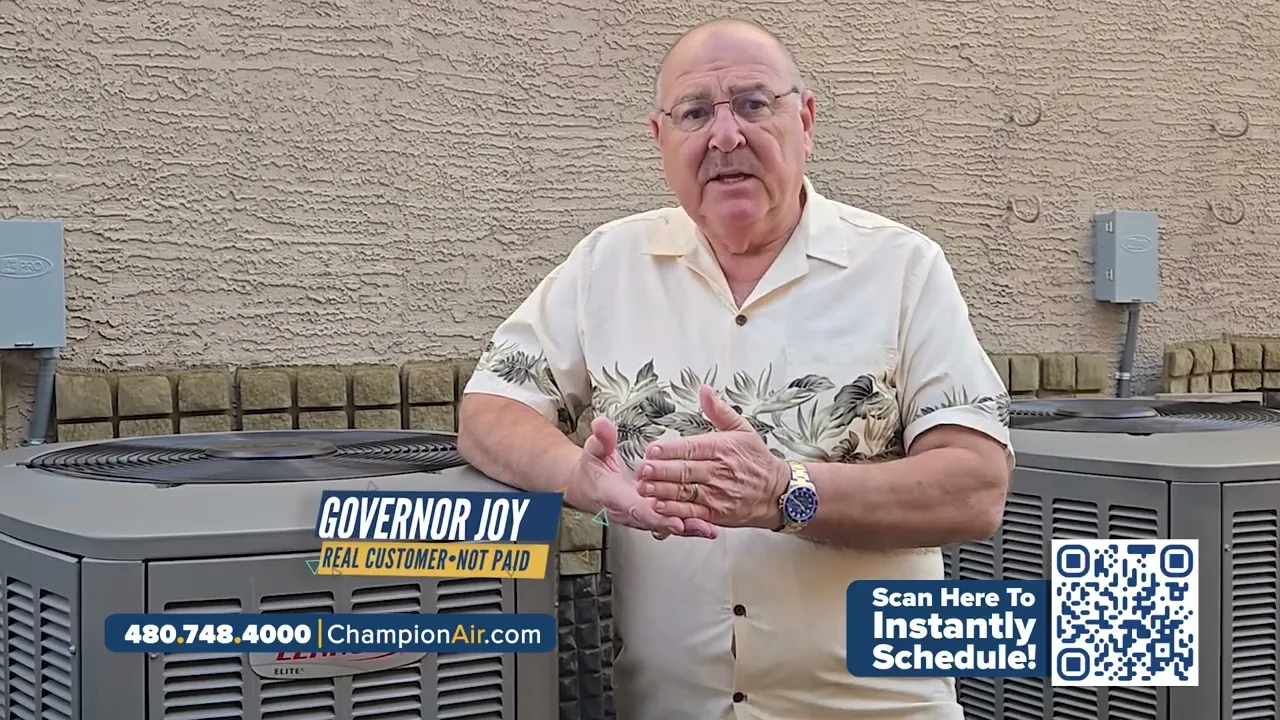
Fast & Reliable
Service
Service
24/7 Emergency
Service
Service
Discounts for Military,
Veterans & Seniors
Veterans & Seniors
Service for all AC
Brands, New & Old
Brands, New & Old
Background Checked,
Certified Professionals
Certified Professionals
Awarded & Reputable
Since 1982
Since 1982
Don’t Just Take
Our Word for it Don’t Just Take
Our Word for it
Our Word for it Don’t Just Take
Our Word for it
Google Reviews 4.9/5
Over 500 Reviews
More Reviews
Over 500 Reviews