


Furnace Maintenance & Tune-Up in Sun City, AZ
Maintenance Overdue? Tune-Up Your Furnace Now
Is your furnace ready for the winter demands in Sun City? Ensure your home stays warm and safe with our timely furnace maintenance and tune-up services. Contact us today to schedule your comprehensive inspection and avoid mid-season failures.
- Prevent unexpected breakdowns during cold spells.
- Enhance furnace efficiency and lower your energy bills.
- Extend the lifespan and performance of your heating system.
Licensed professionals perform every inspection, backed by a satisfaction guarantee for all services.
What You Get Today: Comprehensive Furnace Inspection Scope
A furnace tune-up is not merely a quick glance at your equipment; it is a rigorous, multi-point inspection designed to restore factory specifications and safety standards. When you book a service in Sun City, the objective is to identify minor wear before it causes a catastrophic failure. The scope of work covers the critical components of your heating system, focusing on safety, efficiency, and mechanical integrity.
The maintenance visit addresses the combustion process, airflow dynamics, and electrical controls. Over time, vibration can loosen electrical connections, and thermal stress can crack heat exchangers. Our technicians systematically evaluate these areas. You receive a detailed report on the status of your system, ensuring you know exactly how your furnace is performing.
Core Components Inspected and Serviced:
- Thermostat Calibration: The technician verifies that the thermostat reads temperature accurately and signals the furnace correctly. Improper calibration leads to short-cycling, where the unit turns on and off too frequently, wasting energy.
- Electrical Connections and Voltage: All wiring is inspected for signs of burning or loose connections. Technicians measure the voltage and amperage on motors to ensuring they are drawing the correct amount of power.
- Lubrication of Moving Parts: Friction is the enemy of mechanical efficiency. Bearings and motors are lubricated to reduce resistance, which lowers electricity usage and prevents overheating.
- Condensate Drain Line: For high-efficiency furnaces, the condensate line must be clear. A clogged line can cause water damage or shut down the system entirely. The technician clears debris and checks for proper drainage.
- System Controls and Safety Circuits: This includes checking the high-limit switch, which prevents the furnace from overheating, and the flame sensor, which ensures gas is only flowing when a fire is present.
Combustion and Safety Analysis:
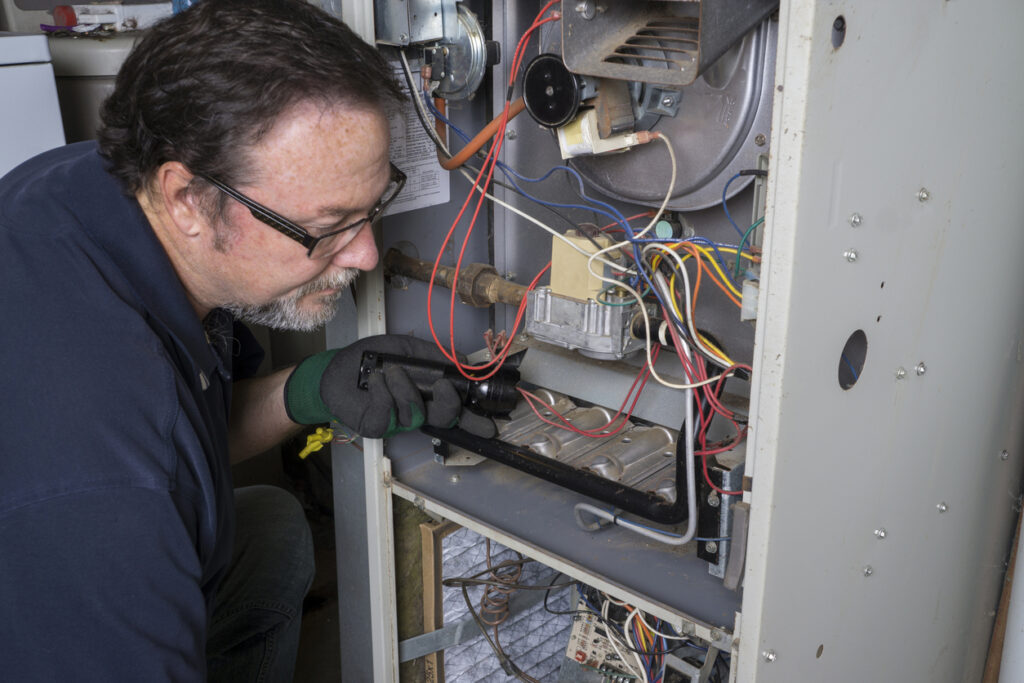
- Heat Exchanger Inspection: This is the most critical safety step. The heat exchanger separates the breathing air in your home from the combustion gases. Technicians check for cracks or corrosion that could allow carbon monoxide to leak into the living space.
- Burner Assembly Cleaning: Soot and rust can build up on the burners, causing an uneven flame. Cleaning them ensures efficient fuel combustion.
- Gas Pressure Measurement: The gas valve is tested to ensure the pressure entering the furnace matches the manufacturer’s specifications. Incorrect pressure can lead to dangerous operating conditions or inefficiency.
- Flue Pipe and Drafting: The venting system is inspected to guarantee that exhaust gases are safely exiting the home and not back-drafting into the room.
The Maintenance Process: How We Tune Your System
Understanding how the maintenance process works helps homeowners in Sun City prepare for the visit. The goal is to be thorough yet efficient, minimizing disruption to your day while maximizing the performance of your heating unit. The process follows a logical sequence to ensure no component is overlooked.
Step-by-Step Execution:
- Initial Assessment and System Start-Up: The technician arrives and begins by discussing any specific concerns you have noticed, such as strange noises or cold spots. The system is then turned on to observe its startup sequence, listening for irregular sounds and watching for delayed ignition.
- Power Down and Interior Access: For safety, electrical power and gas supply to the unit are turned off. The service panels are removed to expose the blower, burners, and controls. This allows for deep cleaning and close visual inspection of internal components that are not visible during operation.
- Cleaning and Adjustment Phase: Dust and debris are vacuumed from the cabinet, blower compartment, and burners. Champion Air technicians then proceed to tighten electrical connections, adjust gas pressure if necessary, and lubricate moving parts. The air filter is inspected and replaced if a new one is available on-site.
- Reassembly and Testing: Once cleaning and adjustments are complete, the panels are secured, and power is restored. The technician runs the furnace through a full heating cycle to verify that airflow is optimal and the temperature rise (the difference between supply and return air temperature) falls within the manufacturer’s recommended range.
- Final Report and Recommendations: The visit concludes with a walkthrough of the findings. You receive a written summary of what was done, the condition of the system, and any recommendations for repairs if worn parts were detected.
Recognizing the Signs: When Maintenance Can’t Wait
Waiting until the furnace stops working completely often results in higher repair costs and uncomfortable nights. Your heating system usually gives warning signs before a total breakdown. Recognizing these indicators allows for proactive maintenance that can save the unit.
Audible and Sensory Indicators:
- Loud Scrapes or Bangs: Grinding sounds often indicate a motor bearing failure, while loud bangs upon startup suggest delayed ignition, where gas builds up before igniting.
- Persistent Burning Smell: While a slight dust smell is normal when turning the heater on for the first time in autumn, a persistent burning odor indicates electrical overheating or a clogged filter restricting airflow.
- Yellow Pilot Light: If you have an older furnace, the flame should be blue. A yellow flame indicates incomplete combustion, which can lead to carbon monoxide production.
Performance and Efficiency Red Flags:
- Rising Energy Bills: If your gas or electric bill spikes without a change in usage habits, the furnace is likely running longer to maintain the same temperature due to dirty components or inefficiency.
- Uneven Heating: If some rooms in your Sun City home are freezing while others are hot, the system may be struggling with airflow distribution or a failing blower motor.
- Short Cycling: If the furnace runs for only a few minutes and shuts off, then turns back on shortly after, it is short-cycling. This destroys the heat exchanger and compressor over time.
Repair vs. Replacement: Making the Right Call
During a tune-up, a technician may uncover significant issues. At this stage, homeowners must decide whether to invest in a repair or opt for a system replacement. This decision relies on mathematical logic regarding the age, cost, and efficiency of the current unit.
- The 50% Rule: If the cost of the repair approaches 50% of the value of a new system, replacement is generally the smarter financial move. Dumping money into an old unit often leads to “throwing good money after bad” as other parts begin to fail shortly after.
- Age of the Equipment: The average lifespan of a gas furnace is 15 to 20 years. If your unit is over 15 years old and requires a major part like a blower motor or control board, replacement is recommended. Newer units offer significantly higher efficiency, which recoups the investment over time through lower utility bills.
- Frequency of Breakdowns: If you have required repairs more than twice in the last two years, the system has become unreliable. Continued repairs are a temporary fix for a dying system. A new installation provides a warranty and peace of mind.
- Efficiency Ratings (AFUE): Older furnaces may have an Annual Fuel Utilization Efficiency (AFUE) rating of 60% to 70%. Modern units range from 80% to over 98%. Upgrading from a 60% unit to a 95% unit means you save 35 cents on every dollar spent on heating.
Local Climate Considerations for Sun City Homeowners
Heating needs in Sun City differ from those in the deep freeze of the Northeast, but specific local factors make maintenance equally vital. The region experiences significant temperature swings, where days can be mild and nights near freezing. This thermal cycling puts stress on the heat exchanger, expanding and contracting metal repeatedly.
- Dust and Desert Conditions: The primary environmental challenge in this area is dust. Airborne particulates are finer and more prevalent here. These particles bypass cheap filters and accumulate on the blower wheel and evaporator coil. This buildup acts as insulation, causing motors to overheat and reducing the system’s ability to transfer heat. More frequent filter changes and professional internal cleaning are mandatory in this climate.
- Utility Infrastructure and Safety: Many homes in the area utilize gas furnaces. Local codes regarding gas line safety and ventilation are strict. Regular inspections ensure that sediment traps (drip legs) in gas lines are clear and that flue pipes remain unblocked by bird nests or debris, which is common during the off-season.
- Dry Air and Humidification: The winter air is exceptionally dry. While the primary focus is the furnace, a tune-up is the ideal time to check whole-home humidifiers if installed. Proper humidity levels protect wooden furniture and flooring from cracking and improve perceived warmth, allowing you to set the thermostat lower.
Why Professional Maintenance Outperforms DIY
Some homeowners attempt to maintain their heating systems personally, but professional service goes beyond changing a filter. The distinction lies in the tools used, the technical knowledge applied, and the safety protocols followed.
Diagnostic Tools and Precision:
- Professionals utilize combustion analyzers to measure oxygen and carbon monoxide levels in the flue gas. You cannot smell or see carbon monoxide leaks until they are dangerous; only calibrated equipment can detect hairline cracks in a heat exchanger.
- Technicians use multimeters to measure electrical draw on motors. A motor drawing too many amps is a fire hazard and a sign of imminent failure, something a visual inspection cannot reveal.
Liability and Warranty Preservation:
- Most furnace manufacturers require proof of professional annual maintenance to keep the warranty valid. DIY repairs can void these warranties, leaving you responsible for the full cost of a replacement compressor or heat exchanger.
- Licensed technicians carry insurance and liability coverage. If a professional damages a component during service, it is covered. If a homeowner breaks a part during a DIY attempt, the cost falls entirely on them.
Systemic Approach:
- A professional looks at the HVAC system as a whole. They evaluate how the furnace interacts with the ductwork, the thermostat, and the intake air. This holistic view allows them to spot airflow restrictions or duct leakage that a homeowner might miss, ensuring the system operates at peak efficiency rather than just turning on.
Secure Your Comfort and Safety Today
Delaying furnace maintenance risks inefficient operation, higher utility costs, and the potential for unsafe operating conditions. A well-tuned system provides consistent warmth and peace of mind throughout the colder months. Do not wait for the first freeze to discover a problem.
Schedule your furnace tune-up now to ensure your system performs flawlessly when you need it most.
Our Promotions
Empowered to Serve You with Exceptional Service
Expect more when
you choose
Champion Air Expect more when you
choose Champion Air
you choose
Champion Air Expect more when you
choose Champion Air
Fast & Reliable
Service
Service
24/7 Emergency
Service
Service
Discounts for Military,
Veterans & Seniors
Veterans & Seniors
Service for all AC
Brands, New & Old
Brands, New & Old
Background Checked,
Certified Professionals
Certified Professionals
Awarded & Reputable
Since 1982
Since 1982
Don’t Just Take
Our Word for it Don’t Just Take
Our Word for it
Our Word for it Don’t Just Take
Our Word for it
Google Reviews 4.9/5
Over 500 Reviews
More Reviews
Over 500 Reviews